

Acrylic Rummikub: The Perfect Housewarming Gift
Table of Contents
- Why an Acrylic Rummikub Set Makes a Standout Housewarming Gift
- Choosing Between the Four Acrylic Rummikub Colors
- How to Personalize a Rummikub Set for the Recipient
- Rummikub Rules and How to Play: A Quick Primer for New Owners
- Housewarming Gift Checklist: Matching the Set to the Recipient
- Caring for Your Acrylic Rummikub Set: Durability and Storage
- Presentation and Delivery: Making the Gift Feel Special
- Conclusion: A Gift That Gets Played With
- Frequently Asked Questions
Last Updated: October 8, 2026
Why an Acrylic Rummikub Set Makes a Standout Housewarming Gift
Most housewarming gifts get opened, smiled at, and shelved. An acrylic Rummikub set earns a permanent spot on the coffee table instead, a game people actually play, in a design they leave out.

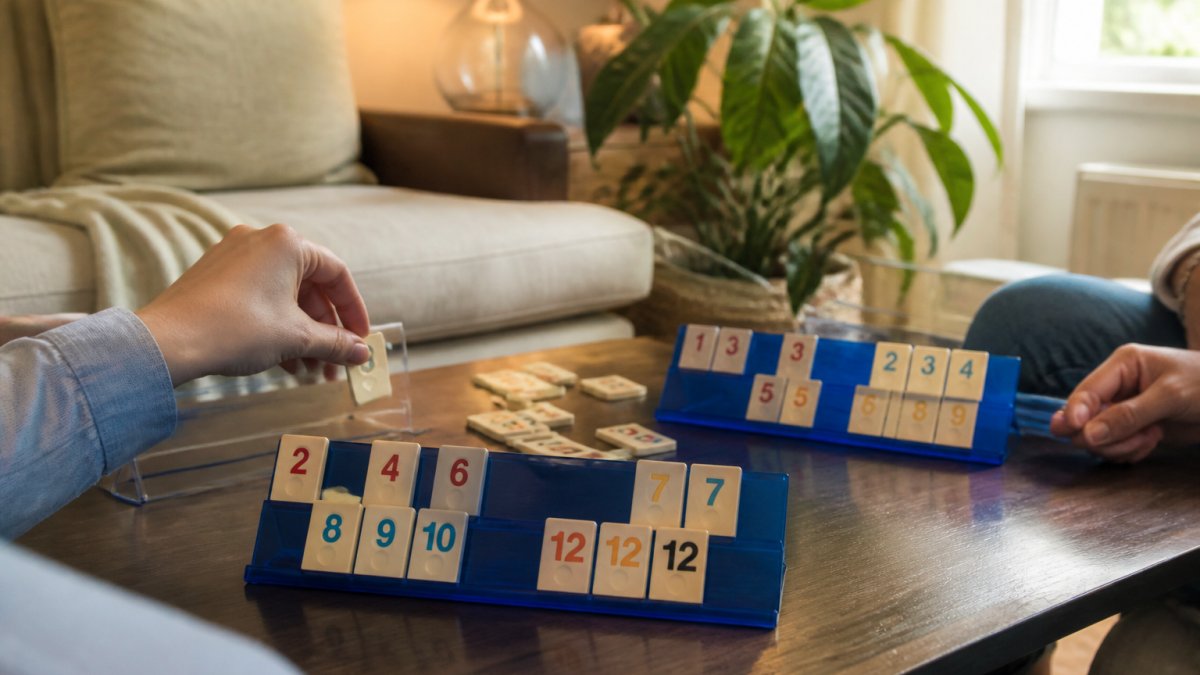
The set arrives with clear acrylic trays, a colored lid, and a full complement of tiles, something to do with the people who visit.
The timing matters. A new home means new hosting duties, new neighbors, and quiet evenings before the rooms feel finished. A tile game gives those evenings a shape.
What's Inside the Box: Tiles, Racks, and Storage
A standard Rummikub set contains 106 tiles, four playing racks, and a storage case: numbered tiles in four colors, plus two jokers.
The acrylic version we carry keeps the same core contents but upgrades the housing: clear acrylic trays hold the tiles, and a colored lid keeps them contained between games, something you can leave on a shelf.
- 106 tiles across four colors, numbered 1 through 13 in two sets per color
- Four playing racks for hands of up to six players
- Acrylic storage trays with a sliding lid
- Two jokers for wildcard play
The storage case is the part most people underestimate. Loose tiles in a cardboard box get lost; tiles in a lidded acrylic box stay together, which matters in a busy household.
Choosing Between the Four Acrylic Rummikub Colors
Color is the fastest way to match a gift to a home. We stock four versions of the acrylic Rummikub set, all at the same price, so the decision comes down to the recipient's space.
| Set | Lid Finish | Best For |
|---|---|---|
| Acrylic Rummikub Set - Blue | Solid blue lid | Bold, colorful living rooms |
| Acrylic Rummikub Set - Tortoise | Tortoise-pattern lid | Warm, traditional interiors |
| Acrylic Rummikub Set - Turquoise | Turquoise lid | Coastal and bright spaces |
| Acrylic Rummikub Set - Light Blue | Light blue lid | Soft, neutral palettes |
The tortoise finish reads as the most classic, pairing with wood furniture and warm lighting; the blue and turquoise versions lean brighter, suiting coastal or modern homes.

How to Personalize a Rummikub Set for the Recipient
Personalization turns a nice gift into a keepsake. A custom name, monogram, or small design on the lid or case makes the set feel chosen for one household rather than pulled off a shelf.
Think about what the recipient would actually want engraved. A family surname works for a household with kids, a wedding date or new address suits a couple, and a short phrase or inside joke fits a close friend.
Rummikub Rules and How to Play: A Quick Primer for New Owners
Rummikub rules are simple enough to learn in one sitting, which is why the game works as a gift. The goal is to be the first player to empty your rack by forming runs and groups from the tiles in your hand and on the table.
Here is the short version for a first game:
- Shuffle all 106 tiles face down and have each player draw 14 tiles.
- Place the remaining tiles face down as the draw pile.
- On your turn, either play tiles or draw one tile and pass.
- Form runs of three or more consecutive numbers in the same color.
- Form groups of three or four tiles of the same number in different colors.
- On your first play, the tiles you lay down must total at least 30 points.
- After that, you can rearrange tiles already on the table to make room for your own.
- The first player to empty their rack wins the round.
That last rule is where the strategy lives. Rummikub blends luck and strategy: the tiles you draw are random, but how you rearrange the table is up to you.
Why the Table-Rearranging Rule Makes This a Social Gift
Most tile and card games are parallel play, everyone manages their own hand and the table barely changes. Rummikub is different. Once the opening 30-point play is down, every player can pull apart runs, slide a tile from one group into another, and rebuild the layout to free up their own pieces.
A few practical consequences worth knowing before you gift the set:
- Turns take longer than new players expect. A player who is rearranging the table is thinking, not stalling. Build in a little patience for the first two or three rounds.
- The game rewards watching the table, not just your rack. Players who track what is already down tend to win more, which makes it a good fit for someone who likes puzzles, cards, or strategy games.
- It plays well at two, three, or four. The set includes four racks, so a couple can play head-to-head, and a family or a pair of couples can fill the table.
- Rounds are short enough to stop and restart. A single round usually runs well under an hour, which suits a weeknight or a casual evening with neighbors.
A common pattern among new owners: the first game feels slow, the second clicks, and by the third the table rearranging becomes the whole point.
A First-Game Setup That Actually Works
If you are handing the set over in person, a five-minute walkthrough beats a rulebook. Lay out a sample run (a red 4-5-6) and a sample group (a 7 in three colors), then show one rearrangement, pull a tile from a run and slide it into a group. That is usually enough for the recipient to teach the next person.
Do not skip the 30-point opening rule. New players who ignore it will lay down two tiles, stall, and then wonder why the game drags. The rule exists to keep the opening fair and the table balanced. Mastering these foundational mechanics provides the necessary discipline to appreciate the tactile weight and aesthetic variety found among different tile options.
If the recipient has never played, include a printed copy of the rules with the gift. The first game can then happen the same night the set is opened, which is the fastest way to turn a housewarming present into a housewarming tradition.
Housewarming Gift Checklist: Matching the Set to the Recipient
A housewarming gift works when it fits the person, not just the occasion. Run through this checklist before you buy.
- Do they host? If they have people over often, a game earns its place.
- Do they have space? A coffee table or shelf is enough; this is not a bulky gift.
- Do they play games already? Cards, board games, or puzzle nights are a good sign.
- Is the home's style warm or modern? Match the lid finish to the room.
- Would a name or date mean something? Personalization suits close friends and family.
Four or more boxes means a strong match. If the recipient does not host and does not play games, a different gift will land better.
For a family with kids, the set doubles as a game-night staple and a way to keep older children engaged with numbers.
Caring for Your Acrylic Rummikub Set: Durability and Storage
Acrylic holds up well with basic care, but it is not glass and it is not polycarbonate. Understanding what the material tolerates is the difference between a set that looks new after five years and one that looks scuffed after five months. The tiles are built for repeated play; the housing is where care matters most.
What Acrylic Tolerates and What It Does Not
Acrylic is a clear thermoplastic: lighter than glass, more shatter-resistant, and it takes a high polish, which is why it reads as a display piece rather than a game box.
What that means in practice:
- Paper towels and dry rags are the main scratch source. Wood pulp fibers and trapped dust act like fine sandpaper on acrylic. A microfiber cloth is the correct tool.
- Alcohol and ammonia cleaners can cloud the surface. Diluted dish soap in warm water is safer and does the same job.
- Prolonged direct sunlight causes yellowing over time. UV exposure is cumulative, so a shelf away from a south-facing window is a better long-term home than a sunlit sill.
- Heat warps acrylic. Do not leave the set in a hot car, near a radiator, or on a dashboard. The lid can distort at temperatures well below what would bother a person.
A simple routine keeps the set presentable: wipe the lid and trays with a soft, damp microfiber cloth after game night, dry with a second cloth, and close the lid.
Preventing Scratches During Play
Most acrylic damage happens during use, not storage. A few habits prevent nearly all of it:
- Play on a felt, cork, or cloth surface. Bare wood, tile, and glass tables transmit grit to the bottom of the trays.
- Keep drinks off the playing surface. Condensation rings and spills are harder to remove from acrylic than from glass.
- Do not slide tiles across the table face-down. Tiles stacked and slid will eventually dull the printed faces.
- Lift the lid straight up when opening. Angling it drags the edge against the tray rim.
- Store tiles in the trays, not loose in a bag. Loose tiles rub against each other and against the acrylic walls.
Replacing Missing or Damaged Tiles
The storage case is not packaging. It is the reason the set survives years of use and stays presentable enough to leave on display in a finished room, which is exactly why the acrylic housing deserves more care than the tiles inside it.
Presentation and Delivery: Making the Gift Feel Special
Presentation is the difference between a gift and a purchase. A set that arrives wrapped, with a handwritten note, reads as thoughtful.
A few ways to make it land:
- Ask for gift wrapping and a short note if you are ordering online.
- Pair the set with a small houseplant or a candle to round out the gift.
- Time it to the move-in week, when the recipient is still unpacking.
- Include a printed copy of the rules so the first game can happen that night.
Delivery logistics matter if you are ordering from out of town.
For anyone visiting the area for a week, ordering online after you leave works the same as any other purchase: the set ships to the recipient, and the note carries the sentiment.
Conclusion: A Gift That Gets Played With
Finding a housewarming gift that does not end up in a drawer is the hard part.
At Palms 30A, our acrylic Rummikub sets come in four lid finishes, each with clear acrylic trays, a sliding lid, and the full 106-tile game inside. We can make it gift-ready before it ships.

Browse the full collection and pick the finish that fits their home. View all
Frequently Asked Questions
Is Rummikub a good housewarming gift?
Yes. A Rummikub set works for a new home because it gives the recipient something to do with guests rather than another object to store. The acrylic version doubles as a display piece on a shelf or coffee table. At $79, it sits in a comfortable gift range for a housewarming, and it suits couples, families, and roommates alike since the game plays well with two to four people.
What makes an acrylic Rummikub set different from a standard set?
The main difference is the case. Standard sets ship in a cardboard box that wears out with repeated use. An acrylic Rummikub set uses clear acrylic trays and a sliding lid, keeping the 106 tiles and playing racks organized and visible. The solid lid also means the set can sit out on a shelf as part of your home décor instead of being tucked away in a closet.
Can you personalize an acrylic Rummikub set?
Personalization options vary, so ask before you buy. A handwritten note can be tucked inside the case.
What are the basic rules of Rummikub?
Each player draws 14 tiles onto their rack. On your turn, you either play tiles or draw one. To make your first play, the tiles you lay down must total at least 30 points. After that, you can add to existing runs and groups on the table. Runs are three or more consecutive numbers in one color; groups are three or four of the same number in different colors. The first player to empty their rack wins the round.