

How to Style Handcrafted Jewelry: 7 Easy Styling Tips
Table of Contents
- Start With One Handcrafted Focal Point
- How to Choose Jewelry for Your Outfit
- How to Layer Necklaces Without the Clutter
- How to Mix and Match Jewelry Metals and Materials
- Stacking Rings and Bracelets With Handcrafted Pieces
- Statement Jewelry Outfit Ideas for Day and Night
- Caring for Handcrafted Jewelry While You Wear It
- Conclusion
- Frequently Asked Questions
Last Updated: October 17, 2026
Start With One Handcrafted Focal Point
A handcrafted jewelry piece is an accessory made by an individual artisan rather than a factory line, which means small variations in shape, color, and finish are part of the design, not flaws.
So pick a focal point first. One piece that carries the look.
- A bold beaded necklace for a plain white tee or linen dress
- A hand-painted ceramic charm when you want a small, personal detail
- A chunky cuff or stacked bracelets if your wrists do the talking
- Statement earrings when your hair is up and your neckline is simple
Everything else you add should support that piece, not compete with it. If two items fight for attention, one of them comes off.

The focal point approach also solves the "what do I wear" problem fast. Choose the piece, then match the outfit to its scale and color. A delicate piece disappears under a busy print. A bold piece looks lost against head-to-toe beige.
How to Choose Jewelry for Your Outfit
Choosing jewelry for an outfit starts with three questions: what is the neckline, what is the color, and how busy is the fabric. Answer those and the piece usually picks itself.
Necklines come first. A V-neck or scoop neck leaves open space that a pendant or a short beaded strand fills well.
Color comes second. Pull one color from your outfit and repeat it in the jewelry. A multicolor beaded necklace like our Rainbow Glass Beaded Necklace does this for you, since it already carries several tones.
Texture comes third. Smooth fabrics like silk and fine knits pair well with textured, chunky pieces. Linen and chambray, which have visible weave, pair better with smooth metal or glass.
A quick check before you walk out:
- Hold the piece against the outfit in daylight, not bathroom light
- Step back three feet from a mirror and squint
- If the jewelry is the first thing you see, it is working
How to Layer Necklaces Without the Clutter
Layering necklaces works when each strand sits at a different length and a different weight. Two necklaces at the same length tangle and look accidental. Three at spaced lengths look deliberate.
The reliable formula is short, medium, long. Our Heishi Beaded Necklaces layer well because the gemstone beads add texture without adding bulk.

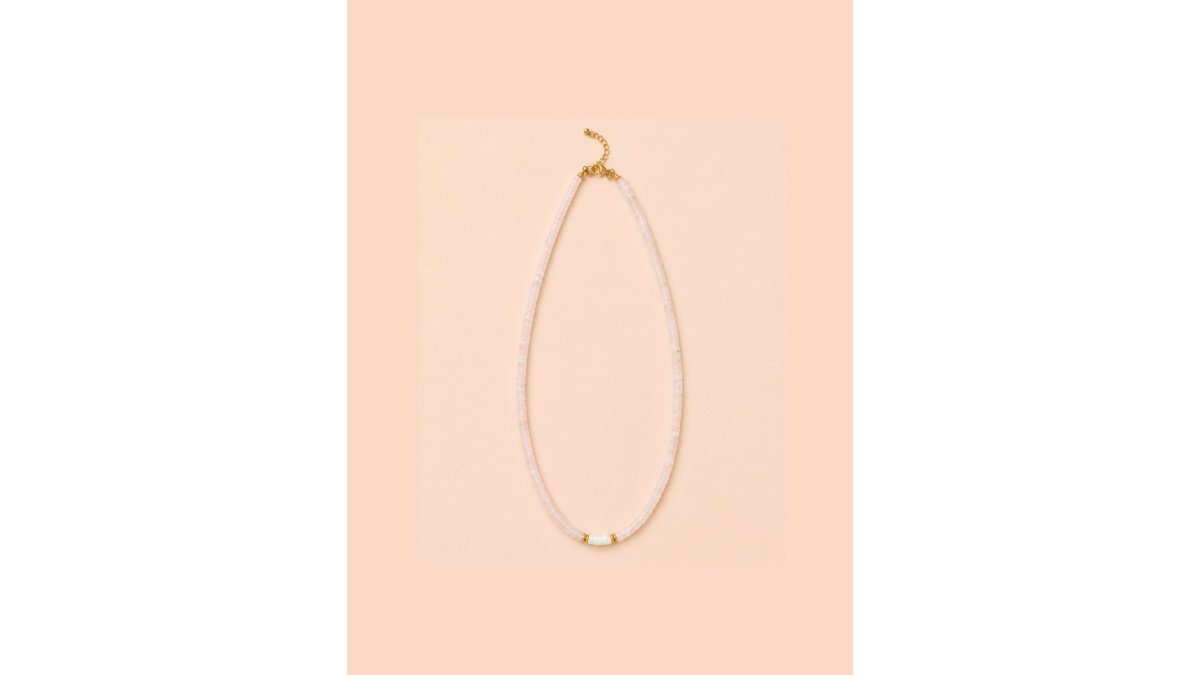
A few rules that save time:
- Odd numbers look better than even. Three strands read as styled; two read as unfinished.
- Vary the weight. Pair one chunky beaded strand with two fine chains.
- Keep one element constant. Same metal, or same bead color, so the group feels related.
- Check the clasp side. Clasps should sit at the back, and each strand should hang free when you move.
If you are new to layering, start with two pieces and add a third once you are comfortable. Clutter comes from too many pieces at once, not from layering itself.
How to Mix and Match Jewelry Metals and Materials
Mixing metals is fine. The trick is to repeat each metal at least twice so the mix looks intentional rather than accidental. Gold and silver together work when you have, say, gold hoops and a gold charm alongside a silver chain. One lonely silver ring among all gold reads like a mistake.
With handcrafted jewelry, material mixing goes further than metal tone. Artisan pieces carry visible evidence of how they were made, and that texture changes what they pair with. A few material-specific rules that general styling guides skip:
- Beaded strands (glass, stone, wood). Beads have visual weight and a matte-to-glossy range. Pair a chunky beaded necklace with smooth, solid-color fabrics so the beads carry the texture. Avoid pairing heavy beads with heavy weave like thick cable knit, which competes rather than contrasts.
- Hammered or brushed metal. The faceted surface catches light unevenly, so it reads best against matte fabrics such as linen, cotton, and wool. High-shine satin next to hammered metal creates two competing light sources.
- Ceramic and enamel charms. These are color-forward and often glossy. Let the charm be the only saturated color note in the look, or repeat its color once in a small accessory such as a scarf or bag.
- Textile and fiber pieces (cord, macrame, woven bands). These soften a look and pair naturally with denim, chambray, and raw-edge linen. Keep metal to a minimum so the fiber texture stays visible.
- Mixed-material artisan pieces. When one piece already combines, say, a ceramic charm on a beaded strand, treat it as the focal point and keep the rest of the jewelry in one material family.
A simple proportion rule: let one material dominate at roughly two-thirds of the visible jewelry, and let the second material act as accent. Three materials in equal amounts is where looks start to feel busy.
| Mix | Works well when | Watch out for |
|---|---|---|
| Gold + silver | Each metal appears twice | One metal appearing only once |
| Glass beads + fine chain | Chain is thinner than beads | Chain competing with bead size |
| Ceramic charm + metal | Charm is the focal point | Too many charms on one chain |
| Hammered metal + matte fabric | Metal texture contrasts the weave | Pairing with high-shine satin |
| Fiber cord + denim | Both read casual and textured | Adding heavy metal on top |
Our Hand Painted Ceramic Charms are a good example of a piece that anchors a mixed-material look. Each charm is individually painted, so no two are identical, and that small difference is what makes the mix feel personal.

Stacking Rings and Bracelets With Handcrafted Pieces
Stacking is about proportion, not quantity. Three rings on one hand look better than six, and three bracelets on one wrist look better than a full arm.
Rainbow Glass Beaded Necklace →
For rings, work from the base of the finger outward. A thin band, a mid-weight band, and one piece with a stone or texture. Keep the stack on one or two fingers, and leave the rest bare.
For bracelets, mix sizes deliberately:
- One chunky piece as the anchor, such as a beaded strand
- One fine chain for contrast
- One textured or colored piece from our Assorted Beaded Bracelets, each one unique
Leave a small gap between bracelets so they move independently. Bracelets that sit flush against each other scratch and tangle.
Statement Jewelry Outfit Ideas for Day and Night
A statement piece is any accessory that leads the outfit. The same handcrafted piece can work at 10 a.m. and 8 p.m. if you change what surrounds it.
Daytime looks:
- Rainbow glass beaded necklace over a white tee and denim, with flat sandals
- Ceramic charm on a short chain with a linen shirt and shorts
- Stacked beaded bracelets with a simple cotton dress
Evening looks:
- The same beaded necklace over a black slip dress, with heels
- A single bold cuff with a sleeveless top
- Statement earrings with hair pulled back and a plain neckline
The dress-up and dress-down move is mostly about contrast. Casual outfit plus one refined piece reads polished. Formal outfit plus one relaxed, textured piece reads modern.
Caring for Handcrafted Jewelry While You Wear It
Handcrafted jewelry lasts when you treat the materials according to what they are. Glass, ceramic, gemstone, metal, and fiber all have different needs, and a few habits prevent most damage. The care question gets more complicated once you start layering, because pieces rub against each other all day.
Daily wear habits:
- Put jewelry on last. Perfume, lotion, and hairspray leave residue on beads and dull metal. Let products dry fully before clasping anything.
- Take it off first. Remove pieces before showering, swimming, cleaning, or exercising. Chlorine and salt water are hard on metal finishes and cord.
- Keep beads away from hard surfaces. Ceramic and glass can chip if dropped on tile. Set pieces on a cloth or tray, not the counter edge.
- Wipe after wearing. A dry, soft cloth removes skin oils before they set. For metal, a jewelry polishing cloth is fine; avoid liquid dips on painted or porous pieces.
Layering-specific care:
- Separate hard and soft. A metal chain rubbing against a ceramic charm or painted bead can wear the finish over time. Put the textured or painted piece on top, or leave a small gap between strands.
- Watch for tarnish transfer. Silver and base-metal chains can leave dark marks on porous beads and fiber cord. If you layer mixed metals, check the contact points weekly and rotate which strand sits closest to the skin.
- Hang layered necklaces, don't coil them. Coiling kinks fine chain and presses beads into each other. A hook or a multi-prong hanger keeps strands straight and makes tangles rare.
- Store pieces separately when not layered. A soft pouch per piece stops chains from scratching beads and keeps painted surfaces from chipping against metal.
- Check clasps and jump rings. Layering puts more strain on closures. A quick tug test before wearing catches a loose jump ring before you lose a piece.
Storage setup that works:
- A lined jewelry box with divided compartments for rings and bracelets
- A hanging rack or wall hook for necklaces you wear often
- A soft travel pouch per piece for trips, so layered looks don't arrive tangled
If a piece does need a repair, ask before you try. For anything with a painted or glazed surface, avoid ultrasonic cleaners and harsh polishing compounds, which can strip finish.
Conclusion
Styling handcrafted jewelry comes down to one decision repeated: choose the piece that leads, then let everything else support it. That single habit fixes most outfit problems before they start.
If you want pieces that make that easy, our handcrafted jewelry collection at Palms 30A is built for it. You will find individually painted ceramic charms, glass beaded necklaces, and gemstone heishi strands, each with its own character and each easy to layer with what you already own.
View all and start with one focal piece.
Frequently Asked Questions
How do you style handcrafted jewelry with everyday outfits?
Pick one handcrafted piece as your focal point and keep the rest simple. A beaded necklace like the Rainbow Glass Beaded Necklace ($38) adds color to a plain tee and jeans, while a single ceramic charm on a chain works with a button-down. Match the scale of the jewelry to the outfit: delicate pieces for fitted clothes, bolder pieces for loose or layered clothing. Let the handmade texture stand out by avoiding too many competing accessories.
How do you layer handcrafted necklaces without making them look cluttered?
Use three necklaces at most and vary the length by at least 2 inches so each piece has room. Start with a short base layer, add a mid-length pendant, then finish with a longer chain. Keep the materials related: a glass beaded necklace, a heishi beaded necklace ($34), and a fine chain can sit together if the colors repeat. If one piece is bold, keep the other two delicate.
How do you mix handcrafted jewelry with other accessories?
Choose one metal family (gold or silver) as the anchor and add one contrasting material, such as ceramic or glass. For example, pair gold hoops with a hand-painted ceramic charm ($10) on a gold chain. When wearing a patterned scarf or bag, keep jewelry solid and simple. The goal is balance: one textured or colorful handcrafted piece, then quieter supporting accessories.
Can you wear statement jewelry with patterned clothing?
Yes, but scale the pattern. A large statement necklace works best over a small print or a solid color, while a bold print calls for simpler jewelry. If the pattern is busy, choose one statement piece and skip earrings or wear small studs. Handcrafted pieces with natural variation, like glass beads or ceramic charms, pair well with stripes and florals when the colors echo each other.