

Men's Fall Apparel: Layers, Tops and Outfits That Work
Last Updated: November 10, 2026
Quick Summary
Men's fall apparel is built in layers that match the day's temperature, starting with a breathable base and adding a knit or jacket as the air cools. Choose tops like double-layer shirts, quarter-zips and half-zip knits, and pair them with a straight or relaxed fit in chinos, dark denim or corduroy.
- Mild days around 60 to 70°F call for a cotton or chambray shirt over a tee plus a light jacket.
- Cool days from about 45 to 60°F work well with a base tee, midweight knit or quarter-zip, and a denim, bomber or quilted outer layer.
- Below about 45°F, add a fleece or heavier knit and a wool or insulated coat over a thermal base.
- A straight or relaxed fit usually lasts longer and works with more layers than a very slim or very wide cut.
- Check pants by sitting down to see if the seat, crotch or waistband pulls before buying.
Table of Contents
- What the Fall Men's Apparel Market Looks Like in 2026
- Men's Fall Layering Essentials for Cooler Days
- Men's Fall Tops: Shirts, Sweaters and Quarter-Zips
- Pants and Denim for Fall: Fit, Fabric and Versatility
- Fall Outfits for Men: Casual Combinations by Occasion
- Building a Fall Wardrobe: Fabrics, Fit and Men's Fall Apparel Brands
- Choosing Your Fall Pieces at Palms 30A
- Frequently Asked Questions
What the Fall Men's Apparel Market Looks Like in 2026
Fall is when men's wardrobes get rebuilt, and the market is responding to demand for fall apparel. The U.S. apparel market is projected to generate US$373.00 billion in revenue in 2026, with annual growth of 1.82% through 2031 (Statista U.S. apparel market outlook). That figure covers apparel overall, not fall menswear specifically, but it shows where the money is flowing.
Comfort is driving more of those fall apparel purchases. Mintel reports that 66% of men say they are stylish and 52% dress for comfort, a sign that casual clothing has become the default rather than the exception (Mintel research on casualization in U.S. men's clothing). At Palms 30A, we see that tension every season: shoppers want pieces that look put together but still feel easy to wear all day.
Brands reflect this in their fall apparel lines. Fall menswear collections from brands like Rails and Wrangler emphasize textured shirts, sweaters, wool coats and versatile pants in earthy tones, plus practical layers for cooler days (Rails fall menswear collection).
Men's Fall Layering Essentials for Cooler Days
Layering is the core of fall apparel, and the right combination depends less on the calendar than on what the day actually does. A morning at 45°F that climbs to 65°F by mid-afternoon calls for a different setup than a steady 50°F drizzle. The goal is a system where each layer can be added or removed without re-dressing.
Layering by Temperature
A simple way to plan is to sort days into three rough bands and build from there.
- Mild, roughly 60°F to 70°F: a lightweight cotton or chambray shirt over a tee, with a light jacket you can carry. The jacket is there for the evening, not for the warmth at midday.
- Cool, roughly 45°F to 60°F: a base tee, a midweight knit or quarter-zip, and an outer jacket such as a denim, bomber or quilted layer. This is the most common fall setup and the one that covers most days.
- Cold, below roughly 45°F: a thermal or fine-gauge base, a fleece or heavier knit as the middle layer, and a wool or insulated coat for the outside. Wool coats earn their place here, not on a 58°F morning.
The thresholds are rough. Wind, humidity and how much walking you do all shift how warm a given layer feels, so treat the bands as a starting point and adjust by how you feel after ten minutes outside.
Layering for Temperature Swings
When the day starts cold and turns mild, or the reverse, the middle layer does the work. A zip-neck knit or a half-zip sweatshirt is easy to push up or unzip, and a jacket that packs into a pocket or hangs over a shoulder keeps you from overheating in the car or the office. Choose the jacket for its weight and how easily it comes off, not just its warmth.
Layering in Rain
Rain changes the fabric choice more than the layer count. Cotton holds water and stays cold against the skin, so a cotton overshirt under a waterproof shell works poorly once it soaks through. Synthetic and wool-blend midlayers keep some warmth when damp, and a shell with a hood or a water-resistant finish handles light rain better than a standard jacket. Keep the outer layer shorter in the body so the hem does not collect water when you sit down.
Fabrics That Breathe Versus Fabrics That Insulate
Pick the base layer for breathability and the outer layer for protection. Lightweight cotton and performance blends move moisture away from the skin, which matters when you warm up on a walk. Heavier wool, fleece and brushed knits hold heat, so they belong in the middle or as the outer layer on colder days. Wool tends to stay warm even when slightly damp, while cotton does not.
Watch out: layering too much
Stacking three bulky pieces can restrict movement and trap heat, so a mild day ends up feeling like a cold one. Keep the middle layer thin enough that the jacket still closes comfortably over it.
The article sorts fall days into three temperature bands, each calling for a different layering setup.
| Temperature band | Typical setup | Outer layer |
|---|---|---|
| Mild, roughly 60°F to 70°F | Cotton or chambray shirt over a tee | Light jacket you can carry |
| Cool, roughly 45°F to 60°F | Base tee, midweight knit or quarter-zip | Denim, bomber or quilted layer |
| Cold, below roughly 45°F | Thermal or fine-gauge base, fleece or heavier knit | Wool or insulated coat |
Men's Fall Tops: Shirts, Sweaters and Quarter-Zips
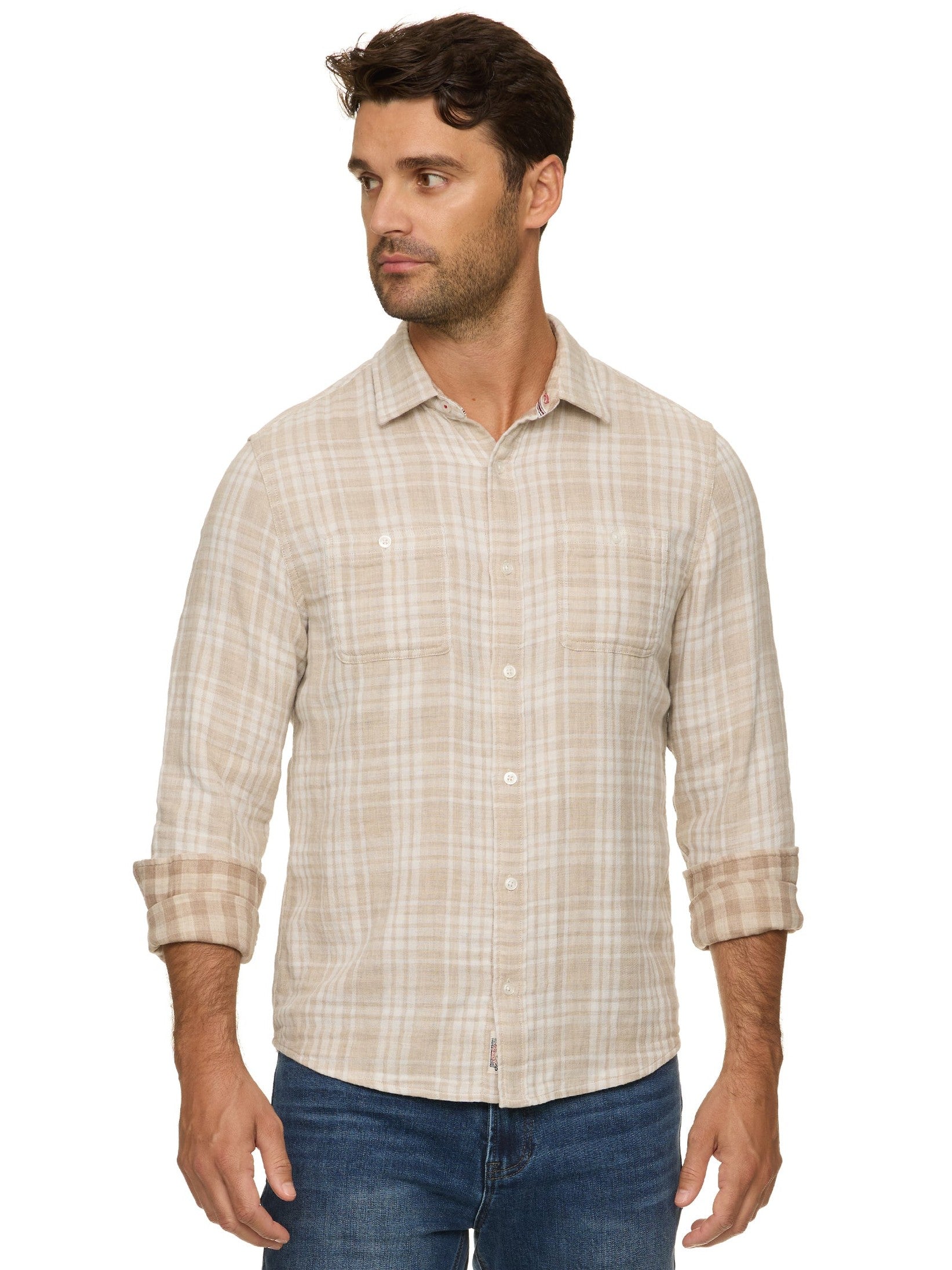
Tops do most of the visual work in a fall apparel outfit. A double-layer button-down gives you texture and a bit of visual interest without extra bulk. The Chicago Double Layer Shirt at $84.95 uses two lightweight layers with a plaid print and a contrasting smaller gingham print on the inside.
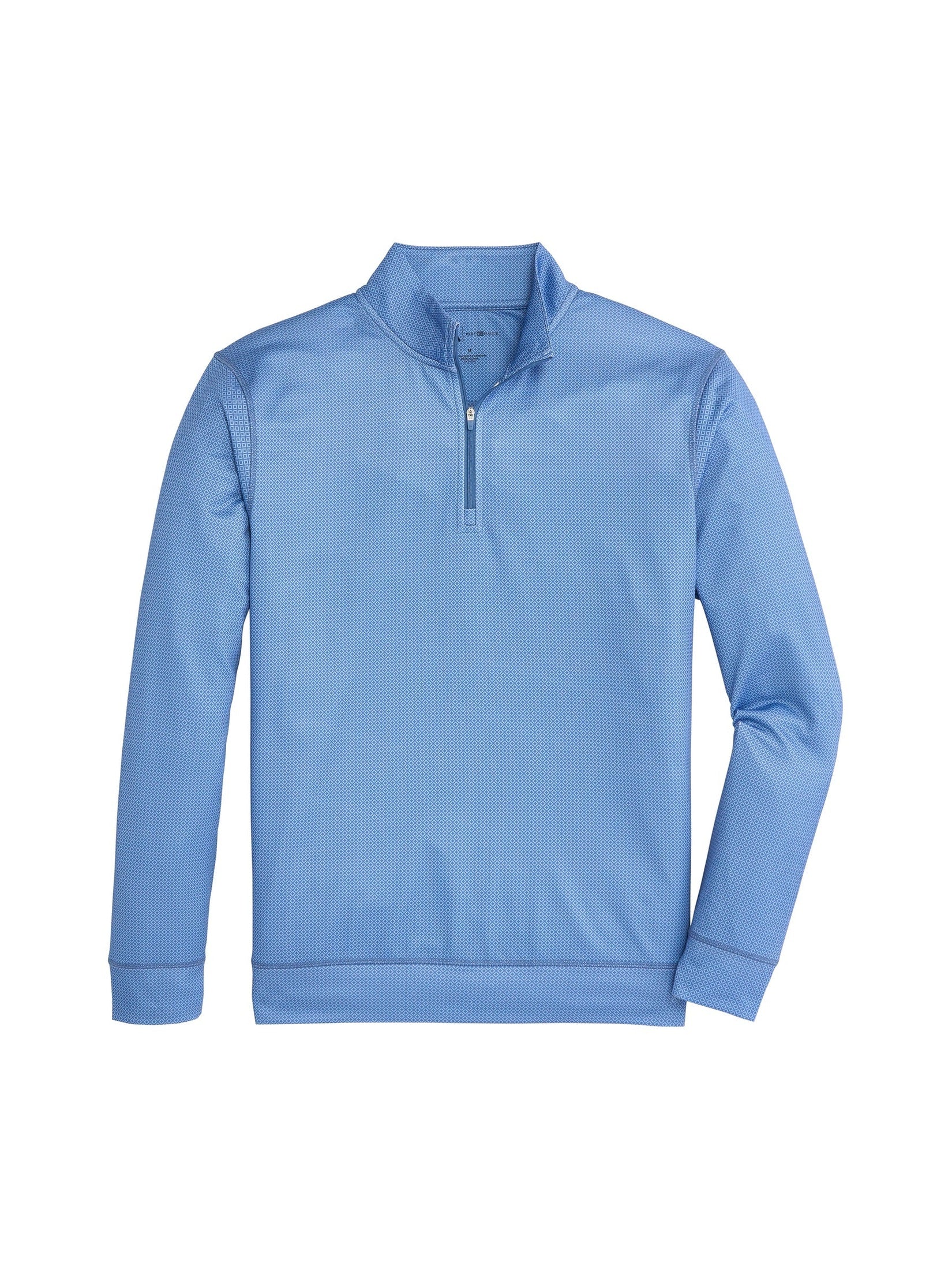
For a performance layer, the Cay Printed Performance 1/4 Zip - Riviera at $135.00 is built from 94% polyester and 6% spandex with UPF protection, which suits days that start cool and turn bright.
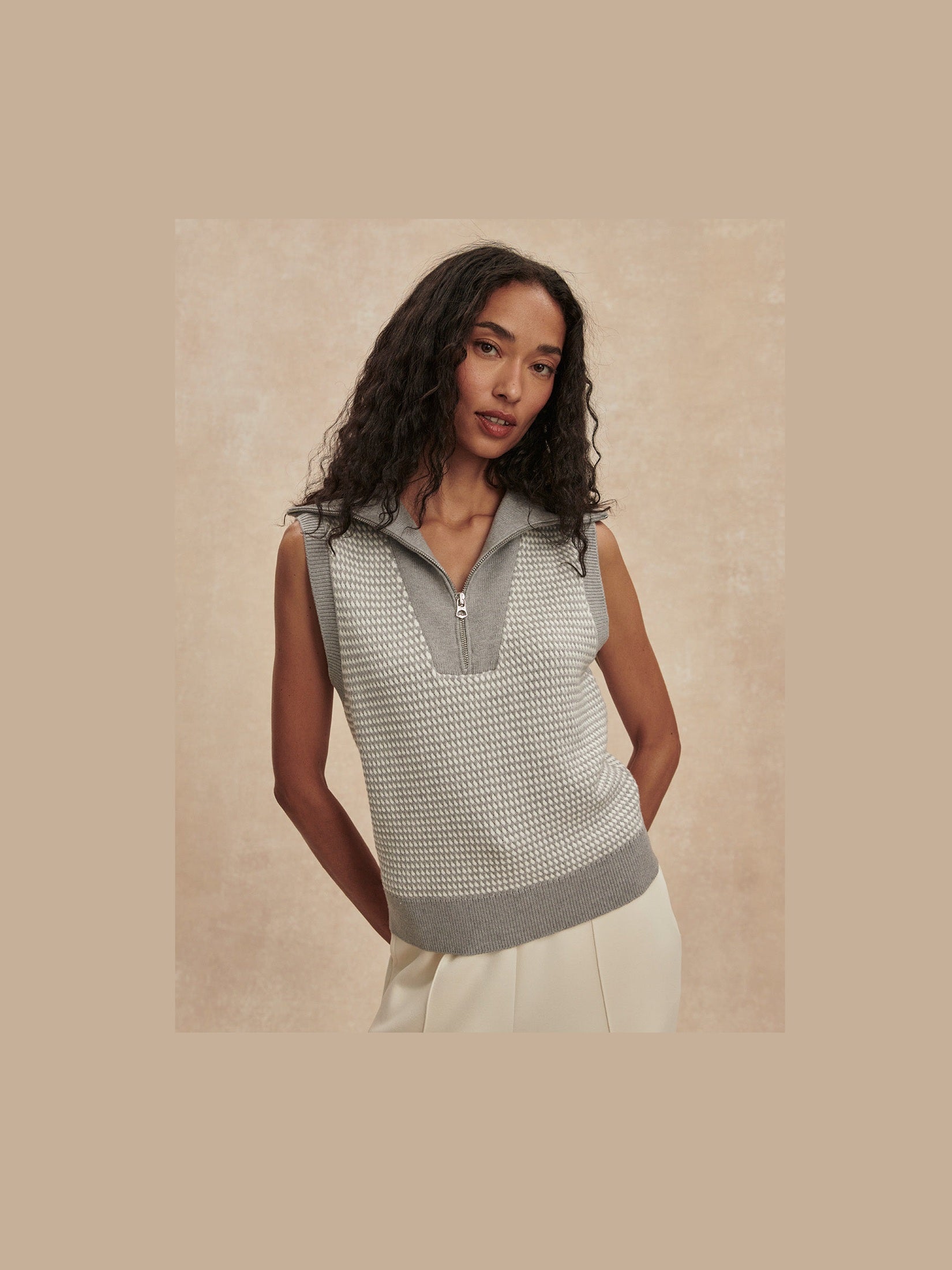
For a knit option, the Peterson Half Zip Knit - Grey Melange/White at $138.00 offers a relaxed fit and a classic colorblock design that pairs with casual and smart-casual looks alike.
Quarter-zips and half-zips are the easiest fall tops to get right: they layer well, adjust for temperature, and look deliberate without effort.
Pants and Denim for Fall: Fit, Fabric and Versatility
Pants set the tone for the rest of the outfit, and fall apparel bottoms need to handle layers over the top, cooler air, and more time outdoors than summer trousers. The right pair depends on your build, the fabric's weight, and what you will actually do in them.
Choosing a Style by Activity
Chinos and cargo styles handle most casual settings and sit well under a jacket. Dark, mid-weight denim works for weekends and dinners. Corduroy adds texture and warmth for the cooler end of the season, and wool-blend trousers look sharp for the office. Match the style to the two or three situations you wear pants most, rather than buying one of each.
Fit Across Body Types
Fit is about proportion more than size. A few checks apply across body types:
- Rise: a mid-rise sits comfortably under a tucked shirt and a knit, while a low rise can expose skin when you reach up and can look short on a longer torso.
- Seat and thigh: if the seat pulls or the thigh bunches, the pair will feel tight over a knit even if the waist fits. Try a relaxed or straight cut instead of a slim one.
- Leg opening: a taper that is too narrow can look awkward above a boot. A straight or slightly tapered hem usually works with both boots and sneakers.
- Length: a hem that breaks once over the shoe looks deliberate. Hems that pool or stop well above the ankle look unplanned.
For bigger or taller builds, a higher rise and a straight leg tend to balance proportions better than a slim cut. For a shorter build, a cropped length or a slightly tapered leg keeps the outfit from looking heavy at the bottom.
Fabric Weight and Warmth
Heavier denim and cotton twill hold more warmth and resist wind better than lightweight chinos, so they suit the cooler part of the season. Lightweight fabrics breathe better when you walk or warm up. Stretch blends move with you and recover their shape, but they can lose structure faster than 100% cotton, so check the knee and seat after a few wears.
Checking Fit Seated
Check how a pair sits when you sit down, not only when you stand. Sit for a minute, cross a leg, and look for pulling at the seat, the crotch, and the waistband. A pair that feels right standing but digs in when seated will feel worse by the end of a dinner or a long drive.
Watch out: buying for trend
A very slim or very wide cut can look current for a season and then age quickly. A straight or relaxed fit usually lasts longer and works with more of your existing layers.
Fall Outfits for Men: Casual Combinations by Occasion
Match your fall apparel outfit to the setting rather than to a fixed formula.
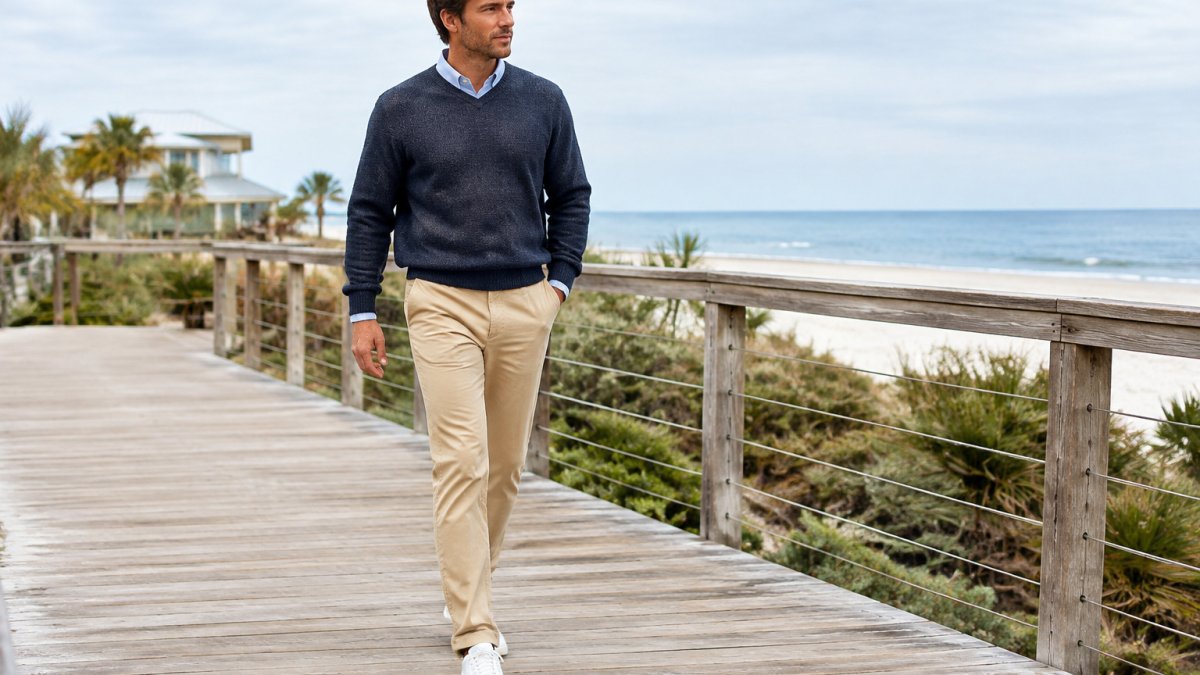
- Everyday errands: a tee, a half-zip knit, dark jeans and clean sneakers.
- Dinner out: a button-down shirt, a lightweight jacket, chinos and loafers.
- Outdoor weekends: a performance quarter-zip over a fitted tee, cargo pants and boots.
!A man in a layered fall outfit of a textured knit over a button-down shirt and chinos, walking on a sunlit coastal boardwalk
A capsule approach helps. Pick three tops, two bottoms and two layers that all work together, and you can build a week of outfits from them.
Building a Fall Wardrobe: Fabrics, Fit and Men's Fall Apparel Brands
A fall apparel wardrobe works when the pieces share a palette and a fabric logic. Stick to a neutral base of navy, grey, olive and cream, and add one or two accent colors. Mix textures deliberately: a knit with a cotton shirt and a denim jacket feels intentional.
Look for fabrics that match your climate and your activity level. Cotton and wool-blend knits suit most fall days, and performance fabrics earn their place if you spend time outdoors. For brand comparisons and guides on building a complete seasonal wardrobe, see A Practical Guide to Building a Boy's Fall Clothing Wardrobe and Rhone Athleisure Wear Review: Is It Worth the Price?.
Choosing Your Fall Pieces at Palms 30A
Start with two or three anchor fall apparel pieces you will wear every week, then add layers that fit the weather where you live. Pieces such as the Chicago Double Layer Shirt, the Cay Printed Performance 1/4 Zip and the Peterson Half Zip Knit are available in our men's collection. Browse the full men's collection at palms30a.com and pick the pieces that fit how you actually dress.
Frequently Asked Questions
What should men wear in the fall?
Men typically wear layered outfits in the fall: a base shirt or tee, a midweight knit or quarter-zip, and an outer layer such as a denim jacket, bomber or wool coat. Textured shirts, sweaters, versatile pants and earthy tones are common choices in current fall menswear collections. Layering lets you adjust as temperatures change through the day, which matters most in the shoulder seasons when mornings and evenings run cool and afternoons stay mild.
How do men layer clothes for fall?
Start with a lightweight base such as a tee or long-sleeve shirt, add a mid layer like a sweater, half-zip knit or flannel-weight shirt, and finish with an outer layer such as a jacket or coat. Keep the fit close enough that the layers sit neatly under one another. Choose one or two layers that can be removed easily if the day warms up, and keep colors within a consistent earthy palette so the combination looks deliberate.
What tops should men wear in fall?
The most useful fall tops are textured button-downs, Western-style shirts, crew and V-neck sweaters, quarter-zip pullovers and lightweight knits. Relaxed-fit knits and soft cotton shirts are a practical choice. Pick tops in earthy tones or heathered colors that pair easily with jeans, chinos and cargo pants.
What are the essential pieces in a men's fall wardrobe?
A core fall wardrobe usually includes a denim or bomber jacket, a midweight sweater or half-zip knit, a few long-sleeve shirts, two or three versatile pants such as chinos or dark jeans, and one outer layer suited to cooler weather. Build around pieces that mix easily with what you already own.
