

Paddle Cover Guide: Protection & Style for Pickleball
Table of Contents
- Why Your Paddle Needs a Cover
- Materials That Protect: Neoprene, Synthetic Rubber, and Beyond
- Pickleball Gear Maintenance: Keeping Your Cover and Paddle in Top Shape
- Neoprene Paddle Sleeve vs. Protective Shell Covers
- Fitment and Compatibility: Standard and Elongated Paddles
- Design and Durability: Finding a Cover That Lasts
- How to Choose the Right Paddle Cover
- Conclusion
- Frequently Asked Questions
Last Updated: September 20, 2026
Why Your Paddle Needs a Cover
Your pickleball paddle is an investment vulnerable to scratches, dings, moisture, and UV exposure that degrade performance. A quality paddle cover shields your equipment and extends its lifespan.
A paddle cover extends equipment longevity while keeping your gear organized and portable, whether storing at home, transporting to the court, or protecting during off-season months.
The Palms 30A Laura Park paddle covers combine practical protection with lifestyle design. They fit most standard paddles and feature full-length zipper closures for easy access, back pockets for storing essentials, and attachment hooks for portability.

Materials That Protect: Neoprene, Synthetic Rubber, and Beyond
Material composition determines how well a cover protects against impacts, moisture, and environmental damage while preserving long-term paddle performance.
Neoprene is a synthetic rubber that absorbs impact, resists moisture, and remains lightweight. Its closed-cell structure prevents moisture from wicking into the paddle face, which is critical because trapped moisture accelerates edge guard separation, where the rubber edge guard peels away from the paddle core, eventually compromising edge protection and playability.
Quilted materials create air pockets that absorb shock and distribute pressure evenly across the paddle surface, reducing the risk of surface delamination where the top veneer separates from the core.
Synthetic rubber compounds resist scratches and maintain integrity through repeated use and sunlight exposure. Their abrasion resistance prevents surface grit, dirt, sand, or court debris, from embedding into the paddle's playing surface, which would roughen it and reduce spin and control.
Pickleball Gear Maintenance: Keeping Your Cover and Paddle in Top Shape
Cleaning your paddle cover is straightforward: wash in cold water and air dry. Avoid high heat, which damages synthetic materials. Regular washing removes dirt, sweat, and moisture.
Inspect your paddle regularly for cracks, edge damage, or delamination. A good paddle cover prevents these issues by reducing exposure to moisture and UV light.
Storage conditions matter: keep your paddle and cover in a cool, dry place away from direct sunlight. Ensure the cover is completely dry before storing to prevent mold or mildew.
Moisture control is critical for equipment longevity. After playing in humid conditions or on wet courts, allow your paddle to dry completely before placing it in the cover. Trapping moisture inside accelerates deterioration of both the paddle and the protective material.
Neoprene Paddle Sleeve vs. Protective Shell Covers
Understanding the difference between neoprene sleeves and hard protective shells helps you choose the right cover for your needs.
A neoprene paddle sleeve is a soft, flexible cover that slides over your paddle like a sock. Neoprene sleeves are lightweight and packable, making them ideal for players who travel frequently or carry multiple paddles. The neoprene material provides cushioning against minor impacts and protects against moisture and scratches. However, neoprene sleeves offer less protection against significant impacts or crushing forces.
Protective shell covers feature a rigid or semi-rigid outer layer that surrounds the paddle completely. These covers provide superior impact protection and are better suited for storage or transport in crowded bags. The harder exterior prevents the paddle from being crushed by other equipment or items pressing against it.
For most recreational players, a well-designed quilted cover strikes the right balance. It provides adequate protection for daily use and storage without the bulk or weight of a hard shell. The Palms 30A Laura Park covers use quilted construction that combines the flexibility of a sleeve with meaningful impact protection.

Fitment and Compatibility: Standard and Elongated Paddles
Paddle dimensions vary, and your cover must fit properly to provide effective protection. But fitment extends beyond just the paddle itself, you also need to consider whether your cover will fit inside the gear bag or backpack you already own.
Standard paddles typically measure around 8 inches wide and 15-16 inches long. Most paddle covers on the market are designed for standard sizing. The Palms 30A Laura Park covers fit most standard paddles with dimensions of 9 inches wide by 12 inches tall, providing a snug fit that prevents the paddle from shifting inside the cover during transport.

Elongated paddles are slightly larger and require covers specifically designed for their dimensions. If you use an elongated paddle, verify that your cover accommodates the extra length and width. A cover that's too small restricts access and may not protect the entire paddle surface.
Bag and backpack compatibility is often overlooked but critical for daily use. A paddle cover that's too bulky won't fit inside a standard equipment bag, forcing you to carry it separately or leave your paddle unprotected. When evaluating a cover, measure not just the paddle but also the interior dimensions of your existing gear bag or backpack. Most quality paddle covers are designed to fit inside a standard pickleball equipment bag (typically 18-24 inches long and 10-12 inches wide), but some thicker covers may exceed those dimensions. If you carry your paddle in a backpack rather than a dedicated sports bag, check the main compartment width, many backpacks are only 10-11 inches wide, which can be tight for a 9-inch-wide cover.
Proper fitment matters for protection and consistency. A cover that's too loose allows the paddle to move around, potentially causing edge damage or the paddle to shift and create pressure points. A cover that's too tight can be difficult to insert and remove, and may stress the zipper or fabric. A cover that won't fit in your existing bag creates friction, you're less likely to use it if it requires special handling.
When selecting a cover, check three dimensions: (1) your paddle's measurements, (2) the cover's stated dimensions, and (3) your bag's interior width and length. The Palms 30A collection clearly states dimensions so you can verify compatibility before purchasing. Many quality covers can accommodate two standard paddles in one cover, offering flexibility for doubles players or those who want to transport multiple paddles together, but verify that the doubled-up cover will still fit in your bag. Ensuring your equipment fits securely is particularly important when upgrading to the best pickleball paddles, as proper storage prevents unnecessary wear on the paddle face and edge guard.
Design and Durability: Finding a Cover That Lasts
A paddle cover that looks good motivates you to use it consistently. Design and aesthetics matter because they affect whether protection becomes a habit or an afterthought.
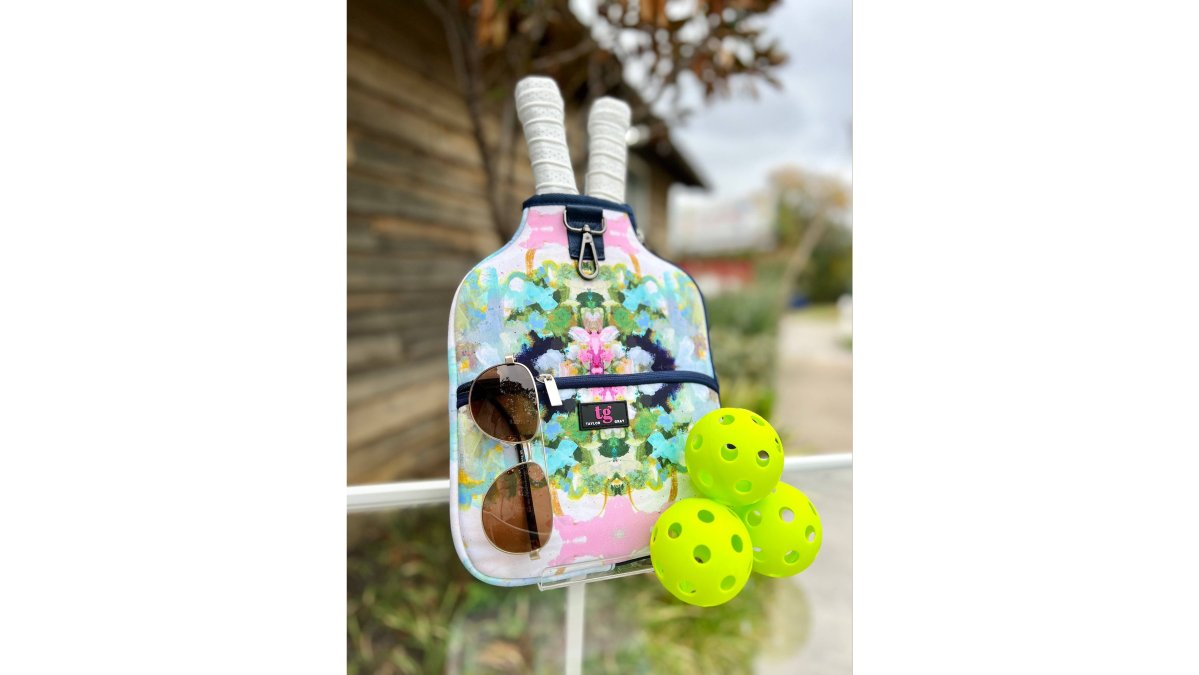
The Palms 30A Laura Park collection features distinctive, curated designs that reflect personal style. Options like Nantucket Bloom, Pink Paradise, Brooks Avenue, Giverny, and Under the Sea transform functional gear into lifestyle accessories. When your cover is something you actually want to display or carry, you're more likely to protect your paddle consistently.
Durability comes from material quality and construction. Look for covers with reinforced seams, quality zippers that run smoothly, and materials that resist fading and cracking. The zipper is particularly important, it should glide easily and handle repeated opening and closing without jamming or separating.
Edge guards protect the paddle's edges during transport. Many quality covers include reinforced edges or binding that prevents the paddle edges from rubbing directly against the cover material or external surfaces.
The back zipper pocket featured in the Palms 30A covers serves a practical purpose beyond storage. It distributes weight more evenly when you're carrying the cover, and it keeps items like sunglasses or keys from pressing against the paddle itself.
A cover that combines thoughtful design with genuine durability becomes something you reach for automatically.
How to Choose the Right Paddle Cover
Selecting the right cover requires considering several practical factors beyond just appearance.
| Selection Criteria | What to Look For | Why It Matters |
|---|---|---|
| Fitment | Dimensions match your paddle size | Prevents shifting and damage during transport |
| Zipper Quality | Smooth, full-length operation | Enables easy access and lasts through repeated use |
| Padding Material | Quilted or neoprene construction | Absorbs impact and protects against dings |
| Outer Material | Synthetic rubber or durable fabric | Resists scratches, moisture, and UV damage |
| Portability | Attachment hooks or carrying loops | Makes transport convenient and consistent |
| Storage Pockets | Back zipper pocket for accessories | Keeps essentials organized and protected |
| Design | Aesthetic appeal and lifestyle fit | Motivates consistent use and protection |
Conclusion
A quality paddle cover is one of the simplest ways to extend your equipment's lifespan and maintain consistent performance. By protecting your paddle from scratches, moisture, UV exposure, and impact damage, you're investing in equipment longevity that pays off over seasons of play.
Frequently Asked Questions
Do you really need a paddle cover for pickleball?
Yes, a paddle cover protects your equipment from nicks, dings, and scratches that damage surface integrity over time. Even minor damage can affect paddle performance and longevity. Covers also shield your paddle from moisture and UV exposure during storage and transport, extending equipment life significantly.
What's the difference between a neoprene paddle sleeve and a protective shell cover?
A neoprene paddle sleeve offers lightweight cushioning and moisture-wicking properties, ideal for players who prioritize portability. A protective shell cover provides harder edge guards and impact protection against more serious damage. Shell covers typically offer better scratch-resistant and waterproof qualities, while neoprene sleeves are more flexible and compact for travel.
Will a paddle cover fit all paddle shapes and sizes?
Most standard paddle covers fit typical pickleball paddles, but elongated paddles may require specialized covers. Check dimensions before purchasing, standard covers typically measure 9 inches wide by 12 inches tall. Some covers accommodate two paddles, offering flexibility for doubles players or those carrying backup equipment.
How do I clean and maintain my pickleball paddle cover?
Most quality covers are washable on cold water and should be air dried to preserve material integrity. Regular cleaning removes dirt and moisture. Store covers in a dry environment away from direct sunlight to prevent fading and material breakdown, ensuring long-term durability.
Protecting your paddle isn't just about preventing damage, it's about making equipment care a natural part of your routine. The right cover combines genuine protection with design that makes you want to use it. Palms 30A's Laura Park collaboration delivers both, with thoughtfully designed covers that keep your paddle safe while adding style to your pickleball gear. View all paddle covers and discover the design that fits your game.