
7 Sustainable Fashion Brands for Families to Know
Last Updated: November 1, 2026
Quick Summary
The best sustainable fashion brands for families cover every age in one place, publish who makes their clothing, and use durable natural fibers like bamboo, linen, and long-staple cotton. Prioritize pieces that survive a cold wash and a second child, and fill fast-rotation items with secondhand.
- Judge a family brand by fiber content, wash instructions, and whether seams survive a second child.
- Palms 30A dresses women, men, and children in one coastal collection, with bamboo infant footies at $39.00.
- Use a 3-2-1 palette: three neutrals, two accents, and one print family across all ages.
- Buy secondhand for fast-rotation play clothes, and buy new where fit and UPF 50+ sun protection matter.
- Plan one outfit per day plus two alternates per person, then wash one mid-trip load in cold water.
Table of Contents
- What Makes a Family Clothing Brand Actually Sustainable
- 1. Palms 30A: Coastal Pieces for Every Age Under One Roof
- 2. Sustainable Clothing Brands for Kids That Survive Real Play
- 3. Ethical Clothing Brands for Families: What to Look For
-
4. Building a Capsule Wardrobe for Families
- Step 1: Build the palette with a simple framework
- Step 2: Set quantities per person
- Step 3: Layer for the season, not just the beach
- Step 4: Plan by occasion and setting
- Step 5: Fit the capsule to every age and body
- Step 6: Add accessories, footwear, and sun protection
- Step 7: Pack and rewear deliberately
- 5. Secondhand Clothing for Families: Where It Fits
- 6. Matching Family Outfits Without the Matching
- Shop the Family Set at Palms 30A
- Frequently Asked Questions
What Makes a Family Clothing Brand Actually Sustainable
The U.S. sustainable clothing market was estimated at USD 8.6 billion in 2025, with projected growth of 15.7% annually through 2035, according to Global Market Insights' sustainable clothing market estimate. That growth explains why so many labels now call themselves sustainable fashion brands for families. Fewer can prove it. At Palms 30A, we judge a family brand by what it will not tell you: the fiber content, the wash instructions, and whether the seams survive a second child.
Sustainable fashion is clothing made with materials and processes that reduce environmental harm while remaining durable enough to pass between wearers. For families, durability matters as much as fiber origin: a garment worn by three children offsets far more than one worn once.
Fabric First: Bamboo, Linen, and Cotton That Hold Up
Fabric is the first filter. Bamboo, linen, and long-staple cotton breathe well and soften with washing, which is why coastal style leans on them. Ask what the fabric is blended with, because a small percentage of spandex or polyester often decides whether a piece survives real play.
The Questions to Ask Before You Buy
Four questions separate claims from practice:
- What percentage of the garment is the sustainable fiber?
- Can it be machine washed cold and tumble dried low?
- Does the brand publish who makes the item?
Parents weighing kids' clothing quality against a brand's claims can find deeper guidance in our guide to choosing high quality clothing for kids.
1. Palms 30A: Coastal Pieces for Every Age Under One Roof
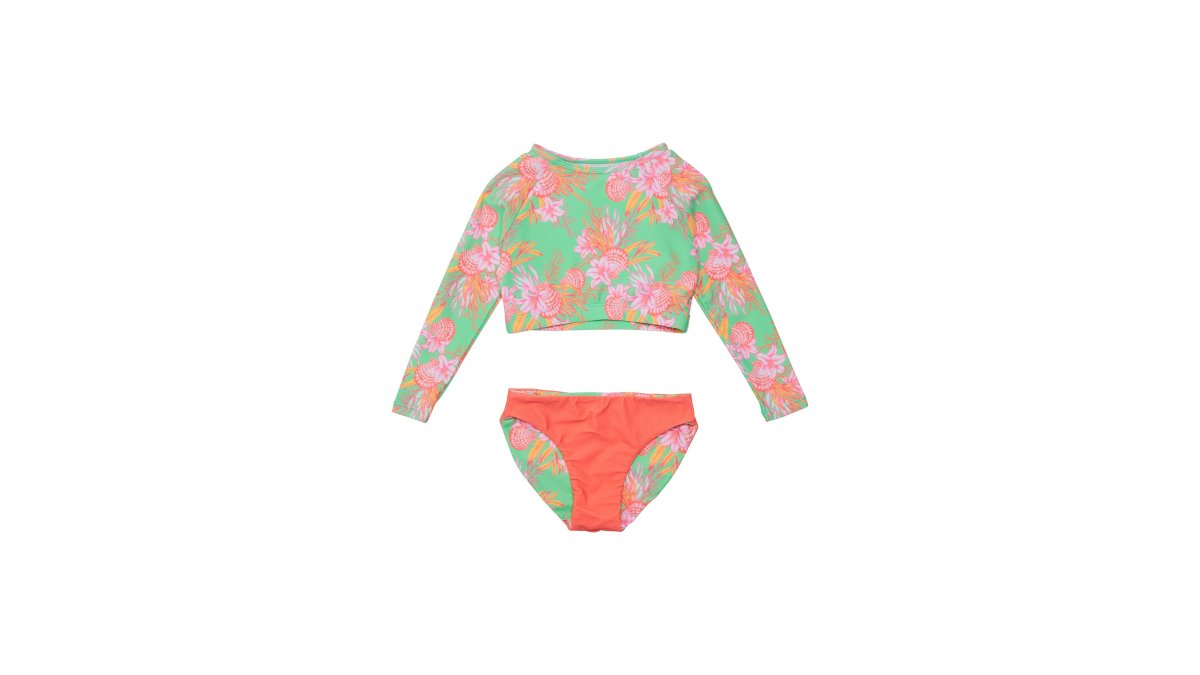
Our first pick is Palms 30A because the collection covers women, men, and children in one place, which is rare among sustainable fashion brands for families. The infant pieces use bamboo fabric: the Dancing Swans Ruffle Footie and Beach Days Zipper Footie both run $39.00. The Coastal Shells Sustainable LS Rash Set is listed at $58.00.


Best for: families who want coordinated coastal pieces across every age. Skip if: you need technical outerwear.
2. Sustainable Clothing Brands for Kids That Survive Real Play
Kids' clothing fails at the knees, the cuffs, and the zipper. A family roundup from My Green Closet's family brand list names tentree, PACT, and Patagonia among brands offering clothing for multiple age groups, and also points readers toward secondhand. The test is simpler than the label: reinforced knees, generous cuffs, and fabric that tolerates a cold wash.
3. Ethical Clothing Brands for Families: What to Look For
Ethical clothing brands for families publish their supply chain. Look for named factories, fiber certifications, and honest care labels. A ScienceDirect study of design and sustainability across 158 fashion brands found sustainability practices vary widely across brands, which means the label alone tells you little. Ask who made the garment and where. If the answer is vague, the claim usually is too.
4. Building a Capsule Wardrobe for Families
A capsule wardrobe for families is a small set of interchangeable pieces in one palette that covers most days. The goal is fewer decisions on a vacation morning when everyone is hungry and the tide is already going out.
Step 1: Build the palette with a simple framework
Use a 3-2-1 method: three neutrals, two accents, one print family.
- Neutrals (3): white, sand, oyster. These carry the bulk of the wardrobe and mix with everything.
- Accents (2): soft blue and rust, or sage and clay. Two is enough; a third usually sits unworn.
- Print family (1): pick one motif, stripes, shells, or small florals, and repeat it across ages so the family reads as coordinated without matching.
A common pattern is to assign the print to one or two people and keep the rest in solids, which keeps a group photo from looking like a uniform.
Step 2: Set quantities per person
| Piece | Quantity per person | Why it earns a spot |
|---|---|---|
| Neutral tee or top | 3 | Mixes with every bottom |
| Linen or cotton short | 2 | Breathable, photo-ready |
| Flowy dress or romper | 1 | Covers dinner and photos |
| Lightweight layer | 1 | Handles evening breeze |
| Swim layer | 1 | Beach days and pool afternoons |
| Closed-toe shoe | 1 | Boardwalks, trails, and dinners |
Six tops and four bottoms per person is a workable starting point for a week-long trip. Adjust up for toddlers, who generate laundry faster than anyone else in the family.
Step 3: Layer for the season, not just the beach
A capsule that only works in July is not a capsule. Build the same palette in three weights:
- Summer: linen and cotton voile, short sleeves, sandals, wide-brim hats.
- Shoulder season: add a cotton cardigan or light denim jacket in the same neutral family. A long-sleeve tee in oyster layers under a summer dress without breaking the palette.
- Cooler months: swap the linen short for a cotton twill pant and add a merino or heavyweight cotton knit. Coastal evenings cool off fast even in spring and fall.
A useful rule: every person should own at least one layer that can go over a summer outfit, extending the capsule by roughly two seasons.
Step 4: Plan by occasion and setting
One capsule should stretch across the trip's actual events. A practical split:
- Family photos: solids and one print, matte fabrics, no large logos.
- Casual beach day: quick-dry shorts, rash guards, and a hat. Save the linen for later.
- Coastal dinner: the flowy dress or a button-down with the twill short. Add the closed-toe shoe.
Step 5: Fit the capsule to every age and body
The same palette works across sizes and needs if you plan for it:
- Toddlers: prioritize pull-on bottoms and zip or snap closures; skip buttons.
- Teens: let them pick their own accent color from the approved two. Buy-in matters more than perfect coordination.
- Plus sizes: confirm the brand cuts the same fabric in extended sizes before committing to a palette.
Step 6: Add accessories, footwear, and sun protection
Accessories do more coordination work than clothing in most family photos. Keep one shared accessory family, straw hats, canvas totes, leather sandals, and let each person wear a different piece from it. For sun protection, look for UPF-rated swim and rash guards, wide-brim hats, and UV-protection sunglasses.
Step 7: Pack and rewear deliberately
A capsule only pays off if it packs light. Plan one outfit per day plus two alternates per person, then wash one mid-trip load in cold water. Rewearing a neutral top twice is the point, not a compromise. Buy only what matches at least two pieces already in the bag, that rule prevents the impulse purchase that never gets worn.
5. Secondhand Clothing for Families: Where It Fits
Secondhand clothing for families belongs in the capsule, not outside it. Children outgrow sizes faster than they wear out fabric, so resale and hand-me-downs supply the fast-rotation pieces: play shorts, everyday tees, school layers. A qualitative case study on sustainable fashion published in Sustainability found that consumer values shape purchasing more than availability does, which matches what we see: families buy secondhand when it is easy, not when it is virtuous.
6. Matching Family Outfits Without the Matching
Coordinated looks beat identical outfits. Pick one palette, then vary the pattern: stripes on one person, floral print on another, solid neutral on a third. The result reads as a family vacation photo rather than a uniform. Soft blues, pastels, and sand photograph well against water and dune grass. For beach family photos, keep fabrics matte and avoid large logos.
The coordination method that actually works
Identical outfits look staged; total mismatch looks accidental. The middle ground is a shared palette with varied pattern scale. A workable method:
- Anchor on one neutral. White or sand on at least two people grounds the group.
- Assign one print per adult and one per child. Different motifs, same color family.
- Vary scale, not color. A large stripe next to a small shell print reads as coordinated; two large prints compete.
- Repeat one accent three times. If soft blue appears on a dress, a hat, and a child's short, the eye ties the group together.
- Leave one person in head-to-toe solid. That person becomes the visual rest.
Coastal palettes that photograph well
- Classic nautical: white, navy, and a touch of red. Works for boardwalks and boat docks.
- Soft coastal: oyster, sand, pale blue, and sage. The most forgiving palette for mixed skin tones and overcast light.
- Warm sunset: clay, rust, cream, and blush. Best for golden-hour photos.
Avoid neon and large graphic logos in group photos; both pull focus and date quickly.
Coordinate by occasion, not just by color
- Family photos: matte fabrics, no shiny synthetics, and shoes that match the palette. Bare feet are fine on sand.
- Resort vacation: linen and cotton in the soft coastal palette, with a cover-up that doubles as a dinner top.
- Casual beach day: rash guards and quick-dry shorts in the same two accents, so the family still reads as a group from a distance.
Coordinate across ages and body types
The palette should flex to fit every family member:
- Toddlers: one print piece plus a solid bottom; avoid long hems near sand and water.
- Teens: give them the accent color and let them choose the cut.
- Plus sizes: confirm the palette exists in extended sizes before you commit.
Finish with accessories, footwear, and sun protection
Accessories carry more coordination weight than most people expect. A shared straw hat family, canvas totes in the same neutral, and leather sandals in one tone tie a group together without a single matching garment.
A recent survey reported by The Sustainable Agency found 94% support for sustainable clothing while 62% still bought fast fashion monthly, so coordination is where intention meets habit.
Shop the Family Set at Palms 30A
Building a coordinated set takes one decision, not ten. Start with the Coastal Shells Sustainable Ruffle Set for the youngest, add the matching Coastal Shells Sustainable Swim Short for a sibling, and finish with the Coastal Shells Sustainable Ls Rash Set for sun coverage. Every piece shares the same coastal palette, so the family coordinates without matching.
Frequently Asked Questions
What are the best sustainable fashion brands for families?
Look for brands that sell across age groups and can tell you what a garment is made from. Palms 30A carries clothing for women, men, and children in one place, including bamboo footie pajamas at $39.00 and a Coastal Shells sustainable rash set at $58.00 with UPF 50+ protection.
How can I tell whether a family clothing brand is sustainable?
Start with the fiber content on the label, then check whether the brand names its materials and care instructions plainly. A garment listing that states exact percentages, such as a 95% bamboo and 5% spandex front with a poly-cotton terrycloth back, tells you more than a page of vague claims.
What fabrics are best for durable, sustainable family clothing?
Bamboo, linen, and cotton come up most often because they breathe and wash well. Bamboo shows up in Palms 30A's infant footie pajamas, and in the burp cloth sets with a bamboo-spandex front and terrycloth back. Buy fewer pieces in these fibers and they will outlast a drawer full of cheap alternatives.
Are matching family outfits a sustainable choice?
They can be, if you coordinate a palette rather than buying identical garments nobody wears twice. Pick three or four colors, such as white, sand, and soft blue, then let each person wear the version that suits them. Choose pieces each family member will wear on their own, not just for one photo.
How can I shop secondhand for family clothing?
Secondhand works best for growing kids and for basics: denim, sweaters, and outerwear that get outgrown before they wear out. Check seams, stretch the cuffs, and confirm the fiber content before buying, since natural fibers hold up better across multiple owners. Reserve new purchases for the pieces that carry the most wear, like swimwear and sleepwear, where fit and sun protection matter. Combining both keeps the cost per wear low and keeps usable clothing in circulation.
The hard part of sustainable fashion for families is not finding brands. It is buying fewer, better pieces that survive hand-me-downs and still look right in photographs. Palms 30A curates clothing for women, men, and children alongside handcrafted jewelry and original art, so one order covers the whole family. Get started with Palms 30A and build a coordinated set that lasts past the next growth spurt.
