

Unique Coastal Home Decor: A 2026 How-To Guide
Table of Contents
- Step 1: Set Your Coastal Color Palette and Materials
- Step 2: Layer Textures Without Clutter
- Step 3: Shop Handcrafted Coastal Home Accessories
- Step 4: Styling Original Art in Beach Homes
- Step 5: Keep Coastal Home Decor Looking Sophisticated, Not Kitschy
- Step 6: Adapt Coastal Decor for Small Spaces and Rentals
- Step 7: Maintain and Care for Coastal Materials
- Conclusion
- Frequently Asked Questions
Last Updated: September 16, 2026
Step 1: Set Your Coastal Color Palette and Materials
Choosing unique home decor for coastal homes starts with two decisions: the color palette and the materials. Get those right and everything else falls into place. Get them wrong and no amount of styling will fix it.
Coastal home decor is a design approach that draws color, texture, and material cues from the shoreline while keeping interiors calm and livable. This guide from Palms 30A walks through seven steps, from palette to maintenance, that separate a styled seaside retreat from a theme-park beach house.
Start with a neutral base: white, sand, driftwood gray, or warm cream.
Choosing Neutrals, Navy, and Turquoise Accents
The 60-30-10 rule keeps a coastal palette from tipping into chaos. Roughly 60 percent of the room should be your neutral, 30 percent a secondary tone like whitewashed wood or linen, and 10 percent a bold accent such as navy or turquoise.
- Neutrals: white, cream, sand, oyster, pale gray
- Secondary tones: washed blue, seafoam, warm taupe
- Accents: navy, turquoise, sea glass green
Natural Fibers and Textures That Hold Up
Natural fibers give a coastal room its tactile character. Linen, cotton, sisal, jute, rattan, and wicker all fit, but they do not age the same way. Linen and cotton handle upholstery well and soften with washing. Sisal and jute work best on floors and low-traffic walls. Rattan and wicker suit furniture frames and lighting.
Step 2: Layer Textures Without Clutter
Watch the line between layered and busy. If every surface holds three objects, the room reads as cluttered. Leave at least one surface in each room nearly bare.
Step 3: Shop Handcrafted Coastal Home Accessories
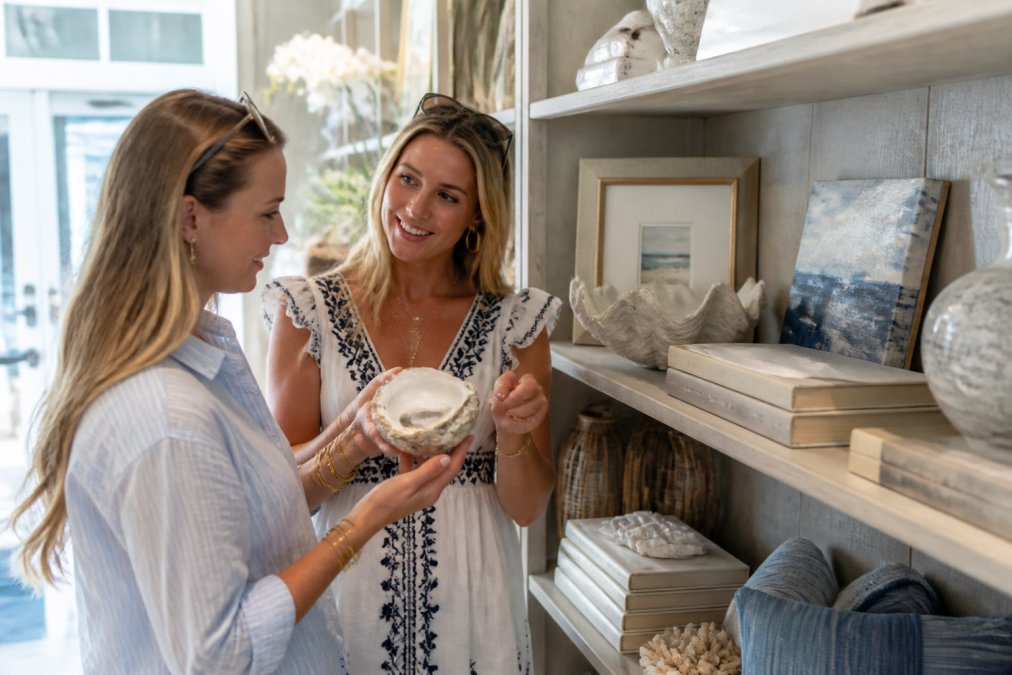
Handcrafted coastal home accessories carry the character that mass-produced decor cannot. A hand-painted oyster shell, a small original painting, or a custom-designed piece tells a story that a big-box print never will. But "handcrafted" is an unregulated marketing word, so the real work is knowing how to tell a genuinely artisan piece from a factory item with a rustic finish, and how to source it without contributing to the environmental damage that coastal materials often carry.
How to Vet a Maker Before You Buy
Ask four questions before buying any handcrafted item:
- Is the maker identifiable? A named artist, studio, or workshop signals authenticity. "Designed in" language with no maker named usually means offshore production.
- Is the material traceable? Ask where the wood, shell, or fiber came from. A maker who can name the source, a specific reclaimed-wood supplier, a farmed-shell operation, a regional weaver, is almost always the real thing.
- Is the piece one of a kind or reproduced? Both are fine, but know which you are buying. A reproduced design should be priced like one.
- Does the material suit the room? Acacia wood and shell pieces belong in dry, low-humidity spots. A wooden serving tray in acacia wood, for example, works as both a functional piece and a display surface, but natural wood varies in color and texture, and shell or wood pieces generally need hand washing rather than a dishwasher.
The Sustainability Question Most Guides Skip
Coastal decor has an environmental blind spot. Seagrass, jute, and sisal are marketed as natural, but conventional harvesting can strip coastal habitats, and reclaimed wood is sometimes neither reclaimed nor responsibly sourced. A few practical filters:

- Favor farmed or reclaimed over wild-harvested. Farmed oyster and abalone shell, reclaimed barn wood, and recycled glass avoid the habitat cost of wild sourcing.
- Look for third-party certification. The Forest Stewardship Council (FSC) certifies responsibly managed wood; Global Organic Textile Standard (GOTS) covers organic cotton and linen. These are the same labels used across the furniture industry, and they apply here.
- Buy less, buy better. One well-made, traceable piece outlasts five novelty items and keeps the disposable decor cycle out of the landfill.
- Ask about finishes. Low-VOC and water-based finishes matter in small, humid rooms where off-gassing lingers.
Step 4: Styling Original Art in Beach Homes
Styling original art in beach homes comes down to placement, scale, and framing. Hang art at eye level, roughly 57 to 60 inches from the floor to the center of the piece. Scale the artwork to the wall, not the furniture beneath it.
Placement, Scale, and Frames That Fit the Space
A few rules that hold up:
- One large piece beats four small ones on a wide wall.
- Group small pieces in odd numbers, tight enough to read as one unit.
- Choose frames in whitewashed wood, natural oak, or thin black metal. Skip ornate gold in a coastal room.
Step 5: Keep Coastal Home Decor Looking Sophisticated, Not Kitschy
Sophisticated coastal decor avoids literal references. The difference between elegant and kitschy is usually restraint, but restraint alone is vague advice. What actually separates the two is whether the objects in the room belong to the place or merely depict it.
The Belonging Test
A useful test: if you removed every obvious beach object, would the room still feel coastal? If yes, you have the balance right. The room should read coastal through light, texture, and material, not through signage.
Where Kitsch Actually Comes From
Kitsch rarely starts as bad taste. It usually comes from three sources, and each has a fix:
- Theme-park sourcing. Buying decor from a beach-town souvenir shop guarantees souvenir aesthetics. Source from makers whose work would look at home in a non-coastal room too.
- Scale mismatch. A single oversized shell sculpture reads as art; a bowl of forty small shells reads as a collection of tchotchkes. Edit to one hero object per surface.
- Literal color matching. Matching every blue in the room to the ocean exactly flattens the palette. Vary the blues, navy, slate, seafoam, faded denim, so the eye has somewhere to rest.
Material Authenticity Beats Motif
The most sophisticated coastal rooms use real coastal materials rather than coastal imagery. Limewashed plaster, whitewashed oak, unglazed ceramic, and raw linen all signal the coast without a single anchor. This is also where sustainability and sophistication overlap: a piece made from reclaimed wood or farmed shell carries the texture and story that a printed motif cannot, and it avoids the environmental cost of wild-harvested materials.
Step 6: Adapt Coastal Decor for Small Spaces and Rentals
Small spaces and rentals need coastal decor that works without a remodel. The constraint is actually an advantage, because fewer objects means each one matters more.
- Use vertical space: floating shelves, wall hooks, a leaning mirror.
- Choose multi-purpose pieces, like a tray that doubles as wall art.
- Favor removable options: peel-and-stick grasscloth, tension rods, freestanding art ledges.
- Keep the palette tight so a small room does not feel fragmented.
Step 7: Maintain and Care for Coastal Materials
Maintenance is where coastal decor either lasts or falls apart. Salt air, humidity, and sun are hard on natural materials.
| Material | Main Risk | Care Routine |
|---|---|---|
| Acacia wood | Cracking, drying | Hand wash, oil occasionally |
| Linen and cotton | Mildew in damp rooms | Wash regularly, dry fully |
| Sisal and jute | Moisture absorption | Vacuum, keep off wet floors |
| Rattan and wicker | Drying, brittleness | Dust, avoid direct sun |
| Shell pieces | Fading, fragility | Dust gently, keep out of sun |
Conclusion
The hardest part of coastal decorating is knowing when to stop. Most rooms fail not from too little decor but from too much, and the discipline to edit is what separates a serene seaside retreat from a themed souvenir shop.
Frequently Asked Questions
How do I make coastal home decor look sophisticated rather than kitschy?
Limit literal beach motifs and lean on texture instead. Choose a neutral palette with navy or turquoise accents, then add natural fibers like linen, sisal, or rattan for depth. Mix in one or two handcrafted pieces, such as a hand-painted oyster shell or an original painting, rather than filling shelves with themed trinkets. Clean lines, whitewashed wood, and a curated few objects read as elegant; rows of identical souvenirs read as kitschy.
What materials hold up best for handcrafted coastal home accessories?
Acacia wood, linen, cotton, and natural fibers like sisal and rattan handle humidity well when cared for properly. Acacia serving pieces, for example, need hand washing only and should be dried immediately. Avoid untreated metals that corrode in salt air. For textiles, organic cotton and linen resist mildew better than heavy synthetic blends. Rotate decorative pieces away from direct window exposure to slow fading and warping over time.
How can I incorporate original art into a coastal design scheme?
Treat original art as the anchor of a wall or shelf, then build around it. Match frame tones to your wood finishes (whitewashed, natural, or distressed) and keep surrounding decor quiet so the piece stands out. Scale matters: a large canvas suits an open living room wall, while small works group well in a gallery arrangement. Coastal subjects like oysters, shells, or shoreline scenes tie the room together without feeling theme-park literal.
What is the 3-5-7 rule in decorating, and does it work for coastal rooms?
The 3-5-7 rule groups objects in odd numbers, typically three, five, or seven, at varying heights to create visual balance. It works well in coastal rooms because grouped shells, candles, and small art pieces look intentional rather than scattered. Vary heights and textures within each group: a tall vase, a medium bowl, and a low tray, for example. Keep each cluster to one color family so the arrangement stays calm and curated.
Coastal decor rewards restraint, and the pieces you choose should earn their place. Palms 30A offers curated clothing, handcrafted jewelry, and original art designed to add warmth and style to your home without tipping into kitsch. Get started with Palms 30A and build a coastal look that feels personal, sophisticated, and built to last.