

What Are the Best Unique Gift Ideas for Family Members?
Last Updated: October 30, 2026
Quick Summary
The best unique gift ideas for family members come from shopping by person instead of by category, noticing what they already reach for and choosing something that fits that habit. Match the gift to their hobbies, shared history, or a gap in their experiences, and let specificity beat price every time.
- Ask one clarifying question and listen for the detail they repeat; that repeated detail is your gift.
- Skip practical items for parents and choose a small indulgence they would not buy themselves.
- Sort the person who has everything by what the gift leaves behind: nothing, a memory, or a skill.
- Age range is the single biggest predictor of whether a game or puzzle gets played.
- Set your budget number first, then shop inside it for one specific person.
Table of Contents
- How to Match a Unique Gift to Each Family Member
- Unique Gifts for Parents Who Have Earned a Little Luxury
- Gifts for Siblings That Feel Personal, Not Generic
- Personalized Gifts for Family That Carry a Story
- Unique Gift Ideas for Family Members Who Have Everything
- Games, Puzzles, and Screen-Free Fun for the Whole Family
- Budget-Friendly Finds Under $35 That Still Feel Special
- Build Your Family Gift List at Palms 30A
- Frequently Asked Questions
How to Match a Unique Gift to Each Family Member
Finding unique gift ideas for family members starts with one shift: stop shopping by category and start shopping by person. The problem is rarely a lack of options, it is a lack of a system. The most thoughtful gifts come from noticing what someone already reaches for, then choosing something that fits that habit rather than replacing it.
Start With What They Already Love
Look at the mug they use every morning, the book on their nightstand, the game that comes out at every gathering. Those small signals tell you more than any wish list.
A common mistake is buying the gift you would want; the second is duplicating what they already own. Ask one clarifying question, then listen for the detail they repeat.
Unique Gifts for Parents Who Have Earned a Little Luxury
Parents are the easiest people to shop for badly and the hardest to shop for well.
For a mother, a keepsake book of reflections on motherhood carries emotional weight without bulk. For more curated picks, see our best artisanal gifts for families.
If you want a broader starting point, our guide on how to find thoughtful gifts for everyone walks through the matching process step by step.
Gifts for Siblings That Feel Personal, Not Generic
Siblings are where generic gifts go to die. You know each other too well for a scented candle to land, but you also have shared history, and that is the raw material for the best gifts.
Three approaches that work:
- Inside-joke items. A small, well-made object that references something only the two of you find funny. It does not need to be expensive to be memorable.
- Hobby-specific picks. A sibling who plays pickleball, puzzles, or hosts game nights has a whole category waiting. Match the hobby, not the personality.
- Something they would buy for themselves but keep putting off. A piece of jewelry, a good throw, a book they mentioned months ago.
Watch out: do not turn a sibling gift into a competition. The moment it becomes about who spent more, the thoughtfulness disappears.
Personalized Gifts for Family That Carry a Story
Personalized gifts for family work because they turn an object into a record. A birthstone, a name, a date, a shared memory: these details make an item specific to one person, which is exactly what a family gift should be.
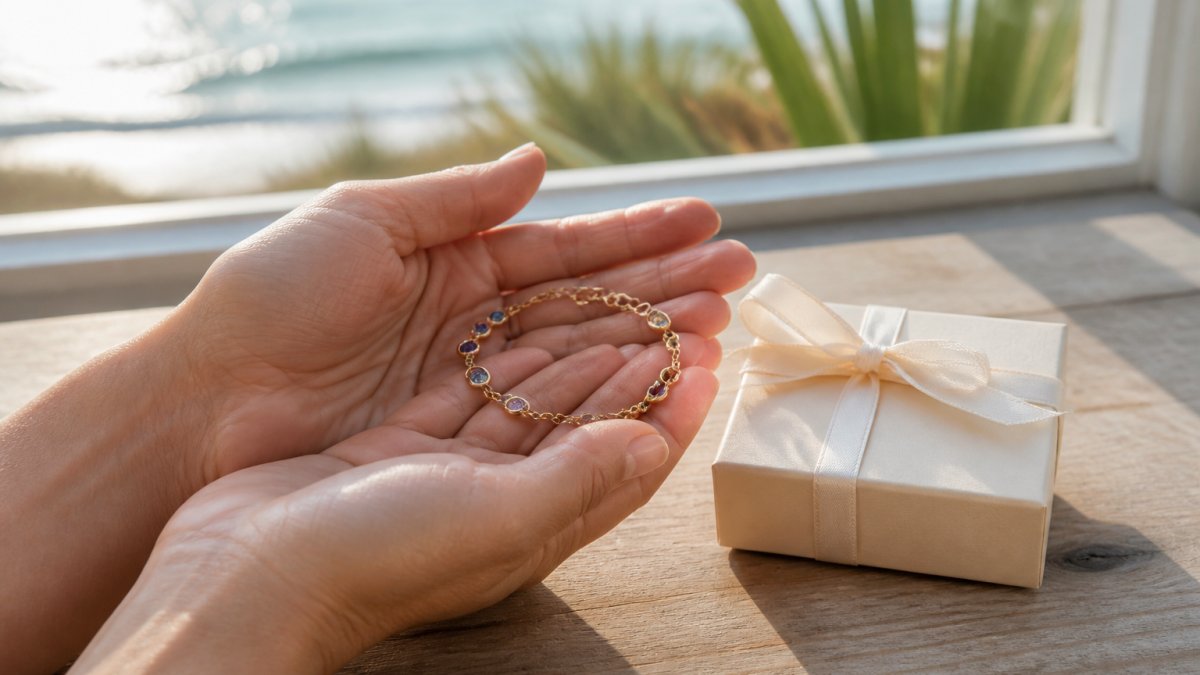
The gold birthstone stacking bracelet is a good example: you choose the birth month, and the piece becomes about one person rather than a general style. A family-themed keepsake like A Little Family does the same job in a different form: it carries a story rather than just a design.
Unique Gift Ideas for Family Members Who Have Everything
The person who has everything is not hard to shop for, they are hard to shop for conventionally. Stop hunting for a gap in their possessions and look for a gap in their experiences, calendar, or pantry.
A useful way to sort this group is by what the gift leaves behind: nothing, a memory, or a skill. Each bucket has a different price ceiling and planning burden, and matching the bucket to the person is most of the work.
Consumables: The Gift That Disappears
Specialty foods, good chocolate, or a coffee subscription all get used and then vanish, for a full household, that disappearance is the feature. Check dietary needs before you buy (nut allergies, gluten, alcohol), and favor a smaller quantity of something excellent over a large box of filler. A $30 box of four really good items lands better than a $60 basket of twelve forgettable ones.
Experiences Under $100: The Memory Bucket
Experience gifts are a good fit for this group. Some ideas for a family member:
Motherhood: 55 Reflections on What It Means to be a Mom →
- A shared meal out. Pick the restaurant they already love but never book, and cover dinner for two. Frame it as a reservation, not cash. A museum membership, a botanical garden pass, a state park annual pass, or a single-day pass to a local attraction. Memberships renew the gift every visit.
The trade-off with experiences is timing. Many are date-specific, so confirm the recipient's calendar before you buy, and check whether the provider allows transfers or refunds. An experience that expires unused is worse than a gift card.
Skills and Hobbies: The Slow-Burn Bucket
For the relative who is curious but never buys for themselves, a starter kit for a hobby they have mentioned can work well. Buy the entry version of a good brand, not the cheap version of a hobby they may not stick with. A $40 well-made tool beats a $15 set that frustrates them on day one.
The Practical Fallback, Framed Well
When nothing fits, a gift card is not a cop-out if you frame it as permission. Pair it with a small, specific object (a nice notebook, a good pen, a bag of their favorite coffee) so the card reads as a nudge rather than a shrug.
A Quick Chooser for the Person Who Has Everything
| If they... | Choose | Typical Budget | Planning Burden |
|---|---|---|---|
| Love food and hosting | Curated consumables or a specialty food box | $25-$75 | Low; check dietary needs |
| Are always busy | A ticketed event or a booked dinner for two | $50-$100 | Medium; confirm dates |
| Have a hobby they never invest in | A starter kit from a good brand | $30-$75 | Low |
| Are hard to read | Gift card plus a small specific object | Flexible | None |
| Dislike clutter | Experience or membership | $40-$100 | Medium |
The pattern across all three buckets is the same: specificity beats price. A $40 experience chosen for one person outperforms a $150 object chosen for no one.
Games, Puzzles, and Screen-Free Fun for the Whole Family
The gifts that get used most in a family household are rarely the most expensive ones, they are the ones that pull people into the same room. Games, puzzles, and shared activities do that better than almost anything else, but the category is wide enough that the wrong pick sits in a closet. Match the gift to the household, not to the shelf.
Match the Gift to the Age Range
Age range is the single biggest predictor of whether a game or puzzle gets played. A few rules of thumb:
- Young children (roughly ages 3-7): Large-piece puzzles, matching games, and cooperative games where everyone wins or loses together. Small parts are a choking hazard, so check the age rating on the box (Small Parts and Choking Hazard Labeling FAQs).
- Mixed ages (roughly 8-12 plus adults): Party games with simple rules and short rounds, so a younger player can compete without a handicap. Trivia games with tiered questions do the same job.
- Teens and adults: Strategy games, deduction games, and longer puzzles. A 1000-piece puzzle works well here because it can be worked on across several evenings.
Match the Gift to the Household Size
A game for two does not work for a family of six, and a party game for eight falls flat in a household of three. Before you buy, count the people who will actually sit down together:
- Households of two or three: Two-player strategy games, cooperative games, and 500-piece puzzles.
- Households of four to six: Classic family games, party games, and 1000-piece puzzles.
- Large or multigenerational households: Party games that scale to eight or more, trivia, and activities that let non-players watch or help.
Accessibility and Screen-Free Considerations
Screen-free does not automatically mean accessible. If anyone in the household has low vision, limited hand mobility, or reading difficulty, favor large-print puzzle books, games with tactile pieces, and activities that do not depend on fast reading.
A 1000-piece puzzle gives a family an evening together without a screen. A compact card tin keeps kids occupied on a plane. A small puzzle cube works as a desk accessory.
| Gift Type | Best For | Budget Range | Planning Needed |
|---|---|---|---|
| Personalized jewelry | Milestone birthdays | $15-$35 | Confirm the detail before ordering |
| Keepsake books | Parents, new grandparents | Around $16 | None |
| Puzzles and games | Whole family, rainy days | $10-$36 | None |
| Consumable food gifts | The person who has everything | Varies | Check dietary needs |
| Gift card | Anyone, last minute | Flexible | None |
Budget-Friendly Finds Under $35 That Still Feel Special
A tight budget does not mean a forgettable gift. It means the thought has to carry more of the weight, and that is usually a good thing. Some of the most-used gifts in a family home cost less than a dinner out.
- A small keepsake book for a parent or a new grandparent, around $16.
- A birthstone bracelet at $15, personalized to one person.
- A card tin of activities at $10 for a child who needs something to do.
The pattern here is specificity. A $12 gift chosen for one person beats a $60 gift chosen for no one. Set your number first, then shop inside it.
Build Your Family Gift List at Palms 30A
The hardest part of family gifting is not the shopping. It is holding a dozen people in your head at once while staying inside a budget and a calendar.
We built our collection around exactly this kind of shopping: curated clothing for women, men, and children, home accessories, handcrafted jewelry, and original art, all chosen to work as gifts rather than filler.
Frequently Asked Questions
What are thoughtful gifts for family members who have everything?
The best answer is usually something consumable or experiential rather than another object. A 1000-piece Let's Play Mahjong puzzle at $36.00 creates an evening together and then stores flat. A lavender-scented weighted plush at $19.98 delivers daily comfort. A hand-painted pickleball ornament at $11.00 marks a shared hobby. These gifts work because they attach to a routine or interest the person already has, so they add enjoyment without adding clutter to a home that is already full.
How do you choose a unique gift for each family member?
Match the gift to a specific habit, not a general category. If your brother plays pickleball every Saturday, a pickleball-themed ornament or a game for his table makes sense. If your mother reads before bed, a keepsake book fits. Personalized gifts for family work the same way: a birthstone bracelet in her actual birth month beats a generic piece of jewelry. Write down one thing each person does weekly, then pick the item that shows up in that routine.
What are good gifts for a family to enjoy together?
Look for items that need more than one person. The Let's Play Mahjong 1000-piece puzzle ($36.00, recommended for ages 13 and up) turns an evening into a shared project, and the finished 24-inch square includes gold foil detailing worth displaying. The On-the-Go Amusements tin ($10.00) holds 50 screen-free activity cards for travel days. A dumpling advent calendar ($34.95) builds daily anticipation through December for younger kids. Each one gives the family something to do, not just something to own.
Are personalized gifts for family worth the extra thought?
They tend to get kept. A Gold Birthstone Stacking Bracelet at $15.00 lets you choose the recipient's birth month, so the piece references a specific date rather than a general style. The Motherhood keepsake book at $15.99 works the same way for a new mom or a grandmother, pairing watercolor illustrations with quotations about parenting.
What is a good unique gift idea under $20?
Several strong options sit under $20. The Goat Warmies Junior weighted plush is $19.98 and can be microwaved for warmth or chilled for cooling, scented with real dried French lavender. The Gold Birthstone Stacking Bracelet is $15.00. The Mahjong Puzzle Cube is $12.95 and arrives in a gift box. The Pickleball Boxed Glass Ornament is $11.00. The On-the-Go Amusements card tin is $10.00. At these prices you can pair two together, such as the bracelet with the puzzle cube, and still stay near $30.
