

Why Artisanal Clothing Fits Better
Table of Contents
- How Pattern Drafting Creates Superior Fit
- Garment Construction Quality and Seam Integrity
- Custom Tailoring and Body Proportions
- Benefits of Handmade Clothing Over Mass Production
- Fast Fashion vs. Artisanal Quality: Where the Difference Shows
- Fabric Quality and Drape in Bespoke Garments
- Cost-Per-Wear Value and Garment Longevity
- Conclusion
Last Updated: August 14, 2026
How Pattern Drafting Creates Superior Fit
Perfect-fitting clothing comes down to precision pattern drafting. Industrial manufacturing uses mathematical formulas to scale a single base pattern up and down in size, but bodies don't scale proportionally. A person who wears a large shirt isn't just a proportionally larger version of someone who wears a medium, their shoulders, arms, and torso may have entirely different proportions.
Artisanal makers draft patterns for specific body types or adjust patterns based on client measurements, accounting for individual proportions rather than relying on standardized scaling. The grainline is positioned intentionally to control drape and movement. Seam allowances are planned with precision so the final garment lands exactly where it should. The result is clothing where every seam lands correctly, the sleeve cap sits naturally at the shoulder, and the hem hangs evenly.
Garment Construction Quality and Seam Integrity
Seam integrity determines whether a garment survives repeated wearing and washing. Industrial sewing machines prioritize speed, often using 10-12 stitches per inch, the minimum acceptable level. Artisanal makers typically use 14-18 stitches per inch, creating denser, more durable seams that resist fraying and distribute stress evenly.
Thread quality matters significantly. Industrial garments often use polyester thread, which snaps suddenly under stress. High-quality cotton or silk thread stretches slightly under tension, absorbing shock before breaking and resisting degradation from washing and sunlight better than lower-quality alternatives.
Skilled garment makers make micro-adjustments that machines cannot: easing fabric smoothly into curved seams, adjusting presser foot pressure for delicate materials, and hand-finishing seams where machines would leave raw edges. Hand-finished details like French seams, bound seams, or topstitching create seams that look beautiful inside and out while resisting unraveling.
Custom Tailoring and Body Proportions
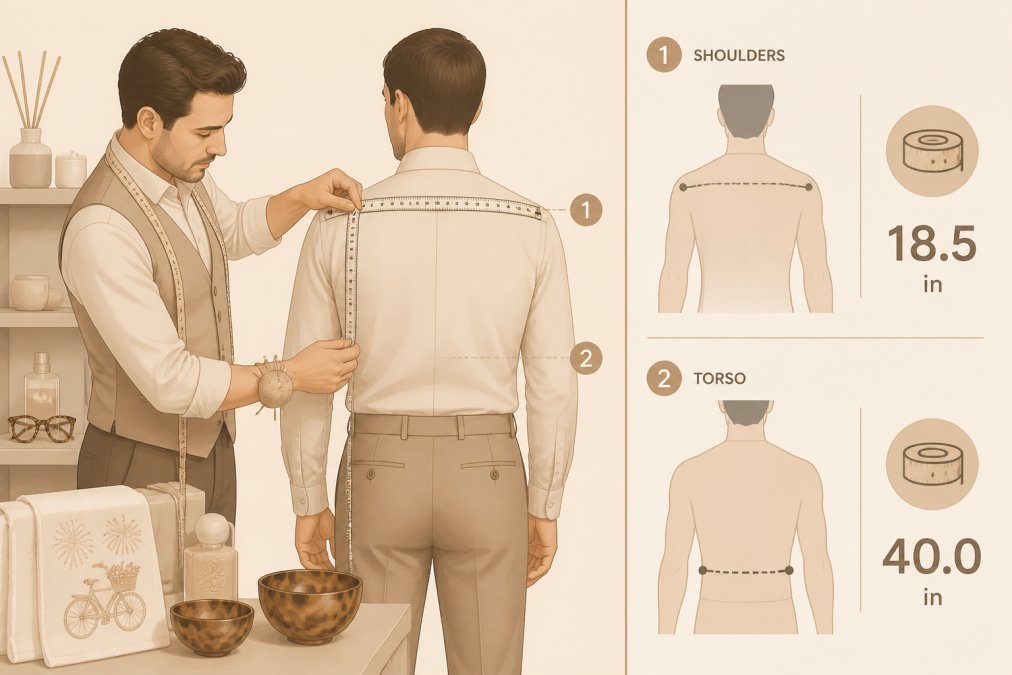
Custom tailoring starts with the premise that your body is unique. A tailor takes measurements of chest, waist, inseam, shoulder point to wrist distance, shoulder slope, back curve, and torso-to-leg ratio. These measurements adjust the pattern specifically for your proportions, creating clothing that fits your actual body, not an imaginary average.
If you have narrow shoulders and a fuller chest, the armhole is adjusted so it doesn't gap at the shoulder while providing enough room across the bust. If you have longer arms, the sleeve length increases without adding extra width. If your back is curved, the pattern includes more ease at the back seam and less at the front.
This customization is impossible in mass production and cannot be achieved through standard alterations after the fact. A dress that's too wide in the shoulders will remain too wide even if you take in the side seams.
Tailors also account for how your body moves by having you sit, reach, walk, and bend while wearing a muslin test garment. They adjust the pattern based on these observations, creating a garment that moves with you rather than fighting against your natural range of motion.
Benefits of Handmade Clothing Over Mass Production
Mass production optimizes for speed and cost, every decision about fabric, pattern complexity, seams, and finishing is evaluated against production speed and price. Artisanal makers optimize for durability, fit, and quality, working with smaller volumes that allow selective material sourcing and pattern adjustments for specific fabrics and bodies.
The psychological benefit of wearing handmade clothing is real. When you know a garment was made by someone who cut your pattern carefully, hand-finished your seams, and adjusted fit based on your measurements, you wear it differently. There's intention and care embedded in the garment.
Handmade clothing develops character over time. Fast fashion garments look worn out; artisanal garments look broken in. Fabric softens, colors deepen, and the garment conforms more precisely to your body, designed to last and improve with age rather than be replaced.
Fast Fashion vs. Artisanal Quality: Where the Difference Shows
Fast fashion prioritizes trend velocity and price point. New designs are produced in massive volumes, sold cheaply, and expected to be worn for a season or two before being discarded. This requires standardized sizing, minimal customization, and construction methods prioritizing speed over durability. Seams are sewn at minimum specifications. Fabrics are chosen for cost and consistency rather than performance or longevity. Fit is standardized to fit as many bodies as possible, which means fitting none perfectly.
Artisanal clothing operates on a different model: garments are made to last. This means investing in better materials, more precise construction, and finishing details that resist degradation. Smaller production volumes allow customization and quality control. Pricing reflects actual costs, including time and skill.
The difference shows most clearly in durability and fit. A fast fashion garment might fit acceptably off the rack but won't conform to your body like a custom-fitted artisanal garment. A fast fashion seam might hold for a year but will eventually fray or fail. An artisanal seam, properly constructed with good thread and adequate stitch density, lasts for years.
Cost-per-wear often favors artisanal clothing. A $30 fast fashion garment worn 20 times costs $1.50 per wear. A $200 artisanal garment worn 500 times over five years costs $0.40 per wear.
At Palms 30A, we understand that quality clothing is an investment in your wardrobe and lifestyle. Our curated selection of artisanal and handcrafted pieces reflects this philosophy, each item is chosen for its durability, design, and potential to become a lasting part of your daily life rather than a disposable trend.
Fabric Quality and Drape in Bespoke Garments
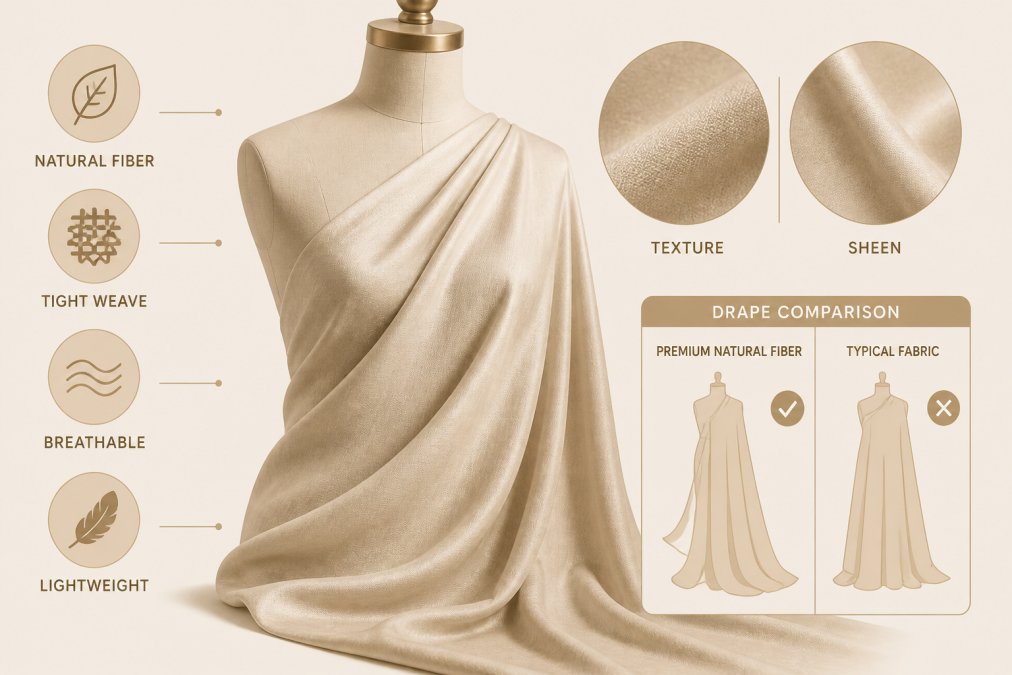
Fabric quality determines how a garment drapes, moves with your body, and lasts. High-quality fabrics are typically made from natural fibers, cotton, linen, silk, wool, or quality blends. Natural fibers breathe, allowing moisture to evaporate. They soften with wear and washing, becoming more comfortable over time. They age gracefully, developing patina rather than looking worn out. Silk drapes with fluidity; high-quality wool holds structure while remaining soft; premium cotton feels substantial without stiffness.
Fabric weight and weave affect fit and drape. A lightweight fabric drapes differently than a heavy one. A tight weave behaves differently than a loose one. A diagonal weave (twill) has different structural properties than a plain weave. Artisanal makers select fabrics intentionally, choosing weaves and weights that support the garment design and how it fits your body.
Industrial fabrics are chosen for cost and consistency rather than hand-feel or performance. Synthetic blends may be cheaper and easier to dye consistently, but they don't breathe as well, don't soften with age, and often pill or degrade after repeated washing. The right fabric, in the right weight with the right weave, drapes to skim your body without clinging, moves with you without pulling, and looks intentional rather than accidental.
Cost-Per-Wear Value and Garment Longevity
Cost-per-wear is calculated by dividing total garment cost by the number of times you wear it. A $100 garment worn 200 times costs $0.50 per wear. A $20 garment worn 30 times costs $0.67 per wear. The cheaper garment actually costs more per wear.
Garment longevity depends on fabric quality, construction quality, fit, and care. A well-made garment in premium fabric, worn by someone who fits it properly and cares for it appropriately, can last for decades. A poorly-made garment in cheap fabric falls apart in a year or two.
Artisanal clothing maximizes longevity through better materials that resist degradation, better construction that prevents seam failure, better fit that ensures you actually wear the garment, and better finishing details that keep it looking good after years of wear.
Clothing you love, that fits perfectly, and was made with care is clothing you'll keep and wear for years. Cheap clothing that doesn't fit quite right and shows wear quickly gets discarded and replaced. The garment you actually wear hundreds of times costs less per wear than the garment you wear a handful of times.
Products like the Bistro Vivie Sandal from Palms 30A exemplify this principle, crafted from high-quality leather with expert construction and built-in arch support, these shoes are designed to be worn repeatedly over years, not discarded after a season. Artisanal garments often improve with age: natural fabrics soften, colors deepen, and the garment conforms more precisely to your body. A five-year-old artisanal garment often looks and feels better than when new.

Artisanal clothing fits better because it's made with intention: to understand how your specific body moves, to select materials that perform well, and to construct garments that last. This fundamentally differs from fast fashion, which optimizes for speed and cost rather than fit and durability.
When you invest in artisanal clothing, you're buying something made to last, something that fits your body better than off-the-rack alternatives, something that develops character and improves with age. At Palms 30A, our curated collection includes handcrafted pieces and artisanal selections designed with this philosophy in mind. Items like our Handcrafted Scarf Charm Necklace showcase the attention to detail and quality craftsmanship that transform everyday accessories into meaningful pieces you'll treasure for years. Explore our full collection and discover how artisanal quality can elevate your daily wardrobe.
Frequently Asked Questions
What are the primary differences between artisanal and factory-made clothing?
Artisanal clothing is created through deliberate pattern drafting and individual fit adjustments, while factory-made garments use standardized patterns graded to fit average body proportions. Artisanal makers control seam allowance, stitch density, and finishing techniques at every stage. Mass-produced clothing prioritizes speed and cost reduction, resulting in inconsistent sizing, weaker structural integrity, and minimal fit testing. Handcrafted pieces typically feature superior textile quality, hand-finished details, and attention to grainline alignment that industrial manufacturing cannot match at scale.
How does garment construction affect the way clothes fit?
Construction quality directly impacts how a garment conforms to your body. Proper seam placement, adequate seam allowance, and precise grading ensure that ease (the intentional extra fabric) is distributed correctly across shoulders, bust, and waist. Artisanal construction includes fit testing through muslin prototypes and adjustments based on body proportions. Poor construction, common in fast fashion, results in twisted seams, inadequate ease distribution, and silhouettes that pull or sag. Hand-finished seams and structural integrity from quality stitching allow the garment to drape naturally and move with your body.
How can I tell if a piece of clothing is truly artisanal?
Look for evidence of intentional construction choices. Examine seam allowance width, stitch density (stitches should be consistent and tight), and finishing techniques like bound seams or hand-stitched hems. Check for pattern drafting precision, collar points should align, plackets should be straight, and seams should follow the grainline. Ask the maker about their process: how they draft patterns, whether they test fit with muslin, and what natural fibers they use. Authentic artisanal pieces often come with information about the maker, materials sourced, and care instructions that reflect slow fashion values rather than disposable design.
Why does fabric choice impact fit and longevity?
Natural fibers like cotton, linen, and wool have inherent properties that affect drape, stretch recovery, and durability. High-quality textiles maintain their shape through repeated wear and washing, supporting the garment's silhouette. Cheap synthetic blends lose elasticity, pill, and distort over time, compromising fit. Artisanal makers select fabrics that complement their pattern design and body proportions, a structured wool suiting drapes differently than a fluid linen, and the pattern is drafted accordingly. Fabric quality also determines cost-per-wear: a garment made from durable natural fibers lasts years with proper maintenance, while fast fashion pieces degrade within months, making artisanal clothing the economical choice long-term.
This article was written using GrandRanker