

Wine by the Glass vs. Bottle: Which Costs Less?
Table of Contents
- Why Wine by the Glass and Bottle Pricing Differ So Much
- Understanding Standard Wine Pour Size and Service
- Average Cost of Wine by the Glass in Restaurants
- Restaurant Markup: Why Bottles Cost Less Per Ounce
- How to Read a Wine List and Spot Real Value
- Wine Preservation and Freshness: The Glass Advantage
- When to Choose Glass Over Bottle (and Vice Versa)
- Frequently Asked Questions
Last Updated: September 26, 2026
Why Wine by the Glass and Bottle Pricing Differ So Much
The markup on wine by the glass is dramatically higher than on bottles. A wine that costs a restaurant $15 wholesale might sell for $8 per glass (a 5-ounce pour) or $32 per bottle. That's not a pricing error, it's restaurant economics at work.
The per-ounce cost of wine by the glass often exceeds the per-ounce cost of a bottle by 2 to 3 times. Understanding why changes how you approach wine ordering and value.
Restaurants face costs that don't exist at retail: staff training, glassware, oxidation loss, inventory management, and spoilage risk. These expenses get baked into the by-the-glass price.

Understanding Standard Wine Pour Size and Service
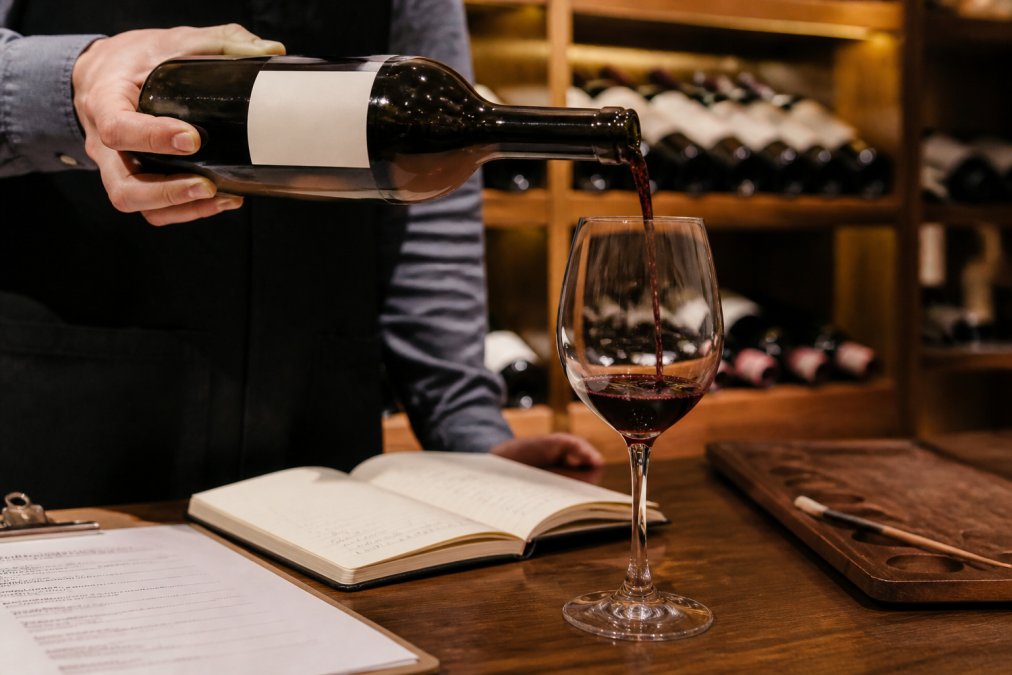
A standard wine by the glass pour is 5 ounces, though some establishments pour 4.5 to 6 ounces.
Five ounces fills a glass generously while yielding exactly five pours from a 750ml bottle, making inventory tracking and margins predictable.
The pour size matters because it directly affects the markup calculation. A restaurant that pours 5 ounces per glass gets 5 pours from a 750ml bottle (plus waste). If they buy the bottle for $15 wholesale and sell each glass for $8, they generate $40 in revenue from a $15 cost, a 167% markup. That math only works if the pour size stays consistent.
Different wine types warrant different pours: heavy reds at 5 ounces, delicate whites or sparkling at 4.5 ounces, and fortified wines at 2-3 ounces.
Average Cost of Wine by the Glass in Restaurants
Wine by the glass typically ranges from $6 to $16 in casual to upscale restaurants, with fine dining venues charging $14-$18 or higher.
The wholesale cost is typically 20-30% of the retail glass price. A $12 glass costs the restaurant $2.40-$3.60; the remainder covers labor, glassware, spoilage, training, and profit.

Restaurant Markup: Why Bottles Cost Less Per Ounce
A bottle costing $20 wholesale might sell for $50 (150% markup). The same wine by the glass at $11 per glass generates $55 revenue (175% markup).
When you order a bottle, the restaurant eliminates oxidation risk, spoilage risk, and labor costs, translating to lower per-ounce markup.
Restaurants use wine by the glass as a profit engine. A $40 bottle might sell to one table; the same wine by the glass at $11 per glass could generate $55 from five customers, increasing total revenue and sell-through likelihood.
Restaurants buying full cases get better per-bottle pricing, but accept the risk that opened bottles won't sell before oxidation spoils them.
How to Read a Wine List and Spot Real Value
The best value is where markup is lowest relative to quality, not the cheapest option.
Entry-level wines carry the highest markups. A $6 house wine might cost $1.50 (75% markup), while a $15 wine might cost $4.50 (70% markup).
Look for wines from lesser-known regions or producers. Restaurants price based on perceived value and brand recognition, not absolute quality, creating opportunities.
Ask about wines that are moving well. Popular selections indicate quality and reliability, and quick turnover means fresher wine.
Compare per-ounce costs: a $12 glass (5 oz) is $2.40/oz; a $45 bottle (25 oz) is $1.80/oz. Bottles are cheaper per ounce, but only if you drink it all.
Wine Preservation and Freshness: The Glass Advantage
Once open, oxidation degrades flavor, aroma, and color. Restaurants must manage this to offer quality wine by the glass.
How Modern Preservation Systems Work
Restaurants use several preservation technologies to extend the life of open bottles:
Inert Gas Systems (Argon or Nitrogen). These displace oxygen, keeping bottles fresh for 2-4 weeks instead of 3-5 days. Equipment costs $500-$2,000 initially, plus ongoing expenses. This allows restaurants to confidently offer premium wines by the glass.
Vacuum Stoppers. These remove air after each pour, extending freshness to 7-10 days. They cost under $50 with no ongoing supplies.
Coravin-Style Needle Systems. These pierce the cork with a needle, allowing pours without removing it. Argon replaces wine volume, keeping bottles sealed. Each system costs $300-$500. Restaurants can offer premium wines by the glass because wine stays fresh for months.
The Freshness Reality
When you order wine by the glass at a restaurant with good preservation methods, you're getting wine that's fresher than most retail bottles you'd buy and open at home. A bottle opened this morning and stored with argon preservation tastes noticeably better than one opened three days ago with no preservation, or a retail bottle that's been sitting in your cabinet for a week.
However, freshness depends entirely on the restaurant's commitment to the system. A high-turnover wine bar with no preservation technology still offers fresh wine by the glass because bottles sell quickly. A slow restaurant with a vacuum stopper might offer wine that's been open for two weeks, noticeably degraded. A fine dining establishment with a Coravin system offers the freshest possible experience.
How to Identify a Restaurant's Preservation Approach
Ask your server or sommelier directly: "How do you preserve open bottles?" The answer tells you a lot. If they mention argon, Coravin, or vacuum systems, they're managing oxidation actively. If they say "we sell through our selections quickly," that's also valid, high turnover is its own preservation method. If they seem uncertain or dismissive of the question, that's a red flag that wine by the glass might not be their priority.
Look for visual cues too. Restaurants using inert gas systems often have small canisters or cartridges visible near the bar. Coravin systems are distinctive and usually displayed prominently because they're an investment the restaurant wants to highlight.
Why This Matters for Your Decision
If you're ordering a delicate white wine or sparkling wine by the glass, selections most vulnerable to oxidation, the restaurant's preservation method becomes crucial.
Before ordering wine by the glass, ask how the restaurant preserves open bottles. Argon systems and Coravin technology indicate serious commitment to freshness. High turnover alone is also a valid indicator of freshness.
When to Choose Glass Over Bottle (and Vice Versa)
Order wine by the glass when you want to try multiple wines in one sitting, when you're dining alone or with someone who doesn't drink wine, or when you're uncertain about what will pair well with your meal. The lower commitment makes sense in those scenarios, even if the per-ounce cost is higher.
The Half-Bottle Solution: The Middle Ground
When Half-Bottles Make Economic Sense
Half-bottles are ideal for:
- Two diners sharing one wine. Two glasses by the glass costs roughly $24 (at $12 per glass). A half-bottle of the same wine might cost $16-$18, saving $6-$8 while giving you more wine.
- Solo diners who want more than one glass. Three glasses by the glass costs $36. A half-bottle costs less and avoids the awkwardness of ordering multiple glasses.
- Uncertain pairings. You want to try a wine with your meal, but you're not sure if you'll like it. A half-bottle is a lower-risk commitment than a full bottle, with better economics than multiple glasses.
- Exploring multiple wines. Two half-bottles give you 4-5 glasses total, allowing you to try two different wines for less than the cost of ordering 4-5 glasses individually.
Availability and Selection
The Trade-Off: Selection vs. Savings
How to Decide: Glass, Half-Bottle, or Full Bottle
Frequently Asked Questions
Is it more cost-effective to order wine by the glass or the bottle?
Ordering by the bottle is typically cheaper per ounce. Restaurants apply 150-300% markups on glass pours versus 75-150% on bottles. A $12 glass pour might represent a $20-30 bottle at retail, while a $50 bottle pour costs the restaurant $20-30 wholesale. If you're ordering multiple glasses, a bottle breaks even after 4-5 pours and saves money thereafter. For single or paired glasses, by-the-glass offers flexibility without commitment.
What is the standard wine pour size in restaurants?
The standard wine pour size is 5 ounces, though some restaurants pour 4-6 ounces depending on house policy. A 750ml bottle contains 25 ounces, yielding five standard pours. Premium or high-end wines may be poured at 4 ounces to stretch inventory and margin. Always check the pour size on the menu or ask your server, as this directly affects the value proposition of ordering by the glass versus the bottle.
How many glasses of wine are in a standard 750ml bottle?
A standard 750ml bottle yields approximately five 5-ounce glasses, which is the industry standard pour size. Some restaurants use 4-ounce pours to stretch inventory, yielding six glasses per bottle. This calculation matters when comparing bottle pricing to glass pricing, if a restaurant charges $12 per glass and pours 5-ounce servings, the bottle should cost around $50-60 to match value. Knowing this math helps you spot fair pricing on wine lists.
What does wine by the glass mean?
Wine by the glass refers to a single serving of wine poured from an open bottle, typically 4-6 ounces depending on the restaurant. It allows diners to order one or two wines without committing to a full 750ml bottle. Restaurants open bottles and serve multiple glasses to different customers, which increases their margin but also introduces oxidation risk after 24-48 hours. This format offers flexibility and variety but typically costs more per ounce than buying a full bottle.