

7 Colorful Stemware Styles That Transform Your Table
Last Updated: November 17, 2026
Quick Summary
Colorful stemware is drinking glass with pigment, tint, or an iridescent finish worked into the glass itself rather than applied as surface paint. Choose the shape for the beverage first, then choose the color for the table, and start with a set of six in a single color.
- A set of six covers a dinner party of four with two spare glasses for breakage.
- Keep mixed sets to three colors maximum and repeat each shape at least twice.
- Red wine suits a goblet or all-purpose glass at 16-20 oz.
- Flutes at 6-9 oz preserve carbonation while coupes at 7-12 oz favor presentation.
- Store glasses upright, never on the rim, to protect the chip-prone edge.
Table of Contents
- Why Colorful Stemware Changes a Table Setting
- Colorful Glassware Sets: Piece Counts and What You Actually Need
- Colorful Stemware Vintage: Retro Shapes Worth Collecting
- Colorful Stemware Brands: What Separates Craft from Commodity
- Red Wine, White Wine, and Champagne: Matching Glass to Pour
- Care, Cleaning, and Durability for Colored Glass
- Building a Color Palette That Works All Year
- Shop the Palms 30A Stemware Collection
- Frequently Asked Questions
Why Colorful Stemware Changes a Table Setting
The glassware market was estimated at USD 16.6 billion in 2025, and colored glass is now one of the fastest-moving corners of that spend (Global Market Insights glassware market estimate). At Palms 30A, we see the same thing on our own shelves: a single teal coupe can do more for a table than a whole matching set of clear glasses. Colorful stemware is drinking glass with pigment, tint, or an iridescent finish worked into the glass itself rather than applied as surface paint, and that color is what turns a functional object into a styling choice.
Here is the part most guides miss. A review of glassware design and drinking behavior research found that glass shape influenced how much people poured and drank, and a separate study in Food Research International (2019) reported that wine color creates real aroma and flavor biases, even among trained tasters.
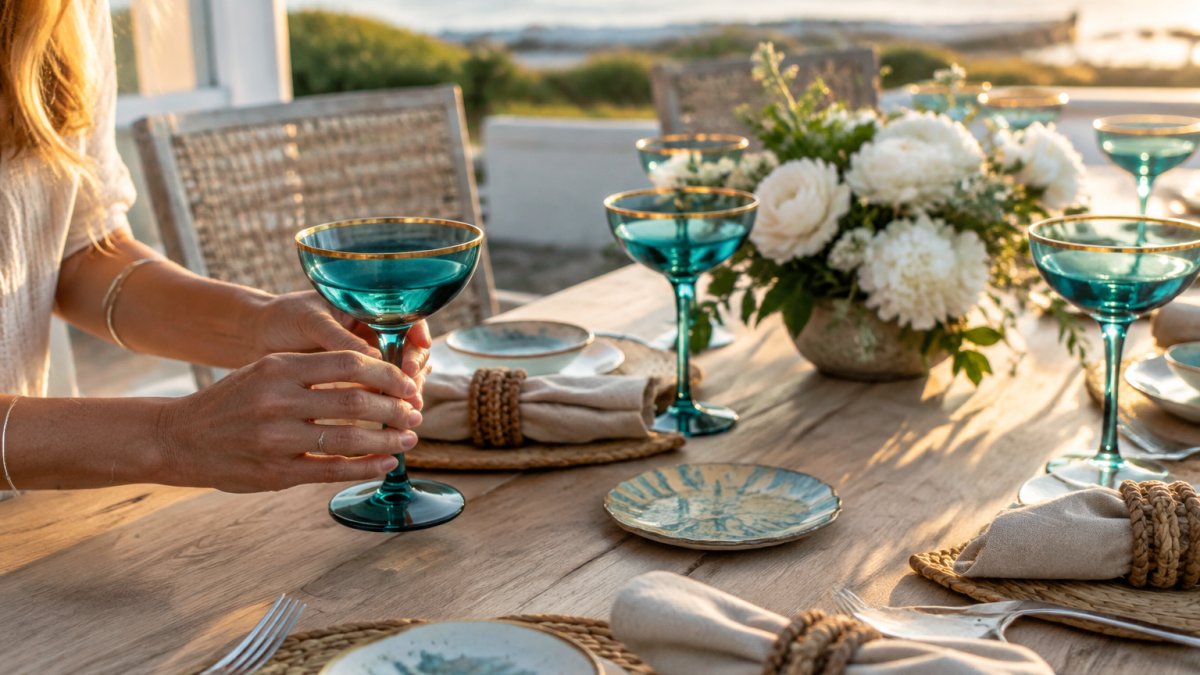
Below, we walk through set sizes, vintage shapes, what separates craft from commodity, and how to build a palette that survives every season. For the full styling playbook, our guide to setting the perfect table for guests covers linens, layering, and glass placement in detail.
Colorful Glassware Sets: Piece Counts and What You Actually Need
A set of six is the right starting point for most households. It covers a dinner party of four with two spare glasses for breakage, and it keeps the per-glass cost sensible. Mixed sets make more sense when you entertain often and want variety across a long table.
We group buyers into three camps:
- Everyday households: one set of six in a single color, plus two clear all-purpose glasses
- Regular entertainers: two sets of six in coordinating colors, one for wine and one for bubbly
- Collectors: mixed sets built one or two glasses at a time, prioritizing shape variety
Sets of Six vs. Mixed Sets
Sets of six win on consistency and price. Mixed sets win on personality. Our ribbed bright colored wine glass set of six in 19 oz is a good example of the first camp: one color story, enough glasses for a real dinner, and a ribbed texture that reads well in candlelight. If you go mixed, keep two rules. Repeat each shape at least twice so the table doesn't look accidental, and hold the palette to three colors maximum.
Colorful Stemware Vintage: Retro Shapes Worth Collecting
Vintage-inspired colorful stemware is glass made in the silhouettes of the 1920s through 1960s, most commonly Art Deco coupes, tall flutes, and wide-bowled goblets, produced today with modern materials.
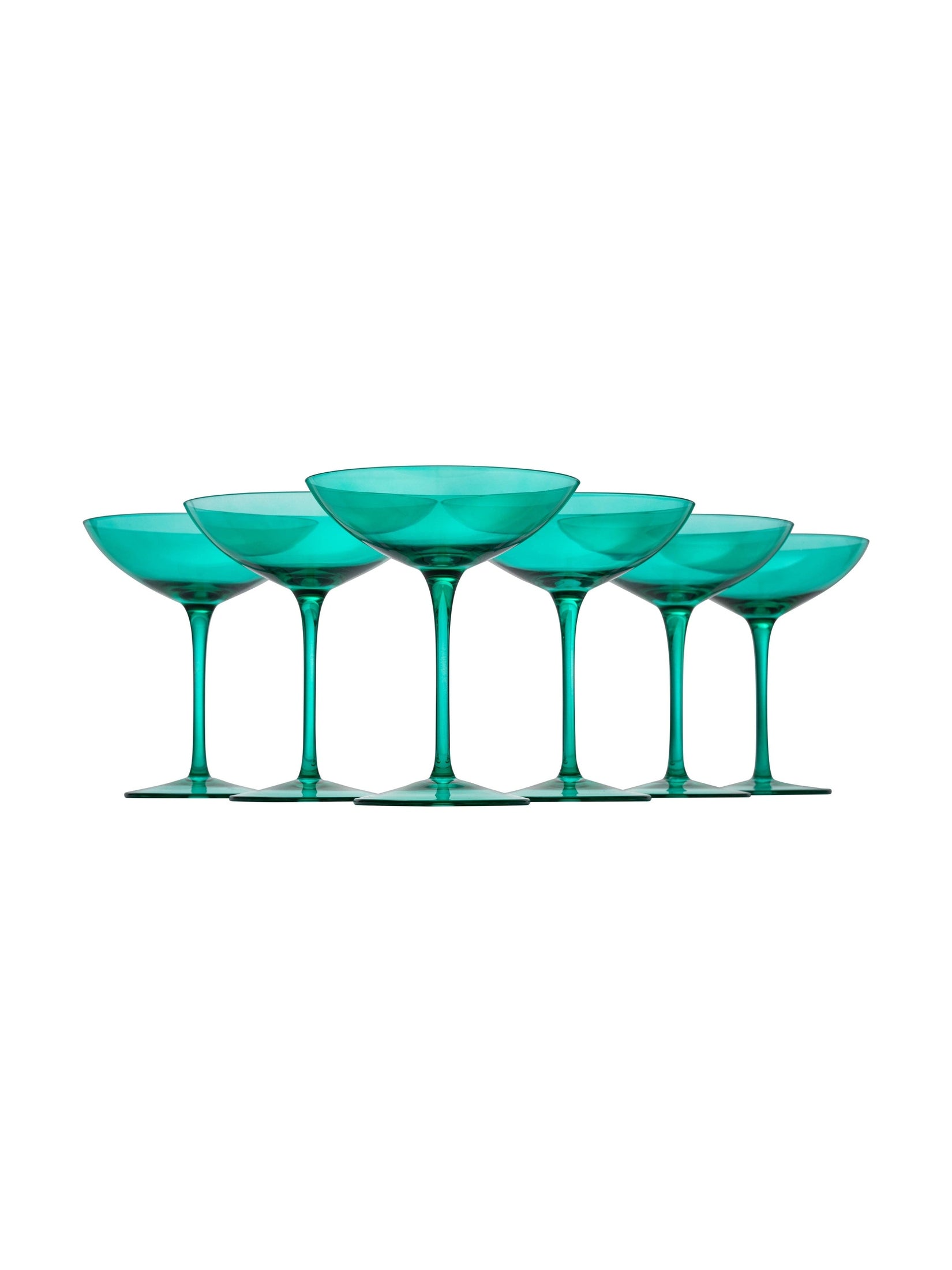
Coupes are the collector's entry point. Two pieces worth a look: our Art Deco colored coupe glass set of six in 7 oz for a matched collection, and the teal vintage glass coupes in 12 oz if you want a single stronger color statement.
Colorful Stemware Brands: What Separates Craft from Commodity
The difference between craft and commodity colorful stemware comes down to three things: how the color is introduced into the glass, how consistent the walls are, and whether the rim is cut and polished or left as-molded. Hand-blown glass shows slight variation in wall thickness. That variation is a signature, not a defect.
What most reviews miss is that color method matters more than color intensity. Laminated and cased glass hold color deeply and resist fading. Sprayed color sits on the surface and dulls with washing.
Casa Vitri's 2026 table-setting reporting names Plum and Azure among the year's color directions, alongside Pantone's Cloud Dancer, which tells you the market is moving toward saturated jewel tones set against soft neutrals (Casa Vitri 2026 table color trends).
Red Wine, White Wine, and Champagne: Matching Glass to Pour
Match the glass to the pour and the color follows. The practical variables are bowl shape, capacity, rim diameter, and how the color is carried in the glass. Most shoppers pick a shade first and a shape second, which is why so many colored sets end up as display pieces. Flip the order: choose the shape for the beverage, then choose the color for the table.
| Glass Type | Typical Capacity | Rim Diameter | Stem | Best For | Color Advice |
|---|---|---|---|---|---|
| Coupe | 7-12 oz | 4-5 in | Short | Champagne, cocktails, dessert | Teal, blush, gold rim; cased color reads best |
| Flute | 6-9 oz | 2-2.5 in | Tall | Sparkling wine, spritzers | Clear or pale tint so bubbles stay visible |
| Goblet | 16-20 oz | 3.5-4 in | Short to medium | Red wine, water, casual table | Cobalt, amber; heavier walls suit daily use |
| All-purpose wine | 16-19 oz | 3-3.5 in | Medium | Red and white, entertaining | Mint, iridescent; one shape covers both pours |
| Nick and Nora | 5-7 oz | 3-3.5 in | Short | Cocktails, aperitifs | Saturated jewel tones photograph well |
Typical Capacity
How to Choose by Beverage
Red wine needs a bowl wide enough to let the wine meet air; a goblet or an all-purpose glass at 16-20 oz does that without the color overwhelming the pour. White wine drinks better from a narrower tulip or all-purpose bowl at 12-16 oz, because a smaller surface area keeps the wine cooler longer. Sparkling wine is a fork in the road: a flute at 6-9 oz preserves carbonation, while a coupe at 7-12 oz trades some bubble life for presentation.
How to Choose by Occasion
For a seated dinner, one all-purpose shape in a single saturated color keeps the table coherent and cuts the number of glasses you need to store. For a cocktail hour, a coupe and a Nick and Nora in coordinating colors give you two silhouettes without a full cabinet. For holiday and champagne toasts, a flute in a pale tint or clear keeps the bubbles visible while a colored coupe anchors the place setting.
Where the Color Should Sit
Color placement changes both the look and the care routine. Color worked into the glass itself, whether cased or laminated, holds up to washing and reads consistently from every angle. Color applied as a surface finish or sprayed coating sits on top of the glass and dulls faster. A gold rim is a third option: it frames the bowl and adds a metallic accent, but it is the first thing to wear, so treat rimmed glasses as hand-wash pieces.
Coupes, Flutes, and Goblets
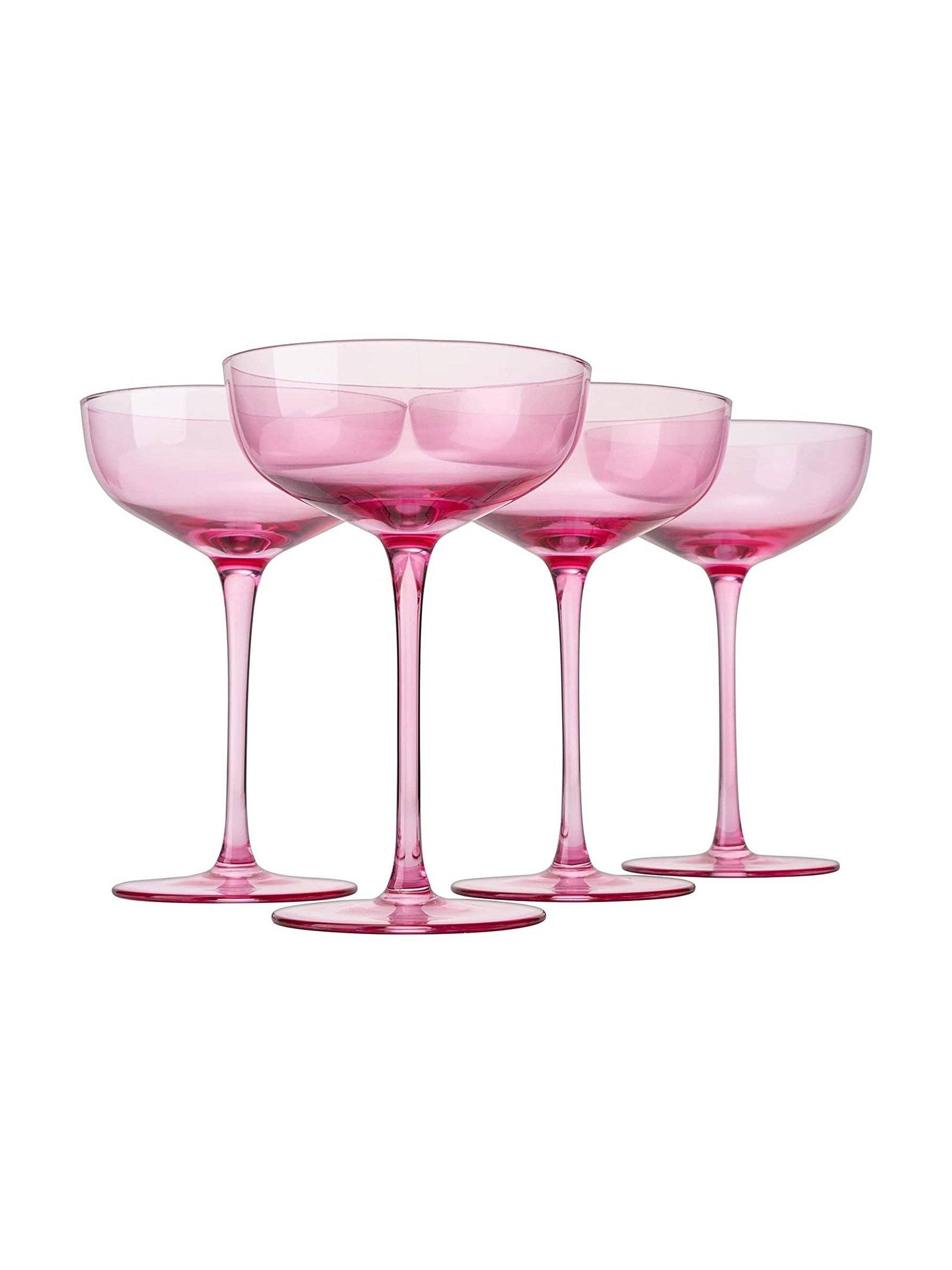
Coupes are the styling choice and the vintage nod. If you want one colored coupe to start with, our rose colored coupe glass set of four in 7 oz is a soft entry point that works with almost any linen.
Watch out: a coupe filled to the rim is unstable on a crowded table, so pour to about two-thirds and keep the stem clear of condensation.
Care, Cleaning, and Durability for Colored Glass
Care advice for colored stemware usually stops at "hand wash," which is not enough to keep a set looking new for years. The variables that actually matter are the color method, the rim finish, the wall thickness, and how the glass is stored between uses. Get those four right and colored stemware behaves like everyday glass.
Dishwasher Safety
Most colored stemware is hand-wash only, and the reason is mechanical as much as chemical. Hot cycles and harsh detergent degrade surface color and cloud the finish over time, and the heat cycle can stress thin hand-blown walls. Glasses with a gold or metallic rim should never go in the dishwasher, because the rim is the first element to wear.
Removing Stains and Clouding
Cloudiness on colored glass is usually mineral film from hard water, not damage to the color itself. A soak in warm water with a small amount of white vinegar, followed by a soft brush and a rinse in warm water, lifts most film. Tea and coffee stains respond to a paste of baking soda and water applied with a soft cloth.
Breakage Risk by Shape
Breakage risk tracks shape as much as handling. Tall flutes are the most tip-prone because of their narrow base and high center of gravity, so they belong at the back of a shelf and away from the edge of a busy table. Coupes with a short stem and a wide bowl are more stable but chip at the rim, which is the most common failure point on any stemmed glass.
Storage and Handling Habits
Store glasses upright, not on the rim, to protect the edge. Never stack colored glasses without a cloth between them, because glass-on-glass contact is how most chips happen in a cabinet. Skip the boiling-water rinse, which can crack thin hand-blown walls, and let cold glasses come to room temperature before adding hot liquid. Carry stemware by the bowl rather than the stem, since the stem is the weakest joint on a hand-blown piece.
Long-Term Durability
Durability tracks back to wall thickness, rim finish, and color method. Color worked into the glass holds far longer than a sprayed surface finish, and a polished rim outlasts a raw one. Treat colored stemware as everyday glass and it will hold up; treat it as fragile and you will stop using it, which defeats the point.
Watch out: storing stemware on its rim for long periods puts stress on the most chip-prone edge, so reserve rim-down storage for short-term display only.
Building a Color Palette That Works All Year
A working palette needs one saturated color, one soft neutral, and one metallic accent. That combination carries from spring lunches to holiday dinners without a full reset. Mint green and blush pink read warm and light for summer.
Work the Metal's 2026 trend notes call colored glassware one of the year's biggest directions, with wine glasses and coupe glasses leading the shift (Work the Metal 2026 glassware trend notes).
Shop the Palms 30A Stemware Collection
The hardest part of colorful stemware is stopping at one set. Color is the easiest upgrade a table gets, and it costs far less than new furniture, new linens, or a redesign.
At Palms 30A, we curate home accessories and gifts with the same eye we bring to our handcrafted jewelry and original art, so the glass on your table feels chosen rather than ordered. Their mix-and-match spirit carries naturally into the sunny spritz drinkware collection, where colorful glasses can bring the same playful cohesion to a table.
Get started with Palms 30A and set a table people remember.
Frequently Asked Questions
Where can I buy colorful stemware?
Boutique home shops and specialty drinkware retailers carry the widest range of colored glass. Palms 30A stocks colorful stemware including teal vintage-style coupes and gilded multicolor champagne coupes at $14.95 each. Buying from a curated shop rather than a big-box store usually means fewer styles but better color consistency across a set, which matters when you want six glasses that actually match on the table.
Can colorful stemware be used for everyday dining?
Yes. Colored stemware works for daily meals as long as you handle the wash cycle correctly. Hand wash colored and gold-rimmed glasses in warm water with mild soap, and dry them promptly with a lint-free cloth to prevent water spots. Skip the dishwasher for anything with a metallic rim or an iridescent finish, since heat and detergent can dull the surface over time. A set you reserve for guests only tends to sit unused, so plan for regular wear.
How do you choose colorful stemware for a table setting?
Start with your existing linens and dinnerware, then pick one accent color rather than several competing ones. A single saturated tone such as cobalt blue or mint green reads as intentional, while a mix of six different colors reads as casual. Match glass shape to the meal: coupes for champagne and cocktails, stemmed wine glasses for red and white. Palms 30A's gilded multicolor champagne coupes are designed to mix and match, so you can build a curated set over time.
How do you care for colored glass wine glasses?
Hand wash in warm water with a small amount of mild dish soap, rinse thoroughly, and dry immediately with a soft cloth. Store glasses upright or hang them by the stem so the rims do not rest on a hard shelf. Avoid sudden temperature changes, such as pouring boiling water into a chilled glass, because thermal shock can crack colored glass. For vintage pieces, check for chipped rims before use, and keep them out of the microwave entirely.
