
CuratedBy Alternative for Unique Jewelry: 2026 Guide
Table of Contents
- Why Shoppers Seek a CuratedBy Alternative for Unique Jewelry
- Quick Comparison: Unique Jewelry Pieces at a Glance
- The Benefits of Shopping Small Boutique Brands
- How to Identify Quality Handmade Jewelry
- Independent Jewelry Designers Online: How to Find Them
- Standout Unique Jewelry Pieces for Everyday Wear
- Pricing Breakdown: What You Pay For
- Frequently Asked Questions
Last Updated: September 13, 2026
Why Shoppers Seek a CuratedBy Alternative for Unique Jewelry
Shoppers who once relied on CuratedBy for distinctive pieces are looking elsewhere: as curated marketplaces scale, the sense of discovery fades. When a catalog grows to serve millions, the algorithm rewards what sells fastest, rarely what feels personal.
This guide from Palms 30A shows how to evaluate small-batch makers, spot genuine handcrafted work, and build a collection of unique jewelry that lasts beyond a season.
The appeal of a curated marketplace was never the platform itself, but finding something that felt chosen rather than mass-produced. Once that feeling disappears, the platform has no reason to stay in your bookmarks.
Quick Comparison: Unique Jewelry Pieces at a Glance
The table below maps the pieces referenced in this guide, with price points and best use cases.
| Piece | Price | Material Highlight | Best For |
|---|---|---|---|
| Serafina Scarf Charm Necklace | $34.00 | Floral scarf charm, layered design | Statement layering |
| Corrie Cord Necklace | $44.00 | Refined cord, warm tone | Everyday wear |
| Jaclyn Opal Cross Necklace | $48.00 | Opal stone, cross pendant | Meaningful gifting |
| Grettel CZ Clover Cuff Bracelet | $38.00 | Gold finish, cubic zirconia | Adjustable fit |
| June Ring - Pink Pearl | $24.00 | Pearl-inspired coating | Entry-level luxury |
| Lord's Prayer Necklace | $48.00 | Inscribed pendant | Spiritual keepsake |
| Open Heart Charm Necklace | $48.00 | Minimalist open heart | Layering base |
| Tiny Letter Charms | $6.00 | CZ set lettering | Personalization |
| Pickleball Charms | $8.00 | Sport motif charms | Niche gifting |
Price alone tells you little about value: a $6 charm and a $48 necklace can both be excellent buys, depending on how they're made and how often you'll wear them.

The Benefits of Shopping Small Boutique Brands
Small boutique brands offer what large marketplaces structurally cannot: accountability at the maker level. A boutique stocking twenty designers can name the person who set each stone; a marketplace listing ten million SKUs cannot.
That difference shows up in three places shoppers feel: material disclosure, returns, and how quickly questions get real answers.
Small-Batch Production and Material Quality
Small-batch production means limited runs rather than thousands of identical units. Labor cost per piece is higher, but so is attention to finishing, clasp strength, and stone setting, a bench jeweler soldering one clasp at a time catches weak joints a casting line would pass through.
Small-batch doesn't automatically mean better, it means the maker has more control, used well or poorly. Watch whether they document it: process photos, named materials, stated finishes.
Direct-to-Consumer vs. Marketplace Pros and Cons
Buying direct means clearer sourcing information and faster answers, but narrower selection and less standardized returns. A one-person studio may offer a 14-day window handled manually; a marketplace may offer 30 days with prepaid labels.
Marketplaces offer convenience, consolidated shipping, and buyer protection, but rarely a named person who can tell you where a stone came from. A marketplace seller may not know whether a stone is natural, lab-grown, or treated, and listing language often blurs the three.
A practical framework for choosing between them:
- Buy direct when the piece is a keepsake, uses a named stone or precious metal, or needs personalization (engraving, sizing, custom length). You want the maker reachable after the sale.
- Buy through a marketplace when you're testing a style, need fast shipping, or want consolidated returns across multiple items.
- Buy from a boutique that curates when you want the marketplace's convenience with the maker's accountability, the boutique has already vetted the designers and can often answer sourcing questions the marketplace can't.
How to Identify Quality Handmade Jewelry
Quality handmade jewelry is identifiable through three checks: material disclosure, construction consistency, and honest photography. Start with the listing, vague terms like "gold-tone" or "premium materials" are a warning sign; look for named metals, stone types, and finishes.
Checking Material Transparency and Sourcing
Material transparency means the seller states exactly what a piece is made of: "sterling silver" and "gold vermeil" are specific; "silver-colored" is not. Sourcing transparency names the region or supplier. Not every small maker can trace everything, what matters is whether they say so honestly rather than inventing a backstory.
- Metal type is named, not implied
- Stone type and treatment are disclosed
- Finish is described (plated, vermeil, solid)
- Care instructions are included
- Maker or studio is named
Sizing and Fit for Non-Standard Pieces
Non-standard pieces, handmade items without mass-market sizing conventions, require you to measure rather than assume. Adjustable chains and cuffs are forgiving; fixed-length chains and rings are not. For rings, confirm the maker's chart matches standard US sizing; for cuffs, an adjustable design removes most risk.
Ordering a fixed-length chain without checking the measurement is the most common return reason for handmade necklaces. A 16-inch chain sits at the collarbone while an 18-inch chain falls lower, and photos rarely make the difference obvious (jewelers.org).
Independent Jewelry Designers Online: How to Find Them
Independent jewelry designers are best found through maker-focused channels: craft fairs, studio tours, and regional boutiques surface designers that algorithm-driven marketplaces bury. Online, specific search terms, "hand-fabricated sterling silver," "recycled gold vermeil," "bench-made rings", filter out dropshippers using the same generic keywords.
A maker who shows their bench, tools, and unfinished work is signaling the product is genuinely theirs, the first of several checks worth running before you buy.
A Vetting Checklist for Independent Designers
Most shoppers evaluate a designer on aesthetics alone. The ones worth returning to pass a short list of verifiable checks:
- Named maker. A real name, a studio location, and a consistent body of work across multiple listings. Anonymous storefronts with rotating inventory are usually resellers.
- Process evidence. Photos of work in progress, not just finished product shots. A bench, a torch, a half-set stone, these are hard to fake at scale.
- Material specificity. "Sterling silver," "14k gold-filled," "gold vermeil over sterling," and "solid 14k" are four different products at four different price points. A designer who names the exact one is being straight with you.
- Stone disclosure. Natural, lab-grown, and treated stones should be labeled as such. If a listing says only "genuine gemstone," ask which.
- A real return policy. Written terms, a stated window, and a process for defects, not just "contact us."
U.S. Federal Trade Commission guidance on jewelry advertising claims sets the standard for how makers should describe materials, which makes it a useful reference when a listing's language feels evasive. Terms like "gold-tone" and "premium materials" are vague by design; specific claims like "14k gold-filled" carry legal weight.
Material Transparency and Sourcing
Material transparency means the seller states exactly what a piece is made of: "sterling silver" and "gold vermeil" are specific; "silver-colored" is not. Sourcing transparency names the region or supplier, recycled gold, conflict-free gems, or a stated country of origin. Not every small maker can trace everything; what matters is honesty. A designer who writes "I source my stones from a family-run supplier in Jaipur and can't verify mine-level origin" is more trustworthy than one claiming full traceability without documentation.
Sizing and Fit for Non-Standard Pieces
Non-standard pieces, handmade items without mass-market sizing conventions, require you to measure rather than assume. Adjustable chains and cuffs are forgiving; fixed-length chains and rings are not. For rings, confirm the maker's chart matches standard US sizing, a handmade ring can run a half-size off. For fixed-length chains, measure a chain you already wear against the listing's stated length.
Boutique retailers that curate a small number of designers do part of this vetting work for you. Palms 30A, for example, builds its jewelry selection around handcrafted pieces and original art, which shortens the search considerably.
Standout Unique Jewelry Pieces for Everyday Wear
Everyday pieces should be lightweight, durable enough for daily handling, and versatile enough to layer. Heavier statement pieces rarely earn their cost per wear.
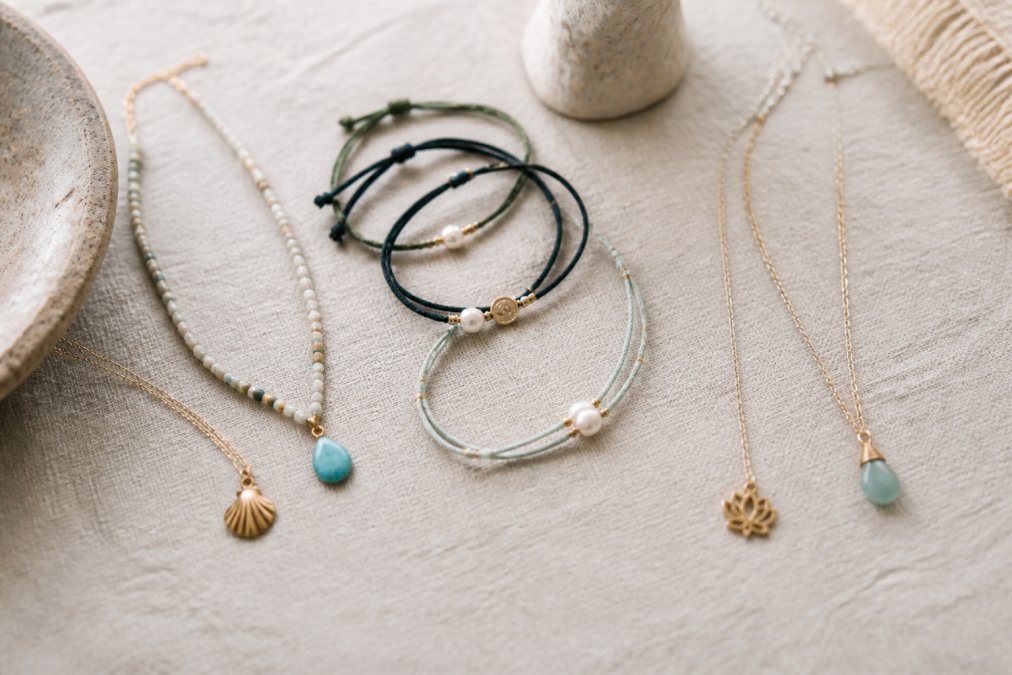
The Serafina Scarf Charm Necklace at $34.00 is the layering piece, with a black and red floral scarf charm that adds movement to a plain tee or dress, bohemian without tipping into costume. The Corrie Cord Necklace at $44.00 uses a refined warm-tone cord for casual or dressed-up outfits, while the Jaclyn Opal Cross Necklace at $48.00 pairs a luminous opal with a delicate cross pendant for meaning built into the design.

The Grettel CZ Clover Cuff Bracelet at $38.00 has an adjustable cuff that fits any wrist without a sizing decision. The June Ring in Pink Pearl at $24.00 is the lowest-commitment entry point, with a pearl-inspired finish suited to casual and formal settings.
Care and Maintenance for Unique Materials
Unique materials need care that mass-produced jewelry never requires. Cord necklaces should avoid prolonged water exposure, since fibers weaken and stretch; plated and vermeil finishes wear faster with perfume, sunscreen, and chlorine. Put jewelry on last, after lotions and fragrance, and take it off first at day's end. Store pieces separately so charms and chains don't tangle or scratch.
The single highest-impact habit for extending jewelry life is removing pieces before swimming, showering, and applying skincare. Most finish wear comes from chemical contact, not from wearing the piece.
Pricing Breakdown: What You Pay For
Price in handmade jewelry reflects four things: material cost, labor time, finish durability, and overhead. Knowing which dominates explains why two similar-looking pieces can differ widely.
| Price Band | Typical Material | Labor Reality | Best For |
|---|---|---|---|
| Under $25 | Base metals, plated finishes | Fast assembly, limited hand-finishing | Trying a style, gifts |
| $25-$40 | Plated or vermeil, CZ accents | Moderate hand-finishing | Everyday rotation |
| $40-$60 | Vermeil, genuine stones | Higher hand-finishing, small runs | Keepsakes, meaningful gifts |
| $60+ | Solid precious metals | Bench-made, one-off pieces | Long-term investment |
At the lower bands you're paying for design and accessibility; at the higher bands, for material that holds up over years and the maker's time. A marketplace listing at a similar price compresses labor and materials to hit a margin, a small-batch maker doesn't have that room, so the money goes into the piece.
Charms illustrate this best. Tiny Letter Charms at $6.00 and Pickleball Charms at $8.00 personalize an existing chain for a few dollars, a better use of budget than a second necklace. The Open Heart Charm Necklace at $48.00 and the Lord's Prayer Necklace at $48.00 sit at the keepsake end, meant to be worn for years rather than a season.
Better Business Bureau guidance on online purchase protections is worth reviewing before any online jewelry order, particularly around return windows and dispute resolution.
Replacing a curated marketplace means losing one checkout and one return address, but you gain a collection that reflects actual choices rather than an algorithm's best guess.
Palms 30A curates handcrafted jewelry alongside original art and lifestyle goods, with a selection built for layering, gifting, and everyday wear across the whole family. Browse the collection, start with a charm or a cord necklace, and build from there. View all at Palms 30A and find the piece that actually feels like yours.
Frequently Asked Questions
What is the 2:1:1 rule for jewelry?
The 2:1:1 rule is a styling guideline for balancing metals and statement pieces in one look. It suggests wearing two pieces of one metal, one piece of a contrasting metal, and one statement or charm piece. For example, two gold necklaces, one silver bracelet, and a single charm pendant. This approach keeps layered unique jewelry from looking cluttered while still letting each piece stand out.
Where can I buy unique, handcrafted jewelry online?
Boutique retailers that carry small-batch, hand-finished pieces are the best starting point. Palms 30A, for instance, offers a curated collection of necklaces, bracelets, rings, and charms ranging from $6 to $48, including the Serafina Scarf Charm Necklace at $34 and the Grettel CZ Clover Cuff Bracelet at $38. Look for shops that name their materials, show close-up photos, and explain their sourcing.
How do I know if handmade jewelry is actually high quality?
Check three things: material transparency, construction details, and return policy. Quality handmade jewelry lists its metals and stones clearly, shows even soldering or setting work in photos, and comes with a return window. Ask whether the piece uses sterling silver, gold vermeil, or recycled metals. If a shop cannot answer basic sourcing questions, that is a signal to look elsewhere.
Are there better alternatives to mainstream curated marketplaces for jewelry?
Yes. Small boutique brands and independent jewelry designers online often offer pieces you will not see on mass-market platforms. The trade-off is usually a higher price point per piece, but you get small-batch production, hand-finished details, and often direct access to the maker. Shipping and returns policies vary, so check those before buying.
How should I care for unique jewelry made from non-standard materials?
Keep pieces dry, store them separately in a soft pouch, and avoid direct contact with perfume or lotions. Cord necklaces should not be soaked; wipe them with a dry cloth. CZ and opal-style stones clean best with a soft brush and mild soap. For gold vermeil, limit exposure to water and sweat to protect the plating. These habits extend the life of handcrafted pieces significantly.