

Palms 30A as an HBX Alternative for Coastal Style
Last Updated: November 12, 2026
Quick Summary
Palms 30A is a practical HBX alternative for coastal style, built around sea blues, sandy neutrals and natural textures like linen, cotton and woven fibers. Its curated clothing and home pieces suit everyday wardrobes and relaxed coastal interiors that stay elevated rather than costume-like.
- Choose breathable natural fibers like cotton and poplin for warm-weather comfort
- Keep roughly 70 percent neutral and 30 percent blue in a coastal interior palette
- Layer at least three natural materials in every room for coastal texture
- Use one sea-inspired accent per room to avoid a kitschy beach look
- Check fabric weight, seam finish and the care label before buying
Table of Contents
- What Coastal Style Means Today
- Relaxed Coastal Style for Everyday Clothing
- Coastal Style Clothes That Stay Elevated
- Coastal Interior Design Ideas Beyond the Beach House
- Elevated Coastal Style: Telling Quality From Costume
- How to Compare HBX Alternatives for Coastal Style
- Choosing Your Next Coastal Piece at Palms 30A
- Frequently Asked Questions
What Coastal Style Means Today
Coastal style is a relaxed, light-filled look built around sea blues, sandy neutrals and natural textures like linen, cotton and woven fibers. Readers wanting broader context can explore the curated home alternatives that apply the same brand approach to decor.
The look has moved past its beach-house roots. Modern coastal style keeps the airy palette but favors cleaner lines and fewer props. Traditional coastal leans on nautical stripes and weathered wood.
Relaxed Coastal Style for Everyday Clothing
Relaxed coastal dressing starts with fabric and fit. Breathable cotton, lightweight poplin and soft knits move well in warm weather and wrinkle less than heavier materials.
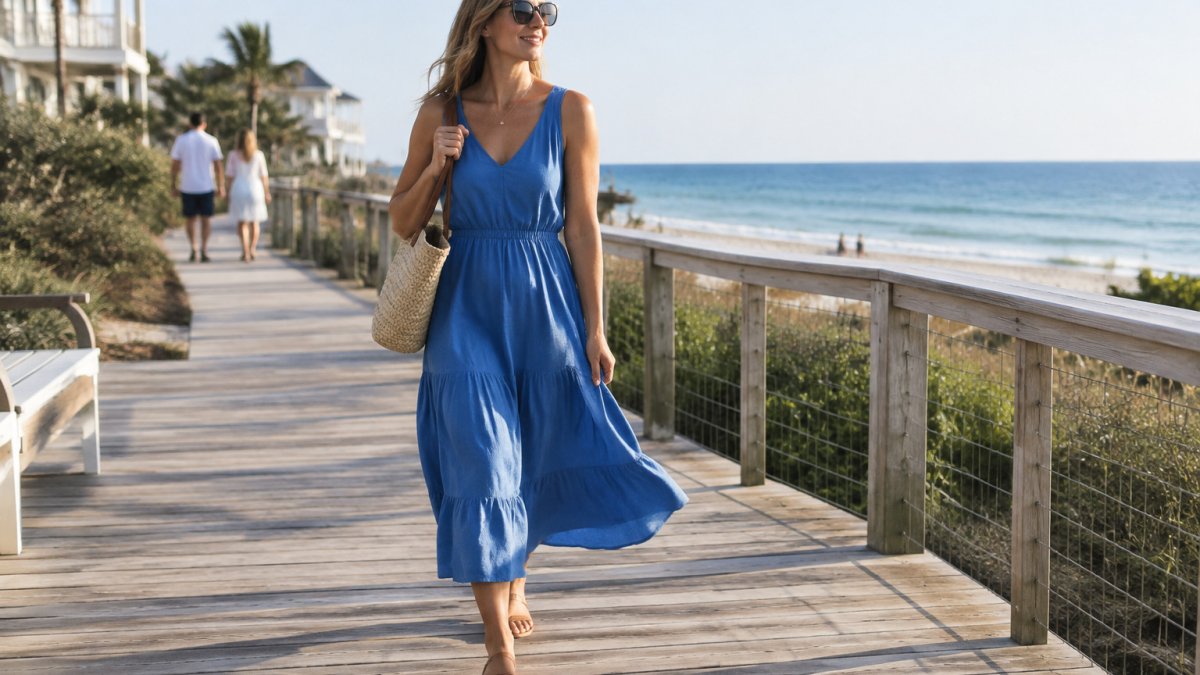
The June Stretch Poplin Pool Party from Palms 30A shows the approach. Its flowing blue silhouette drapes for all-day comfort.
- Choose natural fibers for warm-weather comfort
- Favor loose cuts that let air move
- Pick colors from the sea palette: blues, whites and sand tones
Coastal Style Clothes That Stay Elevated
Relaxed does not have to mean careless. The difference between a beach look and an elevated one usually comes down to fit, finish and a single considered detail.
The Gulf Coast Halter Stripe Dress from Palms 30A is cut from soft cotton with a classic stripe and a halter neckline.
Best for: anyone who wants one piece that moves from daytime to evening.
Coastal Interior Design Ideas Beyond the Beach House
Coastal style works indoors because it is built on light and texture rather than location. The goal is a room that feels breezy and calm without reading as a themed beach house. That comes down to four levers: palette, materials, lighting, and restraint.
Build the palette first
Start with light neutrals, white, cream, sand, and soft greige, on the largest surfaces: walls, rugs, and upholstery. Then add sea-inspired blues in layers, from pale sky tones to deeper indigo. Keep the ratio roughly 70 percent neutral to 30 percent blue so the room reads calm rather than aquatic. A warmer sand-and-driftwood scheme works the same way with tans and weathered browns standing in for the blues.
Choose natural materials and textures
Texture is what separates coastal from plain. Layer at least three natural materials in every room:
- Weathered or whitewashed wood for tables, frames, and shelving
- Jute or sisal for rugs and baskets
- Wicker and rattan for seating and storage
The mix matters more than any single piece. A linen sofa against a jute rug with a rattan side table reads coastal; the same sofa on wall-to-wall carpet does not.
Layer textiles deliberately
Pillows and throws are the cheapest way to shift a room's mood. Mix a solid with a stripe or ikat, and keep throws in the same palette family. Rotate textiles seasonally rather than buying new furniture, a lighter throw and cooler blues in summer, warmer tans in winter.
Get the lighting right
Coastal rooms live or die on light. Maximize daylight by keeping window treatments sheer and light-colored, and avoid heavy valances. In the evening, layer three sources: overhead ambient light, task lighting (a table lamp or reading light), and accent light (a small lamp on a shelf or console). Warm bulbs flatter natural materials; cool bulbs make wood and wicker look gray.
Go room by room
- Living room: Linen or cotton seating, a jute rug, a weathered wood coffee table, woven baskets for storage, and a mix of solid and patterned pillows in the sea palette.
- Bedroom: White or cream bedding with a blue or sand throw, sheer curtains, a rattan or wicker headboard or bench, and a single piece of sea-inspired art rather than a gallery wall of motifs.
- Dining room: A light wood or whitewashed table, woven or slipcovered chairs, a simple centerpiece of driftwood or a bowl of natural objects, and a pendant light with natural fiber or metal hardware.
Avoid the kitschy version
The most common mistake is going too literal. Skip anchor-print shower curtains, rope-wrapped everything, and signage that spells out the theme. Choose one sea-inspired accent per room, a piece of driftwood, a marine-motif print, a blue ceramic, and let the palette and textures carry the rest. If a piece would look out of place in a home far from the water, it is probably too literal.
Adapt the look away from the coast
Nothing about this style requires an ocean view. The palette, natural materials, and layered lighting work in a city apartment or a suburban house. The adjustment is proportion: smaller spaces need fewer, larger texture pieces rather than many small ones, and darker rooms need lighter neutrals on the walls to compensate for less daylight.
Durability and care in humid, high-traffic homes
This is where most coastal guides stop, and it is where the practical decisions get made. Humid air and heavy use punish the wrong materials.
- Natural fiber rugs: Jute and sisal absorb moisture and can stain; vacuum regularly and blot spills immediately rather than rubbing. In humid rooms, a cotton or wool blend may hold up better than pure jute.
- Wicker and rattan: These can dry out and crack in very dry air and grow mildew in damp air. Wipe with a damp cloth and dry thoroughly; keep them out of direct sun.
- Linen and cotton upholstery: Choose tighter weaves and removable, washable slipcovers for high-traffic seating. Loose weaves pill and sag faster.
A playful accent still has a place.
Elevated Coastal Style: Telling Quality From Costume
Plenty of pieces look coastal in photos and fall apart after a few washes. Telling real quality from costume comes down to a few checks.
- Look at the fabric weight and weave. A tighter weave holds its shape.
- Check seams and hems for even stitching.
- Read the care label before you buy, since it signals how the piece will age (the FTC).
Palms 30A describes its collection as built around comfort and everyday wear, and its dresses are listed with specific fabric details in each product description. Compare those details against any alternative before you decide.
How to Compare HBX Alternatives for Coastal Style
This section does the opposite: it sets out a practical framework for evaluating any HBX alternative on style, materials, range, price, availability, and best-fit buyer, then groups the realistic paths by budget tier so you can shop instead of browse.
Start by defining what you need HBX to do
Before comparing anything, pin down the job. A coastal wardrobe piece and a coastal home accent are different purchases with different failure modes. Write down three things: the room or occasion it is for, the palette you are building around (light neutrals, sea blues, or a warmer sand-and-driftwood scheme), and whether you need one statement piece or a set that layers together.
The comparison framework
Use the same six criteria for every option so the decision is like-for-like rather than vibes-based.
| Criteria | What to check | Why it matters |
|---|---|---|
| Style fit | Palette, silhouette or form, and whether it reads modern coastal or traditional nautical | A piece that fights your existing scheme will sit unworn or unused |
| Materials | Natural fibers (cotton, linen, poplin, jute, rattan, wicker) versus synthetics; fabric weight and weave | Determines breathability, drape, and how the piece ages |
| Product range | Whether one source covers clothing, textiles, lighting, and decor, or you need to combine several | Fewer sources means fewer shipping costs and fewer color mismatches |
| Price tier | Affordable, mid-range, or premium, judged against fabric and construction, not the label | The same look spans every tier; pay for construction, not the aesthetic |
| Availability | In-stock sizes and colors, shipping windows, and return policy | Coastal pieces are seasonal; a sold-out size is not an alternative |
| Best-fit buyer | Renter, homeowner, small-space dweller, or someone building a full room | The right answer for a dorm room is rarely the right answer for a primary bedroom |
Budget tiers and what each one realistically buys
Organize candidates into three tiers and hold each to its own standard.
- Affordable: Expect cotton and cotton-blend apparel, printed pillows, and small woven accents. Check fabric weight closely here, thin weaves are where budget coastal pieces fail first. This tier suits renters, seasonal refreshes, and accent layers you plan to rotate.
- Mid-range: This is where most shoppers land. Look for specific fabric callouts in the product description (poplin, linen blends, heavier cotton), even stitching at seams and hems, and a care label that tells you how the piece will age. A mid-range dress or a jute rug should survive regular wear and regular cleaning.
- Premium: At this tier you are paying for construction and material quality, tighter weaves, reinforced seams, natural fiber rugs with visible backing, and lighting with real metal hardware rather than painted plastic. Demand specifics before you pay: fiber content, dimensions, and care instructions should all be published.
A common pattern is that the affordable and premium tiers look identical in a photo and diverge after five washes or one humid summer. Judge the tier by the spec sheet, not the styling.
Match the alternative to your use case
- Renters and small spaces: Favor textiles, lighting, and accessories over furniture, pillows, throws, woven baskets, a table lamp, a coffee-table book. They travel well and do not require wall anchors.
- Homeowners building a room: Start with the largest surfaces (rug, seating, window treatments) in the calmest palette, then layer sea-toned accents on top. Buy the rug before the pillows so the palette has an anchor.
- Wardrobe shoppers: Prioritize pieces that move from daytime to evening, a striped cotton dress, a poplin silhouette, a raffia tote, and check the care label before committing, since warm-weather fabrics vary widely in how they hold up.
Where to shop by product category
Most coastal inspiration content never tells you where to actually buy. Break the search into categories and evaluate each source against the framework above:
- Apparel: Look for published fiber content and care instructions on every product page.
- Textiles: Pillows, throws, and rugs should list dimensions and material composition; jute and cotton are the workhorses.
- Lighting: Favor fixtures that maximize daylight and add warm layered light in the evening; check hardware material.
Watch out: A source that publishes no fiber content, dimensions, or care instructions is telling you something, treat missing specs as a disqualifier rather than a detail to sort out after checkout.
The best alternative is the one that clears your brief on all six criteria at a price tier you can justify. Use the table above as a scorecard and the tier guidance as your filter.
Choosing Your Next Coastal Piece at Palms 30A
For a dress, start with the Gulf Coast Halter Stripe Dress at $159.00 if you want a knee-length, everyday option. For a fuller silhouette, the June Caftan Dress in Keywest Toile at $249.00 offers a vivid pattern and relaxed fit.
Browse the full collection at Palms 30A to find the piece that fits your style.
Frequently Asked Questions
What is coastal style?
Coastal style is a relaxed interior and wardrobe approach built on light neutrals, sea-inspired blues, natural textures such as wood, jute and wicker, and uncluttered layouts. In clothing it favors breathable fabrics, soft stripes, flowing silhouettes and washed colors. The look aims to feel calm and easy rather than themed, so a single well-chosen piece, such as a blue ikat midi dress or a cotton halter stripe dress, can carry the whole style without costume-like props.
How can you dress in a relaxed coastal style?
Start with lightweight, breathable fabrics in soft blues, whites and stripes, then choose silhouettes that move with you. Caftans and midi dresses suit all-day wear, while a knee-length halter dress works for dinner and weekend outings alike. Keep accessories minimal, and layer a cover-up or light cardigan for cooler evenings. The goal is comfort that still looks put together.
What should you look for when comparing HBX alternatives for coastal style?
Compare the product range, price points, fabric and construction details, and whether the selection covers clothing, jewelry, home decor and gifts in one place. Check whether items fit your daily life or only one occasion, and whether the brand describes materials and craftsmanship clearly. Palms 30A offers women's dresses from $159.00 to $249.00, so you can judge fit and value against your own list.
Can coastal style work away from the beach?
Yes. Coastal style translates well to inland homes through light palettes, natural materials such as jute and weathered wood, and textiles like striped or woven throws. A calm, uncluttered room with blue accents and organic textures reads as coastal without a beach theme. Clothing follows the same logic: a versatile piece like the June Caftan Dress in Keywest Toile moves from a city brunch to a weekend at home.
