

A Beginner's Guide to Buying Original Art for Home Decor
Last Updated: November 3, 2026
Quick Summary
Buying original art for home decor starts with measuring the wall and matching the piece to the room's purpose, not the frame or a trend. Original art is a one-of-a-kind work by an artist's hand, so preview it at scale before you buy and confirm provenance, budget, hanging, and care.
- Measure the wall first: art should cover roughly two-thirds to three-quarters of the furniture's width below it.
- Preview the piece at scale with AR apps, digital mockups, or a painter's tape test before committing.
- Only 17% of homeowners said they used original art, per Inprint Designs' 2026 wall art statistics.
- Hang art with its center roughly 57 to 60 inches from the floor, using two hooks for pieces wider than 12 inches.
- Keep art out of direct sun and humid rooms, and ask your insurer whether a rider is needed.
Table of Contents
- Why Original Art Changes a Room
- How to Choose Art for Home Decor
- Original Art vs Prints for Home Decor
- What Original Art Costs and How to Budget
- Provenance, Authenticity, and Supporting Independent Artists
- Best Practices for Hanging Original Art
- Caring for and Insuring Your Original Art
- Finding Your Piece at Palms 30A
- Frequently Asked Questions
Why Original Art Changes a Room
Original art is a one-of-a-kind work created by an artist's hand, and it changes a room because nothing else on your walls carries that kind of presence. The global wall art market is projected to grow from $70.94 billion in 2026 to $145.49 billion by 2034, according to Fortune Business Insights' wall art market forecast, and a share of that growth is homeowners moving past mass-produced prints.
Here is the part most guides skip: original art solves a design problem prints cannot. A print repeats. An original anchors.
Below, we walk through how to choose art for home decor, what it costs, how to hang it, and how to protect it, so your first purchase feels confident rather than risky.
How to Choose Art for Home Decor
Choosing art for home decor starts with the wall and the room's purpose, not with a frame or a trend. Work in this order and the decision gets simpler.
Start With the Wall, Not the Frame
Measure the wall before you fall in love with a piece. A common mistake is buying art that is too small for the space. As a rule of thumb, art should cover roughly two-thirds to three-quarters of the width of the furniture below it.
Here is the math most guides skip. If your sofa is 84 inches wide, the art above it should span roughly 56 to 63 inches.
Take the measurement in inches, note where light falls, and check what the wall can hold. A 30 x 40 inch canvas needs real breathing room, leave at least 6 to 8 inches of wall visible on each side.
Match the Piece to the Room's Job
Ask what the room does. A living room wants a conversation piece. A bedroom wants calm. A hallway wants something that rewards a pause.
Coastal palettes, abstract washes, and landscape work all read differently at 7 a.m. versus 7 p.m. Look at the piece in the light it will actually live in.
See It on Your Wall Before You Buy
This is the step competitors leave out, and it is the one that prevents expensive returns. Before committing to an original, use a virtual staging tool to preview the piece at scale in your actual room.
- Phone-based AR apps: many furniture and art retailers now offer augmented reality previews that project a piece onto your wall through your camera. Measure the piece's listed dimensions against your wall first, then check the AR rendering for proportion.
- Digital mockups: photograph your wall straight-on, then drop a to-scale image of the artwork into the photo using a free design tool. This catches scale problems a thumbnail never will.
- Tape test: cut painter's tape to the exact dimensions of the piece and stick it on the wall for a day. It sounds low-tech, but it is the fastest way to see whether a 30 x 40 inch canvas overwhelms a narrow wall.
Watch out: AR previews render color differently on every screen, so treat them as a scale check, not a color match. Ask the seller for a photo of the piece in natural daylight before you buy.
Once the piece is chosen, the hanging height and hardware matter as much as the art itself, see the hanging section below.
Original Art vs Prints for Home Decor
Original art is a unique work made once by an artist, while a print is a reproduction of an existing image, and that distinction drives everything from price to resale. Only 17% of homeowners said they used original art, according to Inprint Designs' 2026 wall art statistics, which means an original still sets a room apart.
| Factor | Original Art | |
|---|---|---|
| Uniqueness | One of a kind | Reproduced in editions |
| Price range | Higher, varies by artist | Lower, predictable |
| Resale potential | Depends on artist and provenance | Limited |
| Care needs | Light and humidity sensitive | Generally forgiving |
| Best for | Focal walls, collectors | Rotating decor, rentals |
Best for originals: a wall you plan to keep for years. Skip originals if: you change decor every season and want low commitment.
What Original Art Costs and How to Budget
Original art pricing varies widely by artist, size, and medium, so budget in tiers rather than expecting one number.
Set a budget before you browse. Decide whether you are buying a statement piece or an accent, then shop within that band. A useful rule of thumb: the art should cost enough that you would notice it, but not so much that you are afraid to hang it.
Build these line items into your budget before you commit:
- Shipping: oversized canvases often require freight or custom crating, and carriers frequently quote these separately. Our 30 x 40 inch original does not qualify for free shipping, and we provide a shipping quote on request.
- Hanging hardware: heavy pieces may need stud anchors, French cleats, or professional installation.
Reserve a margin for framing and shipping up front.
Watch out: a seller who quotes a single all-in price without breaking out framing, crating, or delivery is often hiding a later charge. Ask for the itemized total in writing before you pay.
Original Art - Oyster Shells →
For a broader sense of how handcrafted decor pricing stacks up, see our handcrafted home decor price comparison guide.
Provenance, Authenticity, and Supporting Independent Artists
Provenance is the documented history of a piece, including who made it, when, and how it has changed hands, and it is your best protection when buying original art. Ask for the artist's name, the medium, the creation date, and any signature or certificate.
Buying from independent artists keeps that chain short. You often deal with the maker or a curator who knows them, which means fewer gaps in the story.
A common mistake is buying "artisanal" work from a seller who cannot name the artist. That is a red flag.
Before you trust any seller, learn how to identify authentic handcrafted art. It walks through the questions worth asking.
Best Practices for Hanging Original Art
Hang original art with the center of the piece at roughly 57 to 60 inches from the floor, the standard gallery height that most people find comfortable. Adjust up or down based on ceiling height and the furniture below.
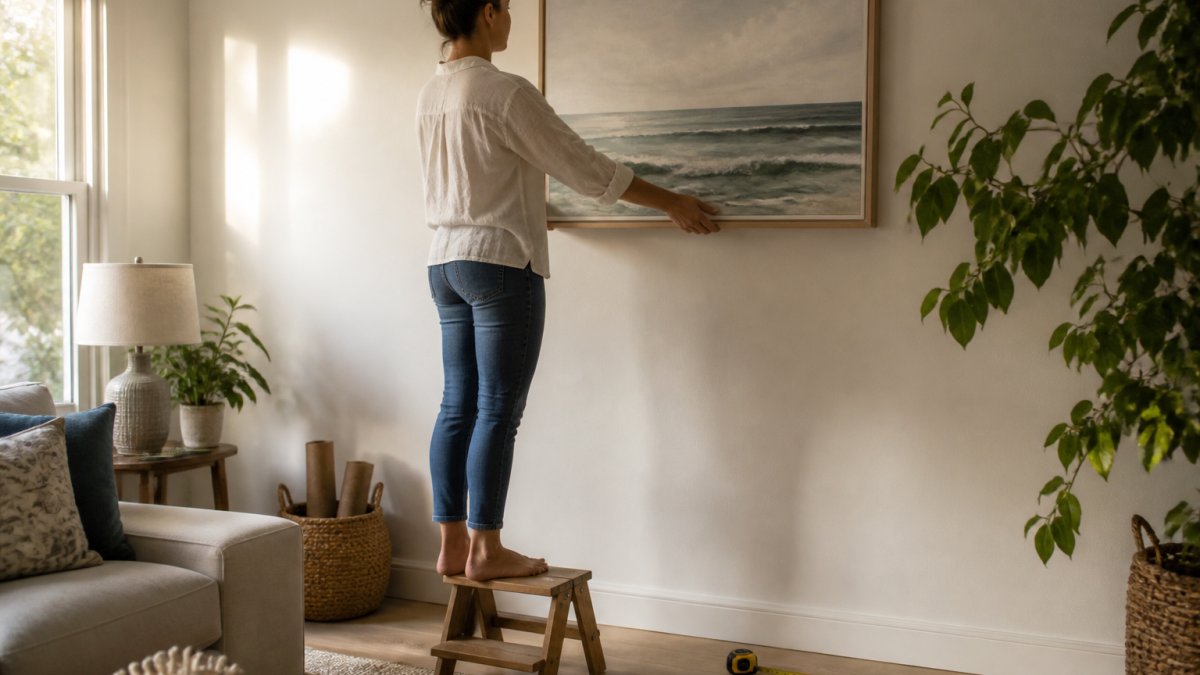
Use two hooks rather than one for anything wider than 12 inches. Two points keep the piece level and spread the load. For heavy canvases, anchor into a stud.
Avoid direct sunlight. Ultraviolet light fades pigments over time, and a south-facing wall can do damage within a few seasons.
For a deeper walkthrough of display options, read our guide to the best ways to display original art in your home.
Caring for and Insuring Your Original Art
Original art needs modest but consistent care: keep it out of direct sun, away from humid rooms like bathrooms, and dusted with a dry, soft cloth rather than a wet one. Canvas should never be wiped with household cleaner.
Insurance is the step most buyers skip. Ask your insurer whether a rider is needed for higher-value pieces. Keep your receipt, the artist's name, and a photo of the work.
Watch out: a humid coastal climate is hard on paper and canvas. If you live near the water, keep pieces off exterior walls and away from doors that stay open.
Finding Your Piece at Palms 30A
Palms 30A curates original art pieces alongside handcrafted jewelry and lifestyle goods. Our original art selection includes pieces by local artists, like the Original Art - Oyster Shells, a 30 x 40 inch custom work priced at $490.00.

If you are buying from out of town, our guide to buying original art online covers how to purchase with confidence.
Best for: buyers who want a named artist and a real story behind the piece. Skip if: you need a large piece shipped internationally on a tight timeline, since oversized art requires a custom quote.
Frequently Asked Questions
Where is the best place to buy original art?
The best source depends on what you want to know about the piece before you pay. Galleries and curated boutiques let you ask who made it, what medium was used, and how it should be cared for. Buying from a named local artist or a shop that lists the artist gives you that same chain of information. Online marketplaces can work too, but check whether the listing names the artist and describes the materials. If a listing shows only a photo and a price, ask for provenance details before you commit.
What is the difference between original art and prints for home decor?
An original is a one-of-a-kind piece made by the artist's own hand, so no two are identical. A print is a reproduction, whether open edition or limited edition, produced from an original image. Originals carry the artist's direct work and usually hold value differently than reproductions. Prints cost less and let you fill large walls quickly. For a focal wall or a piece you plan to keep for decades, an original is the stronger choice. For hallway runs or seasonal swaps, prints do the job at a lower price.
How much should original art cost?
There is no fixed number, but size, medium, and the artist's reputation drive price more than anything else. Small works on paper or acrylic plaques can sit in the tens of dollars, while large custom pieces from a local artist run into the hundreds. At Palms 30A, the Oyster Crosses Acrylic Plaque is $30.00, the Iris Oyster Magnolia Art small piece is $72.00, the Oyster Magnolia Art small is $145.00, and the Original Art Oyster Shells measures 30 x 40 inches at $490.00. Set a budget before you browse so scale does not talk you into a larger piece than you planned.
How do I know a piece is actually original and not a reproduction?
Ask three questions: who made it, what medium it is, and whether the seller can describe how it was produced. A legitimate seller will name the artist and the materials without hesitation. Look for a signature, a dated back, or a certificate or artist note. With local artists, you can often confirm the work directly. If a seller cannot say who painted or made the piece, treat it as decorative rather than collectible and price your expectations accordingly.
What is the 70/30 rule in art?
The 70/30 rule is a hanging guideline rather than a purchasing one. It says art should sit at roughly 70 percent of the width of the furniture below it, leaving about 30 percent of breathing room on either side. The goal is proportion: a small canvas floating over a long sofa looks lost, and a canvas wider than the sofa crowds the wall. Measure the furniture first, then look for a piece in that range. It saves you from buying something that fits the wall but not the room.
How do you start a collection of original art?
Buy one piece you genuinely want to look at every day, then build around it. Start with a single wall or room rather than the whole house. Decide on a rough budget, pick a size that suits your space, and favor artists whose work you would still like in five years. Coastline and botanical motifs are a practical starting point because they sit easily beside most furniture. Add pieces over time as you learn what you respond to, and keep the receipts and artist details together for insurance.
Buying original art for home decor gets easier once you stop guessing and start with the wall, the budget, and the artist's name. Palms 30A can help you find a piece that fits, with curated original art, handcrafted jewelry, and home accessories chosen for warmth and style. Browse our collection and bring a little luxury home.
