
Benefits of Shopping at Local Boutiques
Table of Contents
- How Local Boutiques Strengthen Community Economics
- Sustainable Fashion vs Fast Fashion Guide: Why Boutiques Matter
- How to Identify High-Quality Clothing and Handcrafted Items
- Unique Products You Won't Find Anywhere Else
- Environmental Impact and Reduced Carbon Footprint
- Building Lasting Relationships Through Local Shopping
- Frequently Asked Questions
Last Updated: September 3, 2026
How Local Boutiques Strengthen Community Economics
Shopping at local boutiques does more than fill your closet or decorate your home. When you spend money at a neighborhood boutique, that transaction ripples through your community in ways that never happen when you shop online or at big-box retailers. The economic multiplier effect of local retail is real: money spent locally stays local, cycling through the economy multiple times before it leaves the area.
Consider what happens behind the scenes. A boutique owner pays rent to a local landlord, who uses that income to maintain the building and support other local services. The boutique hires staff from the neighborhood, who spend their wages at nearby restaurants, schools, and service providers. The owner sources products from suppliers, some of whom are local artisans and manufacturers. This interconnected web of transactions creates economic resilience that benefits everyone in the community.
According to the Small Business Administration's economic impact research, locally-owned businesses generate significantly more tax revenue per dollar of sales compared to national chains. This revenue directly funds public services like schools, parks, and infrastructure that benefit all residents. When you shop at a local boutique, you're not just buying a product, you're investing in your community's future.
At Palms 30A, we understand this principle deeply. Our curated selection of handcrafted jewelry, original art pieces, and carefully chosen clothing reflects our commitment to supporting local artisans and creators. Every purchase contributes to the neighborhood vibrancy that makes shopping meaningful.
Sustainable Fashion vs Fast Fashion Guide: Why Boutiques Matter
The difference between fast fashion and sustainable consumption represents one of the clearest divides in how we approach shopping. Fast fashion prioritizes speed and volume, new styles every few weeks, prices designed for disposability, and supply chains optimized for rapid turnover. Sustainable fashion, by contrast, emphasizes longevity, quality, and transparency about how and where items are made.
Local boutiques almost always operate within the sustainable fashion model by necessity and philosophy. They carry fewer items, refresh their inventory thoughtfully rather than constantly, and focus on quality pieces designed to last seasons rather than weeks. This approach directly contradicts the fast fashion cycle that encourages constant consumption and discarding.
The environmental cost of fast fashion is staggering. Rapid production cycles demand cheaper materials, faster manufacturing, and longer supply chains that generate unnecessary carbon emissions. In contrast, boutique shopping supports a completely different system: smaller production runs, local or regional sourcing, and items selected specifically for durability and timeless appeal.
When you shop at a local boutique, you're opting out of the fast fashion treadmill. You're choosing pieces that will still look good in your wardrobe next year and the year after. This mindset shift, from quantity to quality, from trends to timelessness, is one of the most powerful benefits of boutique shopping. You actually spend less money over time because you're not constantly replacing worn-out disposable clothing.
Boutiques like Palms 30A curate selections that reflect this philosophy. Our clothing for women, men, and children emphasizes comfort and style that endures, alongside handcrafted pieces designed to become favorites rather than quick purchases.
How to Identify High-Quality Clothing and Handcrafted Items
Quality doesn't announce itself loudly. It whispers through details that matter: fabric weight, seam construction, fiber content, and finishing touches. Learning to spot these markers transforms you from a casual shopper into someone who can confidently evaluate whether a piece is worth the investment.
Start with fabric. Run your fingers across any garment. High-quality fabric feels substantial, it has weight and texture that suggests durability. Cheap fabric feels thin, plasticky, or slippery. Check the fiber content label. Natural fibers like cotton, linen, wool, and silk typically age better than synthetic blends, though quality matters more than material type alone.
Examine seams closely. Quality construction means seams are straight, even, and reinforced at stress points like armholes and crotch seams. Loose threads or uneven stitching suggest rushed production. Look inside garments, quality pieces finish interior seams rather than leaving raw edges that will fray.
For handcrafted items like jewelry and art, transparency about the maker matters enormously. Reputable boutiques can tell you who created each piece, what materials were used, and how it was made. Original art pieces should come with documentation about the artist. Handcrafted jewelry should specify metal types, gemstone sourcing, and construction techniques. If a boutique can't answer these questions, that's a red flag.

Consider weight and balance. A well-made piece of jewelry feels substantial in your hand, not heavy, but present. Art pieces should be professionally framed or mounted. The craftsmanship should be visible in how carefully each element is finished.
The Personal Touch: Expert Service and Curation
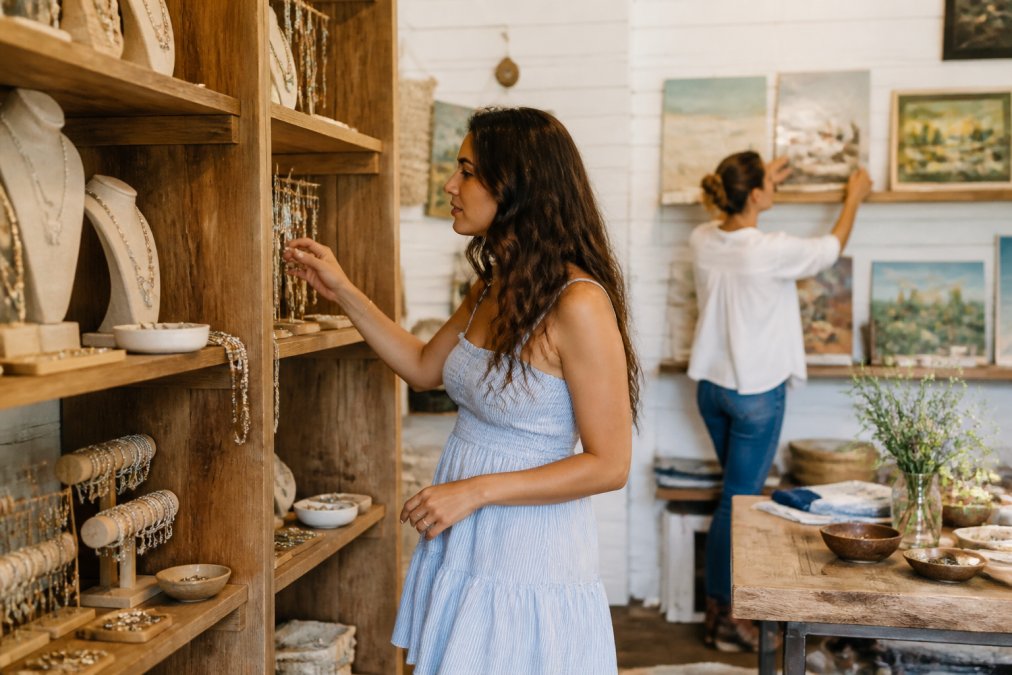
This is where local boutiques create an experience that online shopping simply cannot replicate. A knowledgeable boutique owner or staff member knows the story behind each item. They understand which pieces work together, which fabrics suit different body types, and how to help you find something that feels authentically you rather than just what's trendy.
When you walk into a boutique, you're not navigating an algorithm designed to maximize your spending. You're interacting with a human who has personally selected every item in the store. This curation is the opposite of the overwhelming choice paralysis you face on most e-commerce sites. Instead of sorting through thousands of similar options, you're looking at a thoughtfully edited collection where each piece earned its place.
This expert service extends beyond sales. A good boutique owner becomes familiar with regular customers, what colors you prefer, what styles flatter you, what you're looking for. They'll set aside pieces they think you'll love. They'll offer honest feedback about whether something works for you, even if it means not making a sale. This personalized attention transforms shopping from a transaction into a relationship.
For handcrafted items and original art, boutique expertise becomes even more valuable. Staff can explain the artist's process, the inspiration behind a piece, and how to care for handmade items properly. They can help you understand what makes something genuinely artisanal versus mass-produced with artisanal styling.
Unique Products You Won't Find Anywhere Else
One of the most compelling reasons to shop at local boutiques is the simple fact that you cannot find these items elsewhere. A truly curated boutique sources from local artisans, independent makers, and small producers who don't distribute through mass-market channels. This means every purchase introduces something genuinely new into your life, not a variation on what everyone else owns.
Original art pieces exemplify this uniqueness. When you buy from a local artist through a boutique like Palms 30A, you're acquiring something that exists nowhere else. Our original art collection features work by local artists creating custom pieces that reflect the character and beauty of the region. Each piece tells a specific story and brings individuality to your home in ways that mass-produced prints never can.
Handcrafted jewelry operates on the same principle. Rather than buying mass-produced designs that thousands of other people own, you're wearing something made by an actual artisan. Many handcrafted pieces can be customized or commissioned, allowing you to collaborate with the maker to create exactly what you envision.
Even curated clothing selections at boutiques differ fundamentally from chain retail. Boutiques source from smaller designers and makers whose aesthetics align with the store's vision. This means you're wearing pieces from brands and creators who prioritize design quality and longevity over trend-chasing volume production.
This uniqueness has real value. It means you're not competing with everyone else to own the same thing. You're building a wardrobe and home filled with pieces that reflect your individual taste and values. That differentiation matters, both for how you feel about what you own and for the conversations it sparks when people notice something genuinely special.
Environmental Impact and Reduced Carbon Footprint
Every purchase carries an environmental cost measured in carbon emissions, water usage, waste, and resource extraction. Shopping at local boutiques dramatically reduces this environmental burden compared to conventional retail and e-commerce.
The carbon footprint advantage starts with proximity. When you shop locally, you're not generating emissions from long-distance shipping. A garment or art piece purchased at a neighborhood boutique travels far shorter distances than items shipped from overseas factories or distant distribution centers. This single factor cuts transportation emissions substantially.
The supply chain itself matters enormously. Local boutiques often source from regional suppliers and artisans, which means shorter supply chains with fewer intermediaries and transportation legs. Compare this to fast fashion, where a single garment might travel through five or six countries before reaching a store shelf. Each transition generates emissions; shorter chains generate fewer.
Beyond transportation, the sustainability advantage comes from reduced consumption overall. When you buy fewer items that last longer, you're generating less waste and requiring fewer raw materials to be extracted and processed. A wardrobe built on quality boutique pieces that you wear for years generates a fraction of the environmental impact of fast fashion consumption.
Original art and handcrafted items carry additional environmental benefits. These pieces are typically made locally or regionally using sustainable practices. They're designed to be kept and treasured indefinitely, not replaced seasonally. An original art piece from a local artist has essentially zero ongoing environmental cost once created, you're not replacing it every season like disposable fashion.
Building Lasting Relationships Through Local Shopping
Shopping at a local boutique isn't primarily transactional, it's relational. Over time, regular customers develop genuine connections with boutique owners and staff. These relationships transform shopping from a solitary consumer activity into a social experience that enriches both sides.
A boutique owner remembers your preferences, your lifestyle, and what you're looking for. When new inventory arrives, they think of customers who might love specific pieces. They offer honest advice even when it means suggesting you wait for something better rather than buying today. They celebrate when you find something perfect. This attentiveness creates loyalty that goes far beyond price or selection, you return because you feel genuinely cared for.
These relationships also mean accountability. A local boutique owner's reputation depends on customer satisfaction and trust. They can't hide behind corporate policies or distant customer service departments. If something doesn't work out, they have direct incentive to make it right because you're their neighbor. This accountability makes shopping feel safer and more secure than faceless online transactions.
For customers seeking gifts, local boutique relationships become invaluable. Staff get to know your family and friends through your shopping patterns. They can recommend pieces they think specific people will love. They understand the difference between a generic gift and something that shows genuine thoughtfulness.
The community aspect extends beyond individual relationships. Regular customers at local boutiques often become part of a community, you see the same people shopping, you chat with neighbors, you become part of the store's social fabric. This transforms shopping from isolation into connection.
At Palms 30A, we've built our entire approach around these relationships. Our warm, inviting atmosphere and curated selections reflect our commitment to knowing our customers and helping them find pieces that enhance their lives. Whether you're a regular or visiting for the first time, you're welcomed as part of our community.
Shopping at local boutiques isn't a sacrifice, it's an upgrade. You get better quality, unique pieces that reflect your individual style, personalized service from people who genuinely care about your satisfaction, and the knowledge that your spending strengthens your community. When you choose a local boutique like Palms 30A, you're choosing pieces that will last, relationships that matter, and a shopping experience that feels fundamentally different from the generic transaction of mass retail. Discover our curated selection of handcrafted jewelry, original art pieces, and thoughtfully chosen clothing for your entire family. View all our collections and find the pieces that make your home and wardrobe truly yours.
| Benefit | Impact | Best For |
|---|---|---|
| Economic multiplier effect | Money cycles through local economy multiple times | Community economic health |
| Sustainable consumption | Fewer items purchased, longer lifespan | Environmental responsibility |
| Expert curation | Personalized selections vs. algorithm-driven choices | Finding pieces that genuinely fit your style |
| Unique products | Original art and handcrafted items unavailable elsewhere | Building individual identity |
| Reduced carbon footprint | Shorter supply chains, less transportation | Environmentally conscious shopping |
| Relationship building | Ongoing connections with owners and staff | Long-term customer satisfaction |
Frequently Asked Questions
What are the main benefits of shopping at local boutiques?
Shopping at local boutiques supports your community's economy, keeps money circulating locally, and creates jobs. You gain access to curated, unique products you won't find in big-box retail, receive personalized service from knowledgeable staff, and contribute to reducing your carbon footprint through shorter supply chains. Local boutiques often feature handcrafted items and original art, adding character to your home and wardrobe while supporting local artisans and small business owners.
How does shopping local compare to sustainable fashion vs fast fashion?
Local boutiques embody sustainable fashion principles by offering quality pieces designed to last, rather than the throwaway mentality of fast fashion. Boutique items are typically made with better materials and craftsmanship, reducing the need for frequent replacements. Shopping local also means shorter supply chains, less packaging waste, and support for ethical production practices. Unlike fast fashion retailers that churn out trends weekly, boutiques curate selections intentionally, encouraging thoughtful consumption over impulse buying.
How do I know if boutique clothing and jewelry are actually high quality?
Look for natural fabrics like cotton, linen, and wool rather than synthetic blends. Check seams, stitching, and hems for precision and evenness. Quality handcrafted jewelry should have secure settings, smooth finishes, and clear hallmarks or artist signatures. Ask the boutique about materials, construction methods, and the artisan's background. Reputable boutiques like Palms 30A provide transparency about their makers and sources. Feel the weight and texture of items; quality pieces have substance and durability that cheap alternatives lack.
Are boutique prices worth it compared to online retailers?
Yes, when you factor in quality, uniqueness, and impact. Boutique items are made to last, meaning you spend less replacing worn-out pieces over time. You're also paying for expert curation, personalized service, and the ability to see and feel items before buying. With local boutiques, your money stays in your community, supporting jobs and local artisans. Original art pieces and handcrafted jewelry from boutiques like Palms 30A become meaningful investments and heirloom-quality pieces, not disposable purchases.
This article was written using GrandRanker