
Are Curated Lifestyle Goods Worth the Cost?
Last Updated: October 24, 2026
Quick Summary
Curated lifestyle goods give you fewer, better-chosen items with durability, traceability, and a named maker accountable for the result. You get repairability, honest materials, and clear provenance, though prices run higher and selection is narrower by design. Judge each piece on coherence, provenance, usefulness, and cost per use.
- Nearly 70% of surveyed consumers would not buy an affordable product lacking perceived value, per BCG's 2026 research.
- Set a per-item ceiling, wait 48 hours, and ask what an item replaces before buying.
- Handmade is not a regulated term in the United States, so ask who made the piece.
- Divide price by realistic uses per year to compare cost per use honestly.
- Curation does not guarantee sustainability, so verify claims rather than accepting them.
Table of Contents
- What Curated Lifestyle Goods Actually Are
- The Benefits of Shopping Handmade Products
- Building Mindful Shopping Habits That Stick
- How to Identify Quality Handmade Products
- A Practical Framework for Evaluating a Curated Collection
- The Trade-Offs and Limitations of Buying Curated Lifestyle Goods
- Choosing Your First Curated Piece at Palms 30A
- Frequently Asked Questions
What Curated Lifestyle Goods Actually Are
Curated lifestyle goods are products a retailer selects and assembles around a specific point of view, rather than stocking every option a distributor offers. The selection itself carries the value: fewer items, chosen for how they work together, often made by smaller producers. At Palms 30A, we build our assortment this way, pulling together clothing for women, men, and children alongside home accessories, handcrafted jewelry, and original art.
The distinction matters more than it used to. Nearly 70% of consumers surveyed said they would not buy a product they could afford if it lacked perceived value, according to BCG's 2026 consumer behavior research. Curation is one way a retailer answers that question before checkout.
Below, we break down what the benefits of buying curated lifestyle goods actually are, where they fall short, and how to judge a collection before you spend.
The Benefits of Shopping Handmade Products
The strongest argument for handmade products is not sentiment. It is durability, traceability, and accountability. When a maker controls the whole process, materials and construction get more attention than they would on a high-volume line, and there is a named person or studio answerable for the result.
That accountability shows up in three concrete ways:
- Repairability. A maker who built the piece usually knows how to fix it. Many small studios offer repairs or replacements for years after purchase, which extends useful life and lowers replacement frequency.
- Material honesty. Small-batch makers tend to name specific fibers, finishes, and hardware because their reputation depends on it. Vague "premium blend" language is more common on mass-produced lines than in a studio that sources its own materials.
- Traceable provenance. A named maker or studio gives you a starting point for questions about origin, labor, and process. That is the foundation for verifying any ethical or sustainability claim, which we cover below.
Affordability drives plenty of purchase decisions too. Eight out of ten surveyed secondhand fashion and luxury shoppers named affordability as a top reason to buy, per BCG's secondhand market analysis. Handmade and resale are different categories, but the underlying habit is the same: buyers are weighing cost against what they get.
For a deeper look at how artisanal clothing stacks up against mass-produced alternatives, read our comparison of artisanal clothing vs fast fashion.
Building Mindful Shopping Habits That Stick
Mindful shopping habits are repeatable decision rules, not willpower. The people who buy well consistently tend to follow a short list of criteria and apply it every time, which removes the emotional swing of browsing.
Start with three rules:
- Set a per-item ceiling and a monthly total before you open a single tab.
- Wait 48 hours on anything above that ceiling.
- Ask what the item replaces, not what it adds.
That third rule does most of the work. It forces a comparison against something you already own, which is where value for money actually gets decided.
If you want to see how local buying fits into those habits, our guide to the benefits of shopping at local boutiques covers the practical side.
How to Identify Quality Handmade Products
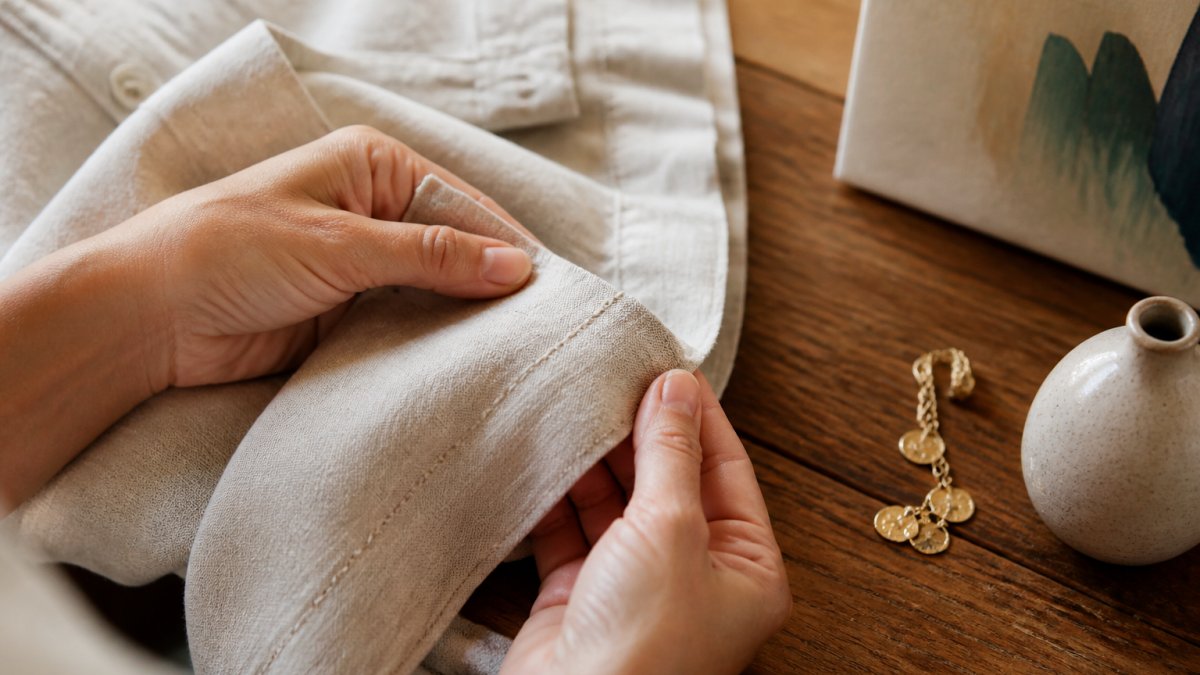
Quality handmade products show consistent stitching, honest materials, and a maker willing to explain their process. Those three signals separate real craft from a mass-produced item with an artisanal label.
Check these in order:
| What to Check | Good Sign | Warning Sign |
|---|---|---|
| Stitching | Even tension, reinforced stress points | Loose threads, skipped stitches |
| Materials | Specific fiber and origin named | Vague "premium blend" language |
| Maker info | Named artisan or studio | No attribution at all |
| Finish | Symmetrical, hand-finished edges | Glue residue, uneven seams |
| Price logic | Reflects labor hours | Suspiciously cheap for the claim |
Watch out: "handmade" is not a regulated term in the United States, so a label alone proves nothing. Ask who made the piece.
Our buyer's guide to identifying authentic handcrafted art walks through authentication in more detail.
Little Luxuries Tiny Moments Kit →
A Practical Framework for Evaluating a Curated Collection
Evaluating a curated collection comes down to four tests: coherence, provenance, usefulness, and total cost per use. A collection that passes all four is doing real work. One that fails two or more is a themed storefront.
Run the tests like this:
- Coherence: Do the pieces relate to each other, or is this a random assortment?
- Provenance: Can the retailer name where items come from?
- Usefulness: Will you use it weekly, or will it sit in a drawer?
- Cost per use: Divide price by realistic uses per year.
That last number changes the conversation. A $44 tray used twice a week for three years costs pennies per use. A $20 gadget used twice costs $10 per use. Cost per use is the honest comparison, not sticker price.
Worth noting: curation is not proof of sustainability. Oxfam's sustainable shopping guidance defines sustainable shopping by reduced environmental and social impact, which a curated assortment does not guarantee on its own.
The Trade-Offs and Limitations of Buying Curated Lifestyle Goods
Curated shopping has real costs, and pretending otherwise is how retailers lose trust. Prices run higher than mass-market equivalents because small-batch production and selective buying carry overhead. Selection is narrower by design, so you may not find the exact color or size you wanted. Ultimately, the premium paid for these goods reflects a commitment to craftsmanship in shopping that extends far beyond the boutique shelf and into the very staples we bring into our homes.
Beyond price and selection, four limitations deserve a straight answer:
- Shipping and returns friction. Small studios often ship from a single location with longer lead times and stricter return windows than large retailers. Factor delivery time and return cost into the total before you buy.
- Inconsistent quality within a collection. A curated assortment can mix strong and weak makers. Judge each piece on its own merits rather than assuming the whole collection meets the same bar.
- Curation as a marketing label. "Curated" is not a regulated term. Some storefronts use it to describe a themed assortment with no real selection criteria. Ask what the curation standard is and whether the retailer can name its makers.
- Sustainability is not guaranteed. A curated collection may still include items with high shipping impact or unverified labor practices. Treat sustainability claims as questions to verify, not facts to accept.
There is also a financial caution worth stating plainly. Investopedia's analysis of luxury buying psychology notes that luxury purchases create a financial burden when the buyer cannot comfortably afford them. A curated presentation does not change that math.
Social commerce is shifting discovery fast. Escalent's 2026 consumer trends forecast projected social commerce would reach 17% of online sales by 2026, which means more curated-looking storefronts competing for the same attention. Not all of them verify their suppliers.
Choosing Your First Curated Piece at Palms 30A
Your first curated purchase should be low-risk, high-use, and easy to gift if it does not suit you. That is why we point most first-time buyers toward the Little Luxuries Tiny Moments Kit at $18.00, a small self-care set that answers the value question without a large commitment.

From there, the logic scales. A $44.00 Natural Botanical Square Tray earns its place if you entertain or organize regularly. A $49.00 Glasshouse Self Care Bundle works as a gift where you want something that feels considered rather than generic.
Best for: gift-givers and first-time curated buyers. Skip if: you need a specific size or colorway immediately.
If you are still working out how curated sites differ from boutique retail, our explainer on curated vs boutique shopping sites settles the definition.
Frequently Asked Questions
What are curated lifestyle goods?
Curated lifestyle goods are items a retailer selects and assembles around a specific point of view, rather than stocking everything a distributor offers. The selection usually favors craftsmanship, provenance, and everyday usefulness. Palms 30A, for example, carries handcrafted jewelry, original art, and clothing for women, men, and children, plus home accessories and gifts. Curation is the filter: someone has already sorted through the market so you are choosing among fewer, better-considered options.
Are handmade products better than mass-produced products?
They are not automatically better, but handmade products often hold up longer because a maker controls materials and construction. The trade-off is inconsistency: two handmade pieces can vary slightly. Check seams, hardware, and finish before buying. Mass production wins on price and uniformity; handmade wins on durability, provenance, and the ability to repair rather than replace. For items you use daily, the cost per use often favors handmade.
How can I tell if a lifestyle product is well made?
Look at the details a maker cannot fake: even stitching, secure hardware, straight seams, and a finish that feels smooth without being plastic. Ask what the item is made of and where it was made. For jewelry, ask about the metal and stone settings. For textiles, ask about fiber content. A seller who can answer specifically is a better signal than one who repeats the word artisanal.
Can buying curated lifestyle goods support small businesses and local economies?
Yes, when the curation is built on independent makers rather than mass-produced goods with a boutique label. Buying from small businesses keeps revenue in the community and supports job creation. Ask who made the item and whether the retailer works directly with artisans. That question separates genuine community support from marketing language, and it gives you a reason to buy fewer, more intentional pieces.
The challenge with curated goods is not finding them. It is judging them before you spend. Palms 30A stocks a deliberately small assortment of clothing for the whole family, handcrafted jewelry, original art, and home accessories, so every piece has a reason to be there. Browse the collection and see what fits how you actually live. Get started with Palms 30A and build a home and wardrobe around pieces you will still want in five years.
